
Water leaks in homes or buildings can happen repeatedly at certain times during the year. These are known as seasonal leak patterns. Identifying them early allows for early leak detection and helps prevent water damage emergencies before they turn into serious problems. This guide will explain what seasonal leaks are, why they occur, and how you can spot and prevent them. It will also include simple advice for homeowners and practical tips for people living in Toronto, Vaughan, Brampton, Markham, and nearby areas.
What Are Seasonal Leak Patterns and Why They Matter
Seasonal leaks are water leaks that happen repeatedly during the same time each year. They are caused by changes in weather, temperature, and humidity. Unlike random leaks that can occur at any time, seasonal leaks follow a pattern. For instance, a pipe may leak every winter when it freezes, or a basement wall may let water in every spring when the snow melts.
These leaks are important to notice because:
- They can damage walls, floors, and ceilings over time.
- Mold can grow, which can affect your health.
- They are often overlooked until they become emergencies.
Understanding the difference between random leaks and recurring water leaks helps homeowners plan inspections and maintenance. People who own or rent properties should pay attention to these patterns so they can take action before serious damage occurs.
How Weather and Seasonal Changes Cause Recurring Leaks
The weather is a major factor in why leaks appear at certain times. Some of the most common reasons include:
- Temperature changes and material expansion: Pipes and building materials expand when it is hot and shrink when it is cold. This can create small cracks that lead to leaks during certain seasons.
- Rain, snowmelt, and groundwater pressure: During rainy seasons or when snow melts in spring, water pressure around basements and foundations can increase and cause leaks.
- Humidity and condensation: High indoor or outdoor humidity can create condensation on walls, windows, or around HVAC systems, which can lead to leaks.
By understanding these weather-related causes, homeowners can predict when leaks might happen and take preventive steps such as insulating pipes, sealing cracks, and ensuring proper drainage.
Common Seasonal Leak Patterns by Season
Leaks can occur differently depending on the season. Knowing seasonal leak trends can help prevent serious damage.
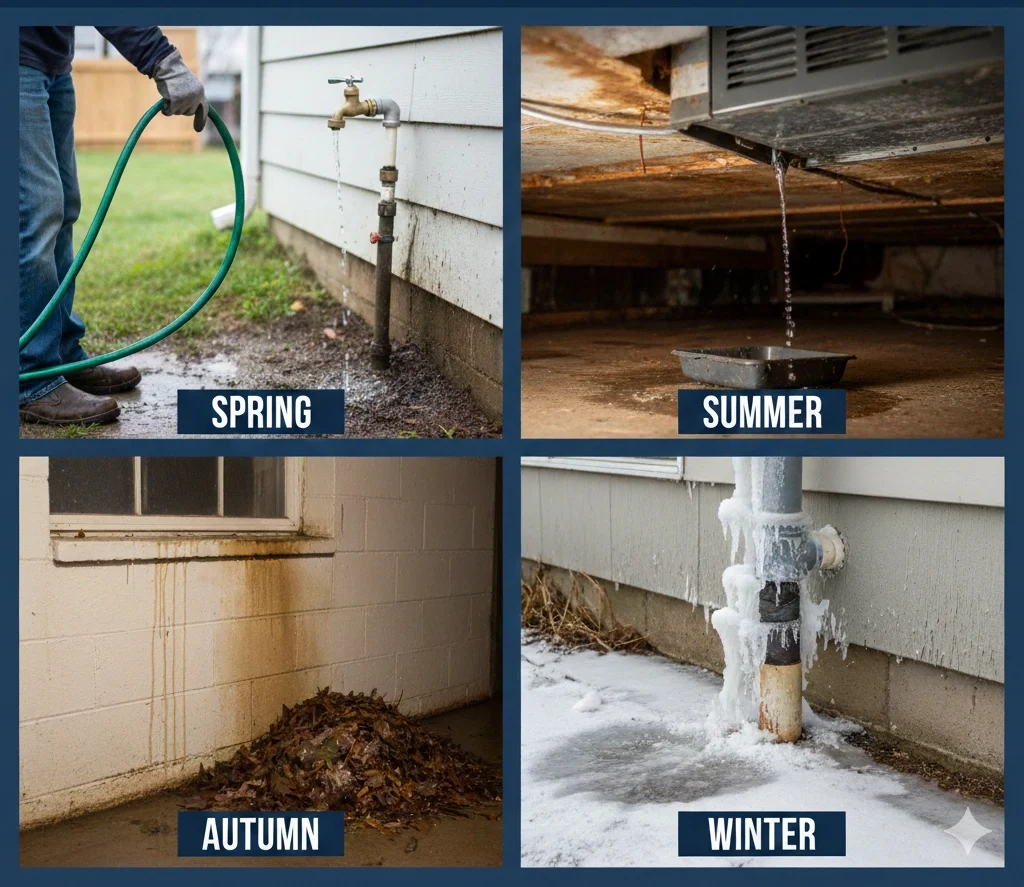
Winter Leak Patterns (Freezing, Thawing, Condensation)
During winter, cold temperatures can cause winter pipe leaks and frozen pipe leaks. The main issues include:
- Freeze and thaw stress: Water in pipes can freeze at night and expand, putting stress on the pipe walls.
- Pipe cracking and delayed leaks: When pipes thaw, small cracks can lead to water leakage.
- Indoor condensation issues: Warm indoor air hitting cold surfaces can create water droplets that appear as leaks.
Homeowners should check exposed pipes, especially in basements and attics, and add insulation where possible. Emergency plumbers in Toronto often become very busy in winter because of frozen pipes.
Spring Leak Patterns (Snowmelt, Groundwater Rise, Roof Stress)
Spring brings melting snow and more rainfall, which can cause spring water leaks or basement leaks in the spring. Common problems include:
- Hydrostatic pressure: Water can push against basement walls and floors.
- Foundation seepage: Cracks in foundations may allow water to enter.
- Roof drainage overload: Gutters and downspouts blocked with leaves or debris can cause water to back up and leak.
Summer Leak Patterns (HVAC Condensation, Heat Expansion)
During summer, summer HVAC leaks and AC condensation leaks are often reported. Problems include:
- Condensate drain overflows: Air conditioners produce water that can overflow if drains are blocked.
- Thermal expansion of roofing and joints: Heat can cause roofing materials to expand, which may create small gaps that allow water in.
Monsoon or Rainy Season Leak Patterns (Roof and Foundation Intrusion)
Rainy seasons can result in rainy season leaks or roof leaks during heavy rain. Common issues include:
- Roof penetration failures: Flashings and shingles can fail under heavy rain.
- Wall and slab water intrusion: Water may seep through cracks in walls or foundations.
Early Warning Signs That Indicate Seasonal Leaks Are Developing
Spotting leaks early can save money and prevent damage. Look for these signs:
- Intermittent dampness: Wet spots that appear and disappear depending on the weather.
- Stains that appear and disappear: Marks on ceilings or walls that show up each season.
- Musty odors and humidity spikes: A persistent damp smell can indicate hidden leaks.
- Small leaks that repeat seasonally: Even minor leaks can become serious if ignored.
If you notice any of these signs, contact plumbers in Toronto or nearby cities for an inspection.
High-Risk Areas Where Seasonal Leaks Commonly Start
Some areas are more likely to develop leaks:
- Roofs and flashing: Shingles, flashings, and skylights can be weak points.
- Plumbing in exterior walls: Pipes running through walls or attics that are exposed to cold or heat.
- Basements and foundations: Cracks or seepage in walls or floors.
- HVAC systems and drain pans: Condensation from air conditioners can cause leaks.
Checking these high-risk areas each season helps with preventive maintenance. Plumbing services in Toronto can help identify these areas professionally.
How to Track and Identify Seasonal Leak Patterns Over Time
Keeping a record of leaks can help find patterns:
- Seasonal inspections: Schedule inspections before and after each season.
- Comparing leaks with weather information: Track rainfall, snow, and temperature changes.
- Using maintenance logs: Write down each leak, including its location and severity, to notice trends.
Tracking leaks over time improves recurring leak detection and helps homeowners plan necessary repairs.
Tools and Methods Used to Detect Seasonal Leaks Early
There are several tools that make detecting leaks easier.
Visual and Physical Inspection Techniques
- Look for water stains, mold, or sagging ceilings.
- Check pipes for cracks, corrosion, or condensation.
- Inspect roof edges, gutters, and HVAC systems.
Water Meter and Usage Monitoring
- Turn off all water sources and check the water meter.
- Any movement of the meter may indicate a hidden leak.
- This method helps detect leaks early, especially for an emergency plumber in Vaughan.
Moisture Meters, Thermal Imaging, and Sensors
- Moisture meters can detect damp areas inside walls.
- Thermal imaging shows temperature differences that may indicate water leaks.
- Smart sensors can alert homeowners when water is detected.
These tools are commonly used by plumbing companies in Toronto for professional inspections.
How Seasonal Leaks Turn Into Water Damage Emergencies
If leaks are ignored, they can cause major problems:
- Structural deterioration: Floors, walls, and ceilings can weaken.
- Mold growth: This can affect the health of the residents.
- Electrical and system failures: Water near wiring or appliances can be very dangerous.
To prevent these emergencies, it is important to take action promptly and contact the best plumbers in Toronto for inspection and repair.
Preventive Maintenance to Stop Seasonal Leaks Before They Escalate
Preventive maintenance is very important to avoid major damage:
- Timely inspections: Check plumbing, roofs, and HVAC systems during each season.
- Drainage and insulation maintenance: Keep gutters clean and insulate pipes.
- Sealant and waterproofing upkeep: Seal cracks and maintain foundation waterproofing.
Local services such as plumbing in Vaughan and Markham can assist with preventive maintenance.
Real-World Examples of Seasonal Leak Patterns and Their Impact
- Roof leaks appearing only during storms: Often caused by damaged shingles or clogged gutters.
- Basement leaks during rainy seasons: Hydrostatic pressure pushes water through cracks in the foundation.
- HVAC leaks every summer: The AC drain overflows because of a lack of cleaning.
These examples show why it is important to track seasonal leak patterns for homeowners and building managers.
When Seasonal Leaks Require Professional Assessment
Sometimes it is not enough to check leaks yourself:
- Hidden leaks behind walls or under floors.
- Leaks that continue even after minor repairs.
- Structural leaks in roofs or foundations.
In these situations, call a professional leak detection service or an emergency plumber in Brampton if you notice ongoing problems.
Frequently Asked Questions About Seasonal Leak Patterns
Why do some leaks only appear during certain seasons?
Leaks appear at certain times of the year because of changes in temperature, snowmelt, rainfall, and humidity. Pipes and building materials expand or contract, which can make cracks appear only during specific conditions.
Can seasonal leaks disappear on their own?
Some leaks may seem to disappear when the weather changes, but the underlying problem usually remains. Ignoring it can lead to bigger damage later.
Are seasonal leaks more dangerous than sudden leaks?
Yes, seasonal leaks are often ignored and can slowly cause serious water damage, mold growth, and structural problems.
Final Thoughts on Preventing Seasonal Leaks Before Emergencies
Understanding seasonal leak patterns is very important for preventing water damage emergencies. By performing inspections early, keeping track of leaks, and using professional plumbing services, homeowners can save money and protect their property. Seasonal maintenance, proper insulation, and timely repairs make a big difference. For residents in Toronto, Vaughan, Brampton, or Markham, working with the best plumbing services in Vaughan, Toronto & GTA ensures that problems are fixed quickly and effectively.