

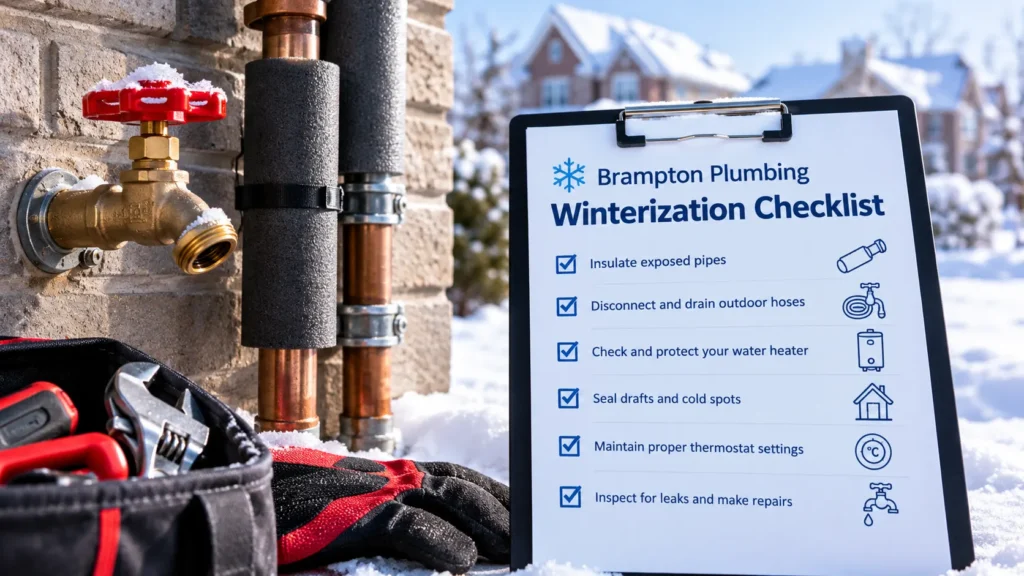
You turn on the tap on a January morning, and nothing comes out. Or you notice a damp patch spreading across the basement ceiling. Winter plumbing trouble rarely arrives without warning, and it often starts with a weakness that was already there when the temperature dropped: an exposed pipe, a hose left on an outdoor faucet, a slow drain, a small leak nobody noticed.
Working through a Brampton Plumbing Winterization Checklist before the first snow lets you find those weak points while the weather is still on your side. Repairs are easier, access is better, and you are not troubleshooting in freezing conditions.
This guide from Drain Experts Plumbing covers ten practical steps, from outdoor faucets to your main shut-off valve. It also explains what to do if a pipe freezes and how to tell when a problem calls for a professional.
What Happens to Your Plumbing When Brampton Temperatures Drop?
Water expands as it freezes. Inside a pipe, that expansion builds pressure, and a pipe can crack or split. Often the damage only becomes obvious after the ice thaws and water starts to leak.
The most vulnerable spots are the ones the heating system barely reaches:
- Pipes along exterior walls
- Unheated garages and crawl spaces
- Poorly insulated basement areas
- Outdoor hose connections and faucets
To prepare your home for extreme cold, follow the Government of Canada’s extreme cold preparedness guidance. Checking your home’s heating system and reducing cold drafts can help protect vulnerable areas, including pipes located along exterior walls and in unheated spaces.
It helps to separate two problems that people often confuse. A frozen pipe is a supply-line issue: water inside the pipe has turned to ice and blocks flow. A clogged drain is a waste-line issue: debris such as grease, hair, or soap residue restricts how water leaves a fixture. They have different causes and different fixes, and one does not cause or prevent the other.
Brampton Plumbing Winterization Checklist: 10 Essential Steps
Work through these in order or tackle them over a couple of weekends. None requires specialized tools, and each tells you when to stop and call someone.
1. Disconnect and Drain Outdoor Faucets
Disconnect every garden hose, splitter, and spray nozzle included. A hose left attached can trap water in the faucet and the pipe behind it, where it may freeze.
If your home has a separate indoor shut-off valve for an outdoor line, follow the manufacturer’s instructions for closing it and draining the line. Frost-free faucets still need the hose removed, and they are designed to drain only when installed with a slight downward slope.
Warning sign: Dripping from an outdoor faucet after the hose is off may mean a worn washer or internal fault worth having looked at.
2. Insulate Exposed and Vulnerable Pipes
Look for visible pipes in unheated areas such as garages, crawl spaces, and the edges of basements. Foam pipe sleeves, available at most hardware stores, are inexpensive and simple to fit. Cut them to length, slide them on, and seal the seams.
Insulation slows heat loss, but it does not generate heat. It cannot guarantee protection during a prolonged deep freeze, so treat it as one layer of defence rather than a complete solution.
Precaution: Keep insulation away from furnace flues, hot-water heater vents, and other heat sources.
3. Check for Small Leaks Before Cold Weather
Inspect visible pipe joints, shut-off valves, faucets, and the cupboards beneath sinks. Look for moisture, water stains, mineral crust, rust, or corrosion. Run a dry paper towel along fittings; even a slight dampness will show.
Small leaks matter more in winter. Water that seeps into a cold wall cavity can freeze, and a minor drip left alone can become a larger repair.
Warning sign: Staining or soft, bubbling paint on a ceiling or wall usually means moisture is coming from somewhere behind it. An active leak is a job for professional Plumbing Services, not tape and hope.
4. Protect Pipes Beneath Exterior-Wall Sinks
Sinks on exterior walls are classic trouble spots. Open the vanity or cabinet doors on very cold nights so warmer room air can reach the pipes. Seal visible gaps around pipe penetrations with appropriate caulk or foam to reduce cold drafts.
Keeping a steady indoor temperature does more than any single trick. Avoid letting the house cool significantly overnight during freezing weather.
Precaution: If you have children or pets, move household cleaners out of reach before leaving cabinet doors open.
5. Test Kitchen, Bathroom, and Shower Drains
Run water in each fixture and watch how it drains. Slow draining, gurgling sounds, persistent odours, or a sink that clogs again soon after clearing are all signs of buildup in the line.
Start with what you can reach. Remove and clean strainers, stoppers, and pop-up assemblies, where hair and soap scum collect. A drain that clears and stays clear needs nothing more.
Precaution: Avoid using chemical drain cleaners as routine maintenance. They can be harsh on some pipes and are not a long-term fix for recurring clogs.
6. Investigate Recurring Drainage Problems
One slow sink is usually a local clog. Repeated blockages, or several fixtures draining slowly at once, can point to a problem deeper in the system, such as heavy buildup, a bellied pipe, or intrusion from tree roots.
In those cases, guessing rarely helps. A Drain Camera Inspection uses a small camera on a flexible line to show what is happening inside the pipe, so the cause can be identified rather than assumed. It is a diagnostic option for symptoms that keep returning, not something every clogged drain requires. If you are weighing options for drain cleaning in Brampton, ask what the inspection is meant to find and whether it is warranted for your situation.
Warning sign: A drain that clogs again within days of being cleared.
7. Check Basement Floor Drains and Visible Drainage Areas
Remove the cover from basement floor drains and clear any accessible debris, such as lint, dirt, or hair. Pour a few litres of water into the drain and watch how quickly it disappears.
Be alert to musty or sewer-like smells, water pooling around the drain, or moisture on the floor after heavy use of laundry or showers. Those can signal a restriction or a backup in progress.
Precaution: If water comes up through the drain, stop using water in the house and arrange a professional assessment. A Drain Camera Inspection can then show whether the cause is a blockage or a damaged line.
8. Check Your Water Heater and Hot-Water Supply
Look around the base of your water heater for pooling water, rust streaks, or damp insulation. Note whether you hear rumbling, popping, or banging, and whether hot water runs out sooner than it used to or fluctuates in temperature.
Follow the manufacturer’s instructions for any routine maintenance, and leave gas, electrical, and pressure-relief repairs to qualified technicians. A Heater Diagnostic Service is appropriate when you want a water heater’s condition and performance assessed. It is a different job from servicing your furnace or central heating system, which heats the air in your home rather than your hot water.
Warning sign: Any leak from the tank itself is a reason to call promptly.
9. Maintain Indoor Heat During Cold Spells
Even well-insulated pipes rely on a heated house. Keep the thermostat at a steady, moderate temperature during freezing weather rather than letting it swing between day and night settings.
This matters most when you travel. Before leaving for several days in winter, set the heat to a safe, consistent level, ask someone to check the house, and consider whether you should shut off the water supply at the main valve.
Precaution: Do not rely on space heaters to warm pipes. They create fire hazards when left unattended. If hot water turns unreliable in cold weather, a Heater Diagnostic Service can identify the cause.
10. Locate the Main Water Shut-Off Valve
Every household member who may need it should know where the main shut-off valve is and how to turn it. Keep the area around it clear of storage, and make sure it is not hidden behind finished walls or boxes.
Turn the valve gently once to confirm that it moves, then return it to its original position. If it is stiff, leaking, or won’t turn, do not force it. A seized valve can break, so arrange Plumbing Services to repair or replace it before you need it in an emergency.
Warning sign: Moisture or drips around the valve stem or handle.
When Should You Book Professional Plumbing Services Before Winter?
Many items on this list are simple home maintenance. Others are better handled by a professional, and it is worth recognizing the difference.
Consider booking help if you notice any of these:
- Repeated drain blockages
- Several fixtures draining slowly at the same time
- Visible leaks or water stains
- Unexpected changes in water pressure
- Water-heater leaks or unreliable hot water
- A suspected frozen pipe or interrupted water flow
Different symptoms point to different services. Leaks, pressure changes, and valve problems are typically a matter for general Plumbing Services. Recurring clogs that return after cleaning may call for a Drain Camera Inspection. Water-heater concerns are best handled through a Heater Diagnostic Service.
Drain Experts Plumbing can assess any of these. If your checklist turns up nothing, you probably don’t need to schedule anything. This is about solving real problems, not adding appointments.
Why Drain Maintenance Belongs on Your Winterization Checklist
Drains do not freeze the way supply lines do, but winter is a poor time for them to fail. Holiday cooking sends extra grease down kitchen sinks, guests mean more showers, and heavy laundry loads put more strain on lines that are already partly restricted.
Grease, hair, soap residue, and food debris build up gradually. A clog that returns after you have cleared the trap and cleaned the strainer is a sign the buildup is further down the line, and ignoring it can lead to a full blockage at an inconvenient time.
If you are dealing with persistent or recurring drainage issues, Drain Cleaning in Brampton can remove appropriate types of buildup from the line. Where blockages keep coming back, or damage is suspected, a Drain Camera Inspection can help identify what is going on before further work is done. Drain Experts Plumbing offers both services.
What to Do If a Pipe Freezes During a Brampton Cold Snap
A frozen pipe is urgent in a way that routine maintenance is not. If water has stopped or slowed to a trickle on a very cold day, act quickly but carefully.
- If a pipe has burst or is leaking, shut off the main water supply immediately.
- Open the affected faucet gently, if it is safe, so water can escape as the ice melts.
- Never use an open flame or blowtorch to thaw a pipe. It is a serious fire risk and can damage the pipe.
- Stay away from electrical hazards. If water is near outlets, panels, or appliances, keep clear and call a qualified professional.
- Call a qualified plumber or book Plumbing Services if you cannot reach the pipe, water does not return, or a leak appears.
Your Quick Brampton Plumbing Winterization Checklist
- Disconnect outdoor hoses
- Protect outdoor faucets
- Insulate accessible vulnerable pipes
- Check for visible leaks
- Test commonly used drains
- Investigate recurring clogs
- Check the water heater for warning signs
- Maintain indoor heating during freezing weather
- Locate the main water shut-off valve
- Seek qualified assistance for unresolved problems
Frequently Asked Questions About Winterizing Plumbing in Brampton
When should I winterize my plumbing in Brampton?
Aim to finish before the first sustained freezing temperatures, typically in the fall. Disconnecting hoses and checking for leaks are quick jobs, and doing them early gives you time to arrange repairs if something unexpected turns up.
Which pipes are most likely to freeze in winter?
Pipes in unheated or poorly heated areas are most at risk: those along exterior walls, in garages, in crawl spaces, and near drafty basement spots. Outdoor faucets and the lines feeding them are also vulnerable if hoses are left connected.
Can clogged drains freeze during winter?
Drain lines inside a heated home rarely freeze, and a clog does not cause freezing in your supply pipes. However, standing water in a blocked line near an unheated area could freeze under severe conditions. The two problems are separate but both worth addressing.
Should I get a Drain Camera Inspection before winter?
Not necessarily. It makes sense if you have repeated clogs, several slow drains, or suspect damage in the line. A single slow sink that clears with basic cleaning generally does not need one.
When should I arrange professional drain cleaning in Brampton?
Consider it, along with a Drain Camera Inspection if the cause is unclear, when blockages return after you have cleared the accessible parts, when multiple fixtures drain slowly, or when you notice gurgling or odours. A one-time minor clog you can clear yourself usually does not need professional help.
Prepare Your Plumbing Before the First Snow
Completing this Brampton Plumbing Winterization Checklist while the weather is mild gives you the best chance of finding problems early and fixing them calmly. Most steps take little time, and each one reduces the chance of a cold-weather surprise.
If you find persistent clogs, leaks, or other plumbing problems along the way, Drain Experts Plumbing can help. Brampton homeowners can contact us for more information about professional assistance.