
Plumbing is something most people do not pay attention to until a problem pops up. In Canada, ignoring it can be a big mistake. The weather changes a lot during the year, and each season affects pipes, drains, and water systems differently. This guide is written in very simple English to help beginners and homeowners understand what to do, when to do it, and why it is important. If you follow this complete Plumbing Maintenance checklist for every season in Canada, you can avoid stress, save money, and keep your home safe.
Why Seasonal Plumbing Maintenance Is Essential for Canadian Homes
Canada has a challenging climate for plumbing. Cold winters, rainy springs, hot summers, and falling leaves in autumn all cause different plumbing issues. Seasonal plumbing maintenance means checking and taking care of your plumbing before problems appear.
Cold weather can freeze pipes and make them burst. Spring snowmelt can overload drains and sump pumps. Summer increases water usage because of gardening, visitors, and children at home. Fall gives homeowners one last chance to prepare plumbing for winter.
When people skip regular maintenance, small problems can turn into emergencies. A tiny crack in a pipe can flood a basement. A slow drain can turn into a sewer backup. Regular checks reduce the need for an emergency plumber in Brampton during winter nights.
Seasonal plumbing care also saves money. Fixing a small leak costs much less than repairing water damage. Many plumbing companies in Toronto recommend simple seasonal checks to prevent emergencies.
Understanding How Canada’s Climate Affects Plumbing Systems
Before we start the checklists, it is useful to know how the weather affects plumbing. Pipes are not just metal or plastic. They react to temperature, pressure, and water movement.
Effects of Freezing Temperatures on Pipes and Fixtures
When water freezes, it expands. This puts pressure on pipes from the inside. If the pressure is too strong, pipes can crack or burst. This often happens in unheated areas like basements, garages, and crawl spaces.
Outdoor taps and hose bibs are also at risk. Even a small amount of water inside can freeze and damage them. Many call emergency plumbers in Ontario during winter because of frozen outdoor faucets.
Freeze and Thaw Cycles and Their Impact on Plumbing Infrastructure
In many parts of Canada, temperatures go above and below freezing in the same week. This freeze-and-thaw cycle is hard on plumbing. Pipes expand when frozen and shrink when thawed. Over time, this weakens joints and seals.
The cycles can also shift soil around underground pipes. This may cause small misalignments that later become leaks or blockages.
Seasonal Water Demand Changes in Canadian Households
Water use is different in every season. In summer, families use more water for showers, laundry, gardening, and sprinklers. In winter, water heaters work harder. These changes put extra stress on plumbing and require seasonal attention.
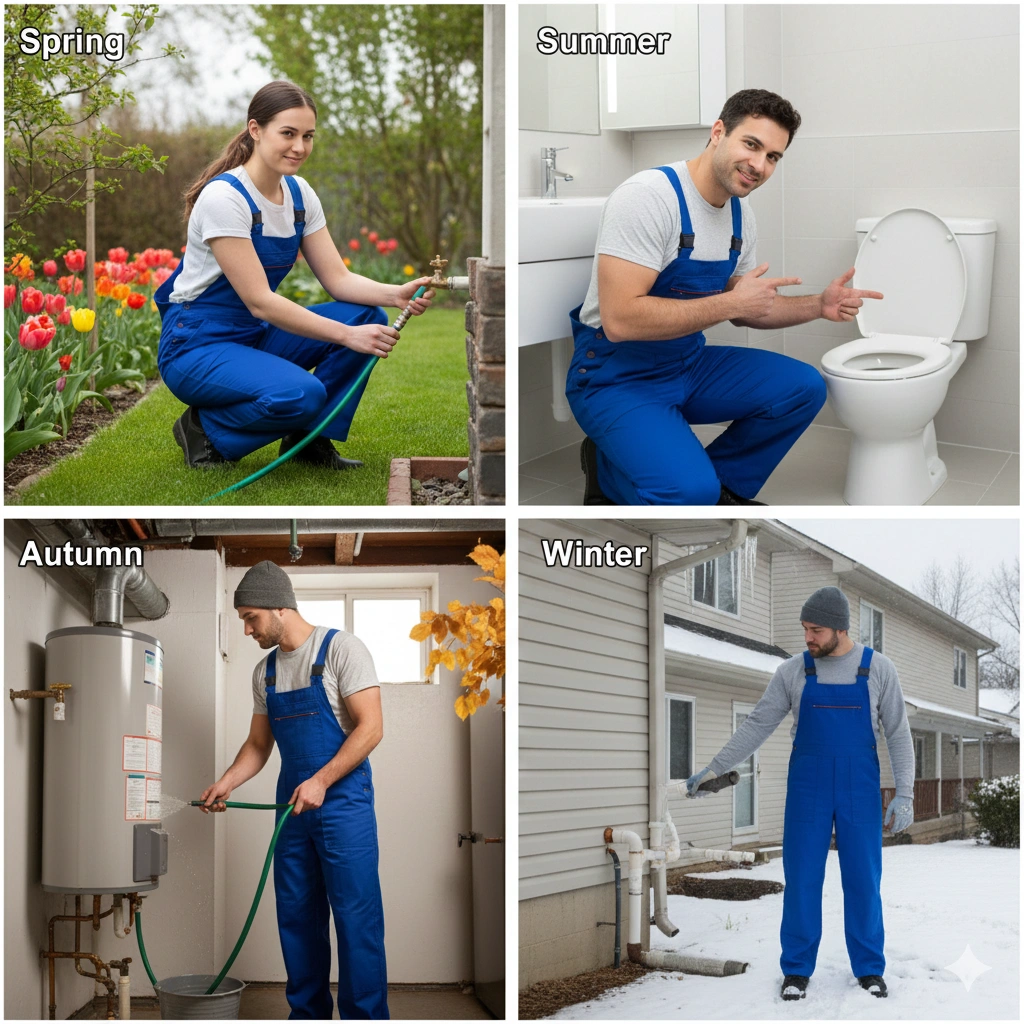
Winter Plumbing Maintenance Checklist for Canadian Homes
Winter is the most risky season for plumbing in Canada. A little preparation can prevent serious damage.
Insulating Pipes to Prevent Freezing and Bursting
Pipe insulation is easy and affordable. Foam sleeves or insulation tape can protect exposed pipes from freezing. Focus on:
- Basement pipes
- Pipes near outside walls
- Garage plumbing lines
This simple step can save you from calling plumbing services in Toronto after a pipe bursts.
Protecting Outdoor Faucets and Hose Bibs During Winter
Turn off outdoor faucets from inside the house. Drain all water and remove hoses. Use insulated faucet covers for extra protection. This prevents freezing and cracking.
Preventing Frozen Pipes in Basements, Crawl Spaces, and Garages
Keep these areas warm during winter. Open cabinet doors under sinks so warm air reaches pipes. Seal drafts near windows and doors close to plumbing lines.
Maintaining Water Flow During Extreme Cold Weather
During very cold nights, let one or two faucets drip slowly. Moving water is less likely to freeze. This tip is often given by plumbers in Canada to homeowners in winter.
Sump Pump Inspection and Winter Flood Prevention
Test your sump pump by pouring water into the pit. Make sure it turns on and pumps water out. Check the discharge pipe to make sure it is not frozen or blocked.
Identifying Early Signs of Winter Plumbing Damage
Watch for warning signs like:
- Low water pressure
- Strange pipe noises
- Damp spots on walls or ceilings
Taking action early can prevent serious damage.
Spring Plumbing Maintenance Checklist After Canadian Winters
Spring is the time to repair winter damage and prepare for rain and snowmelt.
Inspecting Pipes and Fixtures for Winter-Related Damage
Check pipes, faucets, toilets, and appliances. Look for cracks, rust, or water stains. Even small leaks should be fixed immediately.
Checking for Leaks Caused by Freeze and Thaw Cycles
Turn on taps slowly and check connections. Many leaks appear only after pipes thaw. This is when homes usually need a professional inspection.
Cleaning and Inspecting Drains After Snowmelt
Spring brings dirt, debris, and grease into drains. Clean sink and floor drains to keep water flowing smoothly.
Testing and Servicing Sump Pumps for Spring Rainfall
Heavy rain can flood basements quickly. Test the sump pump and clean the pit. Consider a battery backup in case of power outages.
Preparing Outdoor Plumbing and Irrigation Systems for Use
Reconnect hoses and test outdoor taps. Check sprinklers for leaks before using them regularly.
Summer Plumbing Maintenance Checklist for Efficient Water Use
Summer is about efficiency and preventing plumbing wear from higher water use.
Monitoring Water Usage and Detecting Hidden Leaks
Check water bills for sudden increases. Listen for running toilets and dripping taps. Fixing leaks early reduces costs.
Inspecting Outdoor Plumbing and Sprinkler Systems
Look for broken sprinkler heads or soggy spots in the yard. These may indicate underground leaks.
Maintaining Water Heaters During High-Usage Months
Flush the water heater to remove sediment. Set the temperature to a safe and efficient level. This keeps hot water reliable.
Preventing Drain Clogs from Increased Household Activity
Summer often means more cooking and guests. Do not pour grease down drains and use strainers in sinks.
Inspecting Washing Machine Hoses and Plumbing Connections
Check hoses for cracks or bulges. Replace old hoses to prevent bursts and flooding.
Fall Plumbing Maintenance Checklist to Prepare for Winter
Fall is the last chance to prepare plumbing for freezing weather.
Disconnecting and Draining Outdoor Water Lines Before Freezing
Turn off outdoor water supply valves and drain all lines. Store hoses indoors to prevent damage.
Insulating Exposed Pipes in Unheated Areas
Add insulation to pipes in garages, basements, and crawl spaces. This is one of the most effective steps to get ready for winter.
Cleaning Gutters and Downspouts to Prevent Water Backups
Clear leaves and debris so water flows away from the foundation. This lowers pressure on basement drains.
Inspecting Sewer Lines and Drains Before Winter
Slow drains or bad smells may indicate sewer problems. Fixing them before winter avoids backups during freezing weather.
Servicing Water Heaters for Cold-Weather Reliability
Check valves and flush sediment. A well-maintained heater works better during winter.
Essential Plumbing Maintenance Tasks for All Seasons
Some plumbing tasks should be done throughout the year.
Locating and Testing the Main Water Shut-Off Valve
Know where the main shut-off valve is and test it. This is very important during emergencies.
Checking Toilets, Faucets, and Fixtures for Continuous Leaks
Small leaks waste water and increase bills. Fix them as soon as they appear.
Maintaining Water Filtration and Water Softening Systems
Replace filters and check salt levels regularly. This protects pipes and appliances.
Common Plumbing Problems Caused by Skipping Seasonal Maintenance
Skipping maintenance can cause:
- Burst pipes and water damage
- Sewer backups and slow drains
- Higher utility bills from hidden leaks
- Early failure of water heaters and appliances
Many of these problems lead homeowners to urgently search for an emergency plumber in Brampton during extreme weather.
When to Call a Licensed Plumber in Canada
Call a professional if you notice:
- Repeated leaks
- No hot water
- Sewage smells or backups
- Frozen or burst pipes
Experts recommend professional plumbing inspections every one to two years. Trusted plumbing companies in Toronto can spot issues early.
Homeowners in nearby areas also look for services like plumbing services in Vaughan or plumbers in Markham when local help is required.
Final Plumbing Maintenance Checklist Summary for Canadian Homeowners
Seasonal plumbing maintenance is simple but very important. Each season brings different risks, and basic steps can prevent serious problems. Regular checks save money, lower stress, and keep your home safe.
By following this complete plumbing maintenance checklist, you lower the chance of urgent repairs and increase the lifespan of your plumbing system. A little effort each season goes a long way toward a safe and comfortable home all year.