

Your toilet backs up for the third time this month. You plunge it, maybe pour a drain cleaner down the line, and for a few days everything runs fine again, then the same slow drain and the same gurgling sound come right back. If that sounds familiar, you’re not alone. Plenty of Brampton homeowners deal with drain problems that keep returning no matter how many times they clear the blockage.
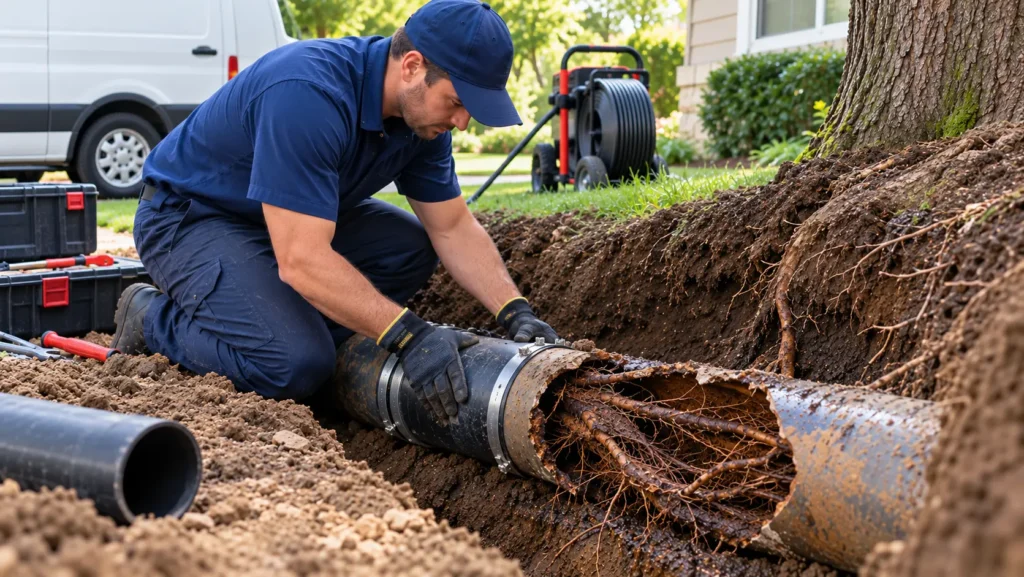
Not every recurring clog is caused by tree roots. Grease buildup, foreign objects, and aging pipes can all play a part. But Tree Roots Damage Sewer Lines in Brampton is one possible reason a sewer line keeps backing up, especially in homes with mature trees or older plumbing nearby. Knowing the early warning signs and when they’re worth a real inspection can save you from a much bigger problem later.
How Tree Roots Get Into Sewer Lines
Sewer pipes usually aren’t damaged by roots pushing straight through a solid pipe wall. In most cases, roots take advantage of a weakness that already exists.
Over time, small cracks can form around pipe joints as the surrounding soil settles or shifts with the seasons. Older clay or cast iron sewer pipes, still found under many established properties, can also develop hairline cracks simply from decades of ground movement.
Tree roots are drawn to the moisture and nutrients inside a sewer line, and once a root finds even a small gap or loose joint, it can work its way in. Fine root hairs then spread out and multiply, forming a mesh-like structure inside the pipe.
That growth doesn’t need to fill the whole pipe to cause a problem. It naturally catches toilet paper and other debris moving through the line, narrowing the opening further. A minor intrusion that started small can slowly turn into a recurring, and eventually a full, blockage.
9 Early Signs Tree Roots Are Damaging Your Sewer Line
None of these signs confirm tree-root damage on their own. They’re reasons to look closer, not proof of what’s happening underground.
1. Recurring Toilet Clogs
A toilet that clogs once usually isn’t a concern. But if the same toilet clogs again shortly after you’ve cleared it, that pattern deserves attention. Repeated clogs in one spot can point to a partial obstruction further down the line that plunging only clears temporarily.
2. Multiple Slow Drains
One slow sink is often a localized issue. But when a bathtub, sink, and toilet all start draining slowly around the same time, the cause may sit deeper in the shared drainage system rather than in any single fixture.
3. Sewage Smells
A persistent sewage odour shouldn’t be masked with air fresheners. Lingering smells can point to a venting problem, a dry trap, or a partial blockage restricting normal airflow, any of which is worth investigating rather than ignoring.
4. Gurgling Toilets or Drains
Gurgling happens when trapped air gets pushed back through the system because wastewater isn’t flowing smoothly. Occasional gurgling may mean nothing, but regular gurgling across several fixtures can indicate a restriction somewhere along the main line.
5. Blockages That Return After Drain Cleaning
Drain cleaning can clear an immediate obstruction, but it doesn’t always explain why the blockage formed in the first place. If the same section clogs again within weeks of a cleaning, that repeat pattern suggests the underlying cause hasn’t been addressed.
6. Drain Problems That Become More Frequent
A clog every year or two is different from one every few weeks. When the frequency increases over time, it often means whatever is restricting the pipe debris, buildup, or root growth is getting worse rather than staying the same.
7. Unexplained Wet or Soggy Areas in the Yard
A soggy patch of lawn can have several explanations, including irrigation, grading, or heavy rain. It doesn’t automatically mean a sewer line is leaking. Still, a wet spot that keeps appearing in the same place, especially near where a sewer line runs, is worth having checked.
8. Unusually Lush Growth Near One Area
Grass or plants that look noticeably greener in one strip of the yard are sometimes linked to extra moisture and nutrients from a leaking line underneath. This isn’t proof by itself, but it can be a useful clue alongside other signs.
9. Repeated Sewer Problems in an Older Plumbing System
Older homes don’t automatically have root damage, but aging systems have had more time for joints to shift and materials to wear. If a property with an older sewer line keeps experiencing backups, having the line professionally assessed is a reasonable next step.
What Happens If Tree Root Damage Is Ignored?
Root intrusion tends to follow a slow progression rather than sudden failure: a small intrusion narrows the pipe, flow becomes restricted, blockages return more often, the pipe condition gradually worsens around the intrusion point, and eventually a full sewer backup can occur.
That doesn’t mean every case ends in a major backup, or that it happens on a fixed timeline. But treating each clog as an isolated event, without asking why it keeps happening, gives the underlying cause more chances to grow.
Catching a problem early, while it’s still a partial restriction, generally leaves more options on the table than waiting until wastewater is backing up into the house.
Can Drain Cleaning Remove Tree Roots?
Drain cleaning can often clear roots and debris that are actively blocking a line, restoring normal flow in the short term. For many blockages, that’s exactly what’s needed.
The catch is that removing the material inside the pipe doesn’t repair whatever let the roots in to begin with. If a crack or open joint is still there, roots can regrow into the same spot, which is why some blockages keep coming back even after professional cleaning.
If a blockage clears and stays cleared, that’s often the end of it. If it returns repeatedly, that pattern suggests the pipe itself may need a closer look rather than another round of cleaning, and the right next step depends on the condition of the line, which isn’t something you can judge from the surface.
Why a Camera Inspection Matters for Suspected Root Intrusion
Symptoms like slow drains or recurring clogs can have several different causes, and guessing from the outside only goes so far. A sewer camera inspection lowers a waterproof camera directly into the line, giving a real-time view of what’s actually happening inside the pipe.
This can help identify root intrusion, cracks, broken or collapsed sections, separated joints, buildup, and other blockages, often in one visit, without digging up the yard first. It also shows exactly where a problem sits along the line, which matters for deciding what kind of repair, if any, makes sense.
The general process works like this: symptoms prompt a closer look, a camera inspection identifies what’s actually causing them, and that information determines the next step: drain cleaning, root management, a repair, or, in some cases, replacement.
A camera inspection is a diagnostic tool, not a guarantee. It can rule out or confirm several possibilities, but depending on what it finds, excavation may still turn out to be necessary for certain types of damage.
What Happens During a Professional Sewer Line Inspection?
A typical sewer inspection follows a fairly straightforward process:
- Discuss the symptoms: what’s been happening, how often, and for how long.
- Access the line: usually through an existing cleanout or another accessible point.
- Run the camera inspection: to see the actual condition inside the pipe.
- Identify the location and type of problem: whether that’s roots, a crack, a buildup, or something else.
- Discuss next steps: based on exactly what was found.
Depending on the results, recommendations could range from a straightforward drain cleaning to root management, a targeted repair, or, in more significant cases, a section replacement. The findings from the inspection are what guide that decision, not assumptions made beforehand.
How Drain Experts Plumbing Can Help With Sewer Problems in Brampton
If you’re dealing with a drain or sewer issue that keeps coming back, Drain Experts Plumbing offers a few services that fit directly into this kind of problem:
- Drain Cleaning: for clearing blockages and buildup affecting everyday flow.
- Camera Inspection: for an actual look inside the line when root intrusion or another underlying issue is suspected.
- Drain and Sewer Repair: for addressing a specific problem once an inspection identifies where it is and what it involves.
- Full Plumbing: for needs beyond a single drain, from fixture issues to broader system concerns.
- Emergency Plumbing: for urgent sewer backups that can’t wait for a scheduled appointment.
Rather than guessing at a fix, the goal is to figure out what’s actually causing the recurring problem and match the solution to it. If you’re looking for a reliable Plumber in Brampton, that’s a good place to start the conversation.
Tree Roots Damage Sewer Lines in Brampton: Repair or Replace?
There’s no single answer that applies to every property. The right approach depends on factors specific to that sewer line: how much of the pipe is affected, the overall pipe condition, where and what type of damage is, how accessible that section is, and whether the line has been repaired before.
Depending on those factors, possible approaches can include ongoing drain cleaning for minor, occasional intrusion, root management to slow regrowth, a spot repair for one damaged section, a broader sewer-line repair, trenchless methods where the site allows, or full replacement when the line is too compromised to repair.
None of these is automatically the right answer without an inspection first. A plumber who has actually seen inside the pipe is in a far better position to recommend one option than anyone guessing from symptoms alone.
How Brampton Homeowners Can Reduce Future Sewer Problems
There’s no way to guarantee roots will never reach a sewer line, but a few habits can lower the odds and help you catch problems sooner:
- Avoid flushing wipes, paper towels, or other materials not meant for the toilet.
- Keep grease and cooking oil out of kitchen drains.
- Don’t rely on repeated temporary fixes for a blockage that keeps coming back.
- Pay attention if several drains start running slow around the same time.
- Look into any sewer backup rather than just cleaning up and moving on.
- Keep a rough record of when plumbing problems happen, so patterns are easier to spot.
- Know where your sewer cleanout is located, if your property has one.
- Consider a professional inspection once a problem becomes a pattern rather than a one-off.
When Should You Call a Plumber in Brampton for Tree Root Problems?
None of the symptoms below prove that tree roots are involved, but together or repeated over time, they’re good reasons to have a professional take a look.
Consider calling a Plumber in Brampton if you’re noticing:
- Sewer backups that have happened more than once
- Several drains running slow at the same time
- Toilet clogs that keep returning
- A sewage smell that doesn’t go away
- Regular gurgling from drains or toilets
- A blockage that comes back shortly after cleaning
- Wet or unusually green patches in the yard near the sewer line
- Any sewer problem that’s become a repeated pattern rather than a one-time event
FAQs
Can tree roots damage sewer lines in Brampton?
Yes, this can happen in Brampton, as it can anywhere with sewer lines near trees or landscaping. Roots typically enter through an existing crack or separated joint rather than breaking through intact pipe, then grow inside and gradually restrict flow.
How do I know if tree roots are blocking my sewer line?
You can’t confirm it from symptoms alone. Recurring clogs, slow drains, gurgling, or odours may indicate a blockage, but a camera inspection is the most reliable way to see what’s actually inside the pipe.
Can drain cleaning remove tree roots from a sewer line?
It can often clear roots that are actively blocking the line and restore flow. It doesn’t repair the crack or joint that let them in, though, so regrowth and repeat blockages are still possible.
Can a camera inspection detect tree root damages sewer lines in Brampton?
Yes. It can typically show root intrusion along with cracks, buildup, or separated joints, and identify where along the line the problem is located.
How often should I get a sewer camera inspection?
There’s no fixed schedule for every home. It’s generally worth considering after a recurring blockage, a sewer backup, or when buying an older property with an unknown plumbing history.
Can tree roots damage a sewer line before I notice major symptoms?
Yes. Root intrusion can begin as a minor restriction that develops gradually before symptoms like slow drains or recurring clogs become noticeable.
Does Drain Experts Plumbing provide sewer and drain services in Brampton?
Yes. Drain Experts Plumbing provides drain cleaning, camera inspection, sewer and drain repair, and full plumbing services for homeowners in Brampton.
Don’t Wait for a Small Sewer Problem to Become a Major Backup
Recurring sewer or drain problems are worth investigating, since tree roots are only one of several possible causes. A professional camera inspection can show what’s actually happening inside the line, rather than leaving you to guess from symptoms alone.
Need a Plumber in Brampton? Contact Drain Experts Plumbing for drain cleaning, camera inspection, sewer and drain repair, or full plumbing assistance.