
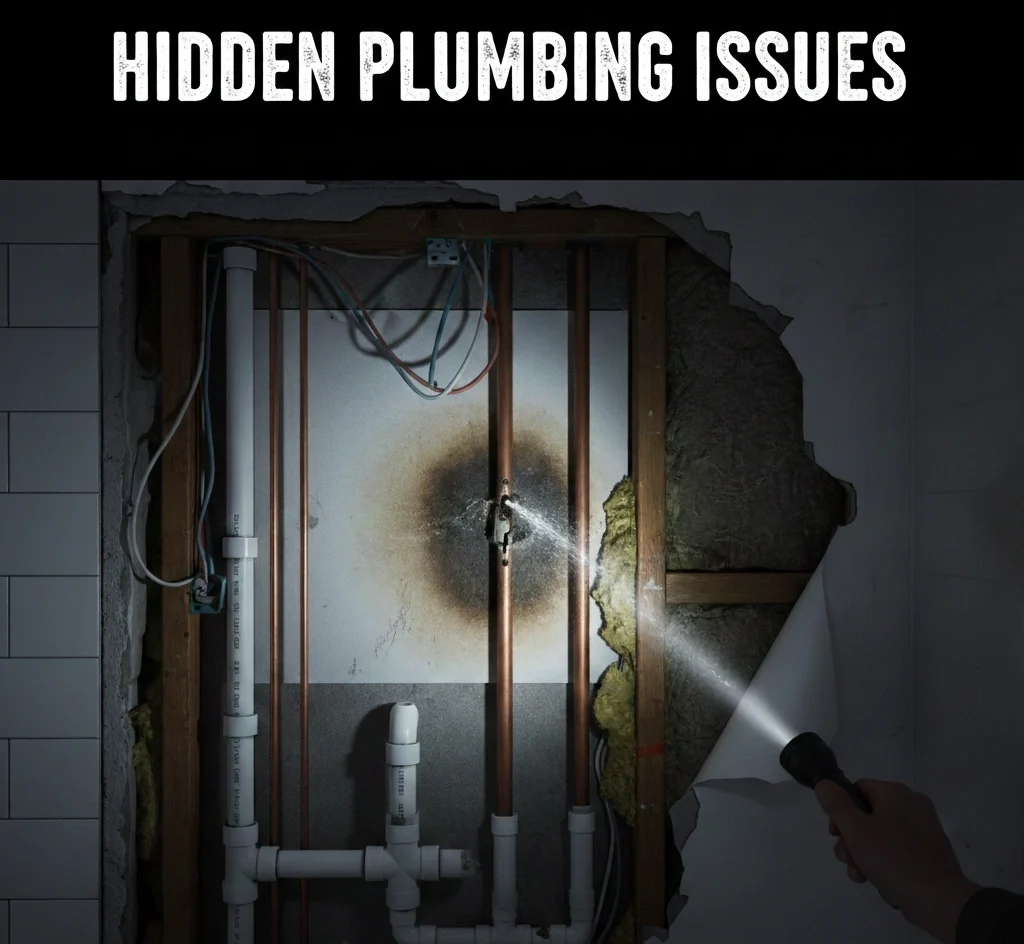
Plumbing problems are not always loud, messy, or easy to notice. Many serious plumbing issues can stay hidden for a long time before anyone realizes they exist. These are called hidden plumbing issues, and they can slowly cause damage to your home or building without giving clear signs. Most pipes are installed behind walls, under floors, or below the ground. Because of this, undetected plumbing problems can grow quietly and eventually lead to major repairs.
Hidden water leaks, slow pipe damage, or blocked drains often start very small. At first, they might only waste a little water or create slight dampness. Over time, they can weaken walls, ruin floors, lead to mold growth, and increase water bills. This guide explains these problems in simple language so beginners and homeowners can understand what is happening and know what to do next.
What Are Hidden Plumbing Issues and Why Are They Hard to Detect
Hidden plumbing issues are problems inside your plumbing system that are not easy to see. Most plumbing pipes are installed inside walls, ceilings, concrete slabs, or underground. Because these areas are hidden, problems can exist for months or even years before showing any clear signs.
These problems are hard to detect because:
- Pipes are covered by drywall, tiles, or concrete.
- Small leaks do not drip immediately.
- Water can travel far before showing damage.
- Early signs often look like normal wear and tear.
Visual checks often fail because nothing appears broken at first. A slow leak might release only a few drops per hour, but over time, those drops soak wood, insulation, and concrete. These slow problems usually remain hidden until stains, smells, or structural damage appear. By that time, repairs are often bigger and more expensive.
Why Undetected Plumbing Problems Are a Serious Risk for Homes and Buildings
Hidden plumbing problems are not harmless. Even small leaks can cause serious trouble if ignored. The longer a plumbing issue remains unnoticed, the more damage it can create.
Major risks include:
- Structural damage: Water can weaken wood, drywall, and concrete. Floors may sag, walls may crack, and ceilings may collapse.
- Higher water bills: A hidden leak can waste hundreds of liters of water every day without your knowledge.
- Mold and bacteria growth: Damp areas behind walls are perfect places for mold, which can affect indoor air quality and your health.
- Costly repairs: Fixing a small leak early is inexpensive, but fixing water-damaged walls, floors, and foundations is costly.
For both homes and businesses, these risks grow over time. That is why understanding and addressing hidden plumbing leaks early is extremely important.
Common Hidden Plumbing Issues Found in Residential and Commercial Properties
There are many types of plumbing problems that remain hidden. Some are more common in homes, while others occur more often in larger buildings. Below are the most frequent issues that plumbers discover during inspections.
Hidden Water Leaks Behind Walls and Ceilings
A very common problem is hidden leaks behind walls or inside ceilings. These leaks usually come from loose pipe joints, cracked pipes, or old materials.
Common causes include:
- Old or worn-out pipe connections.
- High water pressure puts stress on pipes.
- Temperature changes cause pipes to move.
Early warning signs:
- Yellow or brown stains on walls.
- Peeling paint or bubbling wallpaper.
- Musty odors in some rooms.
Materials affected:
- Drywall.
- Wooden studs.
- Insulation.
Since water spreads inside the wall, the damage can become significant before you notice it.
Slab Leaks Under Concrete Foundations
A slab leak happens when a pipe breaks under a concrete foundation. These hidden leaks under foundations are very dangerous because they affect the building’s structure.
Slab leaks stay unnoticed because:
- The pipe is buried under concrete.
- Water spreads beneath the slab.
- Damage develops slowly.
Possible damage includes:
- Cracked floors or tiles.
- Warm spots on the floor.
- Shifting foundation.
Slab leaks require professional tools and fast action to prevent major structural repairs.
Silent Toilet Leaks and Hidden Fixture Failures
Toilets can leak without making any noise or showing water on the floor. These silent toilet leaks usually occur inside the tank.
Common issues:
- Worn flapper valves.
- Faulty fill valves.
- Loose tank bolts.
Even though nothing looks wrong, water continues to flow into the bowl. This results in high water bills and wasted water every day.
Corroded Pipes Hidden Inside Walls and Floors
Older homes often have metal pipes that slowly rust from the inside. This is known as hidden pipe deterioration.
Problems caused by corrosion:
- Reduced water pressure.
- Discolored or metallic-tasting water.
- Small pinhole leaks.
Since corrosion happens inside the pipe, there are usually no visible signs until the pipe begins to leak.
Underground Sewer Line Problems and Tree Root Intrusion
Sewer lines run underground, which makes problems very hard to notice. Tree roots naturally grow toward moisture and can break into pipes.
Signs people often miss:
- Slow drainage in multiple fixtures.
- Gurgling noises.
- Bad smells outside.
You may also see wet patches or sinking soil in your yard. These indicate hidden sewer line issues.
Partially Blocked Drains and Hidden Drain Line Buildup
Not all clogs stop water completely. Some blockages grow slowly over time.
Common causes:
- Grease buildup.
- Soap residue.
- Hair and debris.
Why drains still appear normal:
- Water still flows, but slower than usual.
- Blockage is deep in the pipe.
Warning signs include sinks draining slowly and odors that come and go.
Early Warning Signs of Hidden Plumbing Issues You Should Never Ignore
Even hidden problems leave small clues. Knowing these signs can help you act early and prevent major damage.
Unexplained Increase in Water Bills
If your water bill rises suddenly and your water usage has not changed, there could be a hidden leak somewhere in your plumbing system.
Musty Odors, Mold Growth, and Persistent Damp Smells
A damp, earthy smell usually indicates water trapped behind walls or under floors. Mold growing in unusual areas is a serious warning sign.
Discolored Walls, Ceilings, or Peeling Paint
Water stains, bubbling paint, or peeling surfaces often point to water stains on walls caused by plumbing leaks.
Warm Spots, Damp Floors, or Soft Flooring Areas
Warm or soft floors can be a sign of a slab leak, especially if hot water pipes are involved.
Unusual Plumbing Noises or Running Water Sounds
Hearing water when nothing is turned on may indicate a leak inside the walls or under the floors.
Low or Fluctuating Water Pressure in Fixtures
Sudden changes in water pressure may signal leaks, pipe corrosion, or blockages.
Hidden Plumbing Issues in Commercial Buildings and Large Facilities
Commercial buildings have higher risks because their plumbing systems are bigger and more complex. Hidden leaks can affect offices, restaurants, warehouses, and apartment buildings.
Common challenges include:
- Long pipe networks.
- Multiple restrooms and fixtures.
- Higher water pressure.
Undetected problems can disrupt business operations, damage equipment, and create safety issues. Many businesses rely on professional plumbing services in Markham to manage these risks properly.
How Hidden Plumbing Issues Are Detected by Professional Plumbers
Modern plumbing uses advanced tools to find problems without breaking walls or floors.
Thermal Imaging for Hidden Water Leaks
Thermal cameras detect temperature differences caused by hot or cold water leaks behind walls or floors.
Acoustic Leak Detection for Concealed Pipes
Special listening devices can hear water escaping from pipes, even if they are underground or hidden.
Pressure Testing for Hidden Supply Line Leaks
Pressure tests show whether water is escaping from pipes that are supposed to be sealed.
CCTV Camera Inspections for Drain and Sewer Lines
Small cameras travel inside pipes to locate cracks, root intrusions, and blockages.
How to Prevent Hidden Plumbing Problems Before They Cause Damage
Preventing plumbing problems is always cheaper than repairing damage. Simple steps can reduce risk:
- Schedule regular plumbing inspections.
- Monitor your water bills closely.
- Fix small issues as soon as they appear.
Homeowners often hire plumbers in Toronto and nearby cities like Vaughan, Brampton, and Markham for routine inspections.
When to Call a Professional Plumber for Hidden Plumbing Issues
You should call a professional if you notice:
- Ongoing leaks.
- Moldy smells.
- Unexpectedly high water bills.
Trying DIY fixes can delay proper repairs. Many people trust the best plumbers in Toronto or an emergency plumber when they need urgent assistance.
Final Thoughts on Identifying and Addressing Hidden Plumbing Issues Early
Hidden plumbing issues are easy to ignore but difficult to fix once they get worse. Learning the warning signs and acting early can save money and protect your home. Whether you need plumbing in Vaughan, Toronto, Brampton, or Markham, working with experienced plumbing companies ensures that problems are detected before they grow. Acting quickly is always the smartest choice.