
A slow kitchen sink, a shower that pools around your ankles, or a drain that clogs again a few weeks after clearing: these problems are frustrating, and they rarely have a single cause. In many Mississauga homes, rental properties, and commercial kitchens, the real question isn’t whether to clear the drain, but how.
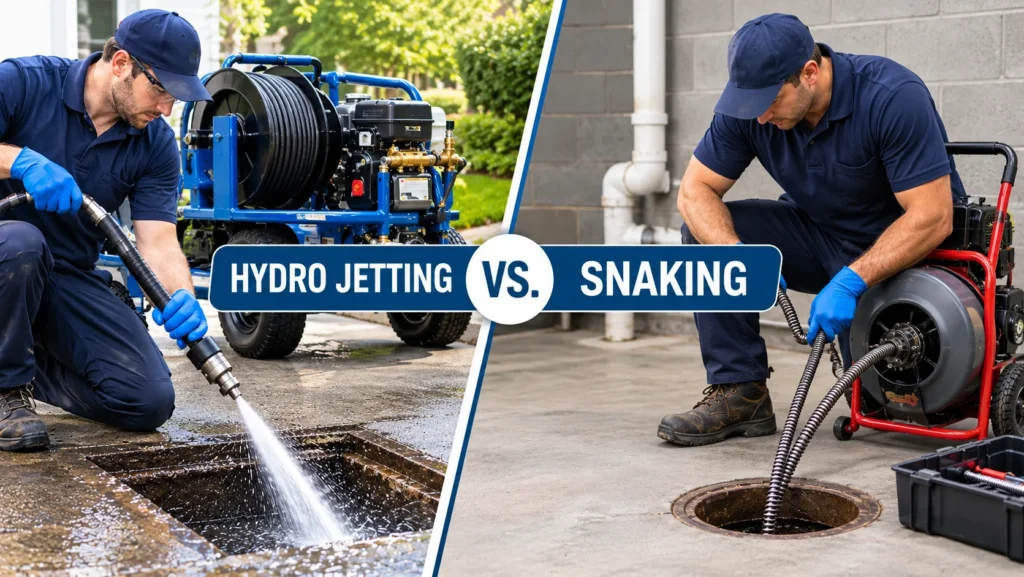
Hydro jetting vs. snaking for Mississauga drain cleaning depends on the type of blockage and the pipe material. Snaking breaks through or retrieves a specific obstruction. Hydro jetting washes away built-up deposits along a longer stretch of pipe. This guide explains how each method works, where each fits best, what to consider about older pipes and cost, and how to prevent clogs from returning.
What Is Drain Snaking and How Does It Work?
Drain snaking, also called augering, uses a flexible metal cable that is fed into the drain line. A hand-cranked or motorized drum rotates the cable, and a suitable attachment on the end, such as a tip that bores into a clog or one that hooks and retrieves debris, works at the blockage.
Common applications
Snaking is typically used for blockages in a sink, shower, bathtub, or toilet branch line.
It can address:
- Hair and soap buildup in a bathroom drain
- Food debris lodged in a kitchen drain
- Small objects that have slipped down a drain
- Soft, compacted material forming a plug in one spot
Advantages and limitations
For a localized clog, snaking is direct and efficient. The plumber reaches the obstruction, breaks it up or pulls it out, and flow returns.
The limitation is coverage. A snake tends to punch a channel through a blockage rather than clean the entire pipe wall. If grease, sludge, or mineral deposits coat the pipe, the drain may run freely for a while and then slow down again as buildup narrows the opening.
A realistic example: A Mississauga family notices their bathtub draining slowly. There are no other problems in the house, and the tub is the only fixture affected. A hair-and-soap clog near the tub’s trap is a likely cause, and snaking is a sensible first step because the problem is confined to one spot.
What Is Hydro Jetting and How Does It Work?
Hydro jetting uses controlled, high-pressure water delivered through a hose and specialized nozzle. The nozzle is guided into the drain line, and the water streams scour the inside of the pipe, breaking up deposits and flushing them toward the main drain or sewer.
Where it is most useful
Because the water contacts the pipe walls, hydro jetting suits situations where the problem is accumulated residue rather than a single obstruction:
- Grease that has cooled and hardened inside kitchen drain lines
- Sludge and scale along the pipe walls
- Gradual buildup that keeps narrowing the pipe
- Certain suitable sewer lines that need broader cleaning
For recurring blockages caused by deposits, this wider cleaning action can make a meaningful difference. If you are searching for hydro jetting in Mississauga, it helps to know that the method requires professional equipment and a trained operator.
Why pipe condition matters first
High-pressure water is not appropriate for every pipe. Before jetting, a plumber should consider the pipe material, its age, and any signs of cracks, corrosion, or loose joints. Pressure settings and nozzle choice are adjusted to the situation, and in some cases a different approach is the safer choice.
Hydro Jetting vs. Snaking: Key Differences
Snaking often targets one particular obstruction, while hydro jetting can clean accumulated deposits from a larger section of a suitable pipe. Neither is automatically better; each answers a different problem.
| Factor | Drain Snaking | Hydro Jetting |
| How it works | A rotating cable with an attachment breaks through or retrieves an obstruction | High-pressure water streams scour the inside of the pipe |
| Blockages addressed | Hair, soap, food debris, small objects, localized clogs | Grease, sludge, scale, and general buildup; some suitable sewer line cleaning |
| Cleaning coverage | Mainly the point of the clog | A longer section of pipe wall |
| Recurring clogs | May provide only short-term relief if deposits remain | Can help when buildup is the cause; won’t fix structural problems |
| Equipment and water | Compact equipment; minimal water | Specialized pump and hose equipment; uses a notable volume of water and needs appropriate access and drainage |
| Pipe suitability | Generally used on a wide range of pipes, with care | Requires assessment of pipe material, age, and condition |
| Relative cost | Often lower for a simple, localized blockage | Often higher due to equipment and setup |
| Limitations | Can leave residue on pipe walls; may not suit heavy buildup | Not suitable for every pipe; won’t remove all root intrusions or repair damage |
When Is Drain Snaking the Right Choice?
Snaking may be appropriate when:
- A single bathroom or kitchen drain is clogged
- The obstruction is something that can be loosened or retrieved mechanically
- The blockage appears straightforward, with no signs of extensive buildup elsewhere in the system
A plumber may recommend snaking first because it is less intensive and often resolves a simple clog. If the drain clears and stays clear, there may be no reason to go further.
A household example: A homeowner in Mississauga drops a small hair accessory into a bathroom sink, and the drain stops almost immediately. Since the problem began suddenly and affects only one sink, a plumber can use a snake with a retrieval attachment to pull the item out.
That said, if the same drain slows again within weeks, that pattern suggests something more than a one-time obstruction.
When Is Hydro Jetting the Better Option?
Hydro jetting may be worth considering when:
- Substantial grease has accumulated in a suitable kitchen drain line
- Sludge or residue coats the pipe walls
- Clogs keep returning because of deposits
- A suitable sewer line needs more extensive cleaning
Residential example: A Mississauga household has had its kitchen drain snaked several times over the past year, and it keeps slowing down. Years of cooking oil and food residue may have built up along the pipe, so a plumber might assess the line and, if it is suitable, recommend jetting to clean the interior more thoroughly.
Commercial example: A small restaurant in Mississauga sends greasy wash water down its drain every day. Even with good habits, grease can accumulate over time in the lines, making periodic professional cleaning a practical part of maintenance.
When cleaning isn’t the whole answer
Recurring clogs aren’t always about buildup. Tree roots, damaged pipes, displaced joints, and other structural problems can also cause repeated blockages. In those cases, cleaning may offer only temporary relief. An inspection, specialized root removal, or a repair may be needed to address the underlying cause.
Is Hydro Jetting Safe for Older or Damaged Pipes?
It depends on the pipe. Several factors affect whether hydro jetting is appropriate:
- Material: Different pipe materials respond differently to pressure and cleaning tools.
- Age and corrosion: Older pipes may be weakened or scaled.
- Cracks and joint condition: Existing damage can be worsened by aggressive cleaning.
- Previous repairs: Patched or relined sections may need extra care.
This is why a professional assessment matters. A drain camera inspection lets a plumber see inside the pipe and judge what is causing the problem, what condition the line is in, and which method is suitable.
It’s also important to understand that neither hydro jetting nor snaking repairs structurally damaged pipes. They clear blockages and remove deposits. A cracked, collapsed, or misaligned pipe will need repair or replacement regardless of how clean it is. No method is safe for every system, and the right choice depends on what the plumber finds.
Hydro jetting vs. snaking for Mississauga drain cleaning: Cost Determination
For a straightforward, localized blockage, snaking often costs less. Hydro jetting may cost more because it involves specialized equipment, setup, and typically more time.
Several factors influence the final price of either method:
- Location and severity of the blockage: A clog near a fixture is different from one deep in a main line.
- Length and accessibility of the drain line: Difficult access can add time and complexity.
- Extent of accumulated deposits: Heavier buildup takes more effort to remove.
- Inspection requirements: A camera inspection adds a step but can prevent guesswork.
- Pipe condition and additional work: Damage or access issues may require extra work.
Because these variables differ from one property to the next, it’s hard to quote a meaningful figure without seeing the situation. A clear estimate based on an accurate diagnosis is worth more than the lowest quote for the wrong method. Paying less for a quick fix that doesn’t last can end up costing more than doing it properly once.
How to Choose the Right Drain Cleaning Service in Mississauga
Choosing a method shouldn’t be a guess. A sensible process looks like this:
- Assess the symptoms and affected drains: One slow fixture points to a local problem; several slow drains point to a shared line.
- Identify the likely blockage and decide whether inspection is needed: Repeated clogs or unusual symptoms often justify a camera look.
- Evaluate pipe condition and access: Material, age, and layout affect which tools are appropriate.
- Select snaking, hydro jetting, or another suitable solution: The method should match the findings, not the other way around.
- Confirm that drainage has improved and explain any further concerns: A good plumber will verify flow and tell you about anything that needs follow-up.
When you’re comparing plumbing services in Mississauga, look for a provider who explains why they recommend one approach over another and who is open about the limits of each. If you’d like more detail on professional options, you can read about Drain Cleaning in Mississauga.
Practical Tips to Prevent Recurring Drain Clogs
Good habits reduce how often you’ll need any kind of drain cleaning:
- Keep grease and oil out of the drain: Let cooking fat cool, then dispose of it in the garbage or a suitable container instead of rinsing it down the sink.
- Use strainers: Catch hair in showers and food particles in kitchen sinks.
- Avoid flushing wipes and similar items: Products labelled “flushable” can still collect in pipes and cause blockages.
- Get an assessment if clogs keep coming back: Repeated blockages are a signal worth investigating rather than clearing again and again.
- Plan maintenance around your usage and pipes: A busy commercial kitchen has different needs than a small household, and a plumber can advise on a suitable schedule based on your system’s condition.
Frequently Asked Questions
1. Is hydro jetting better than snaking for every clogged drain?
No. Snaking is often enough for a simple, localized clog, while hydro jetting is better suited to buildup along the pipe. The best choice depends on the blockage and the pipe’s condition.
2. Can hydro jetting remove grease from kitchen drains?
It can be effective for grease and residue in suitable kitchen drain lines because the water cleans the pipe walls. The pipe should be assessed first to confirm that jetting is appropriate.
3. Why does my drain keep clogging after snaking?
Snaking may clear the immediate obstruction without removing deposits on the pipe walls. Recurring clogs can also point to roots, damage, or misaligned joints, which is why an inspection can be useful.
4. Should a camera inspection be performed before hydro jetting?
Often, yes. A camera inspection helps show pipe condition and the nature of the blockage, which supports a safer and more informed decision. Your plumber can advise whether it’s needed in your case.
5. Which drain cleaning method is right for Mississauga homeowners?
It depends on the symptoms. A single slow drain may only need snaking, while repeated clogs or heavy buildup may call for inspection and possibly hydro jetting. A professional assessment is the most reliable way to decide.
6. Can drain cleaning repair damaged sewer pipes?
No. Snaking and hydro jetting clean pipes but do not fix cracks, collapses, or displaced sections. Structural damage requires repair or replacement.
Conclusion
The main difference is simple: snaking typically addresses a specific obstruction, while hydro jetting cleans accumulated deposits across a larger section of a suitable pipe. Which one makes sense depends on the blockage, the pipe’s condition, and how much buildup is present. Neither is the right answer every time, and neither repairs damaged pipes.
If a drain in your Mississauga home or business keeps slowing down or clogging, an accurate diagnosis is the best starting point. Drain Experts Plumbing can help you explore your options, and you can find more information on the Drain Cleaning in Mississauga page whenever you’re ready.