

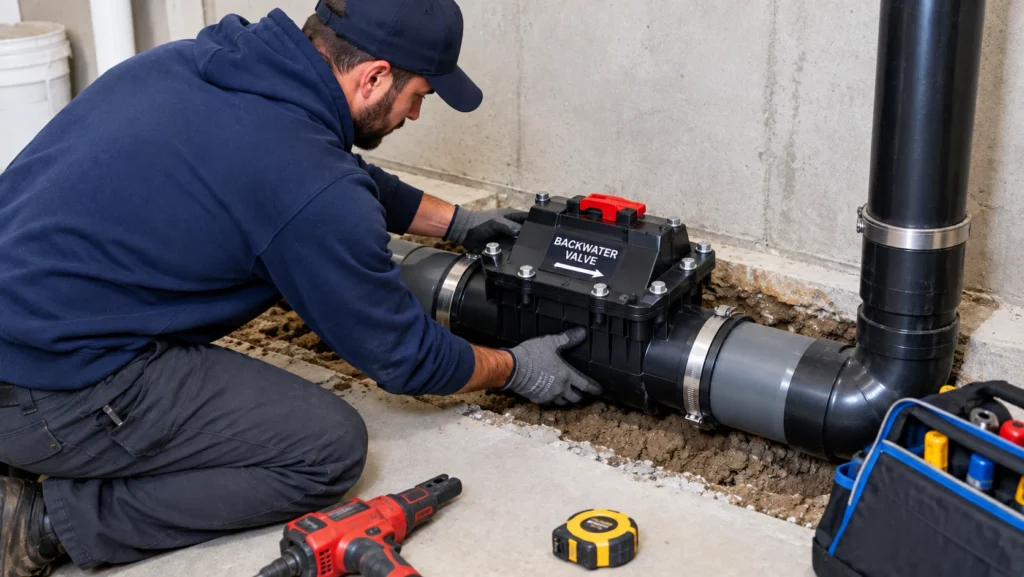
Sewage in a basement is one of the worst things a homeowner can deal with. It’s messy, it can be unsafe, and it often damages finished spaces, belongings, and mechanical equipment in a matter of minutes. If you’ve had a backup before, or you’re worried about the next big storm, a backwater valve is one of the most practical protections you can add to your home’s drainage system.
This guide explains how backwater valves work, what they can and can’t do, how installation goes, and what Toronto homeowners should know about permits and subsidies. It comes from the team at Drain Experts Plumbing, who handle drain and sewer problems for Toronto homes. If you’d like a property-specific opinion at any point, you can request a Backwater Valve Installation in Toronto assessment.
What Is a Backwater Valve?
A backwater valve is a one-way valve installed on your home’s main Sewer Line inspection, usually in the basement floor or near where the line leaves the house. Wastewater from your toilets, sinks, showers, and laundry flows out through it as normal. If sewage starts flowing the wrong way, from the municipal sewer back toward your home, the valve closes and blocks it.
Think of it as a check valve for your drains. It stays open during everyday use and closes only when the flow reverses.
Installation matters as much as the device itself. The valve has to be the right type for your plumbing, placed correctly, sealed properly, and accessible for future maintenance. A poorly placed valve can cause its own problems, from drainage issues to a valve that can’t be inspected or cleaned.
How Does a Backwater Valve Prevent Sewer Backup?
Normally, gravity carries wastewater from your home through the sewer lateral (the pipe connecting your house to the street) and into the city’s sewer main. During intense rainfall, or when a main line is overloaded or blocked, the water level in the sewer can rise. Without protection, that sewage can push back up your lateral and out through the lowest openings in your home, typically floor drains, basement showers, and toilets.
A backwater valve has a flap or gate that closes when reverse flow occurs. That keeps sewage on the outside of your home.
A backwater valve is a protective device, not a cure-all. It won’t stop groundwater seeping through foundation walls, and it won’t fix a clogged or broken sewer pipe on your property. When the valve is closed, water from your own fixtures can’t drain out either, so you’ll need to limit water use until conditions clear.
Why Backwater Valve Installation Matters in Toronto
Backwater valve installation in Toronto comes up often because of how the city’s drainage works. Many older neighbourhoods are served by aging infrastructure, and heavy rainfall can push sewer systems past what they were designed to handle. When that happens, sewage can back up into connected homes.
Several factors can raise the risk of sewer backup:
- Intense rainfall: Sudden downpours put a lot of water into the system quickly.
- Sewer capacity: Combined or overloaded sewers can surcharge during storms.
- Older homes: Older drainage lines may have been built without backflow protection, and materials like clay or cast iron can crack, shift, or corrode over time.
- Blockages and damaged lines: A partially blocked or collapsed lateral makes backups more likely.
- Tree roots: Roots can enter small cracks and joints in sewer pipes, then grow into blockages.
- Drainage problems: Poor grading, failing weeping tile or clogged drains can add to basement water problems.
We’re not going to claim that any particular street or neighbourhood is more or less at risk. Conditions vary from one property to the next, and even from one house to its neighbour. A plumbing assessment of your own lines is far more useful than a generalization.
Signs Your Toronto Home May Need a Backwater Valve
Some warning signs point toward a drainage vulnerability, or a problem you should get looked at:
- A previous sewer backup
- Repeated backups from basement drains
- Gurgling sounds from drains or toilets
- Slow drains, especially on the lowest level
- Sewage odours near floor drains or the laundry area
- Water coming up through a floor drain during heavy rain
- Older drainage systems with no backflow protection
- Previous basement flooding
- General concern about sewer backflow, especially if you have a finished basement
None of these automatically means you need a backwater valve. Slow drains, for example, are often just a local clog. A professional assessment can tell you whether backflow protection makes sense, or whether the real issue is somewhere else in your system.
How Backwater Valve Installation in Toronto Works
Every house is different, but a professional installation generally follows these steps:
- Plumbing and drainage assessment: We look at how your home drains, where the main line exits, and what’s finished or hidden around it.
- Choosing the location: The valve has to go on the right part of the line, with enough room to be reached later for cleaning and inspection.
- Sewer and drain evaluation: Before adding a valve, it helps to know the line is in reasonable condition.
- Camera inspection in Toronto homes, when appropriate: A small waterproof camera is fed into the Sewer Line inspection so we can see the pipe from the inside. It can show blockages, roots, sagging sections, cracks, and offset joints, which is helpful when the line’s condition or layout is unclear.
- Backwater valve installation: This usually involves cutting into the floor and existing line, setting the valve, restoring the connection, and repairing the floor where needed.
- Testing and inspection: The valve and connections should be checked to confirm it operates and seals correctly. In Toronto, installation is also subject to permit and inspection requirements (more on that below).
- Maintenance guidance: You should leave knowing where the valve is, how to access it, and what upkeep it needs.
If you’re not sure what’s happening in your Sewer Line inspection, a camera inspection can save guesswork. It’s often better to know before you invest in protection.
Do You Need a Backwater Valve or Sewer Line Inspection Repair?
This is where a lot of homeowners get confused, because several different problems look alike from inside the house.
- Backwater protection stops sewage from flowing back in from outside. It doesn’t clear your own pipes.
- Drain cleaning removes buildup or clogs in drain lines.
- A Sewer Line inspection blockage can come from grease, debris, roots, or a collapsed pipe, and it needs to be cleared or repaired.
- Tree-root intrusion happens when roots enter through cracks and joints, and it often returns unless the pipe is repaired.
- Damaged sewer pipes (cracked, collapsed, or misaligned) may need Sewer Line inspection, repair,r or replacement.
- Camera inspection is how we tell these apart.
A backwater valve is not a substitute for repairing a damaged or severely blocked Sewer Line inspection. If your line is failing, adding a valve won’t fix the underlying problem, and in some cases it can make a blockage more noticeable. That’s why diagnosing first matters. Sometimes a valve is exactly what you need. Sometimes you need drain cleaning or a repair first, or in addition.
Backwater Valve vs. Sump Pump: What’s the Difference?
People often mix these up, but they protect against different things.
- Backwater valve: protects against wastewater and sewer backflow coming through your home’s connected drainage lines.
- Sump pump: collects groundwater around your foundation’s drainage system and pumps it away from the house.
If sewage is coming up your floor drain during a storm, that’s a backwater valve question. If groundwater is seeping in at the foundation or the sump pit is filling, that’s a sump pump question. Some homes are exposed to both risks, so depending on your circumstances, you may benefit from more than one form of water protection.
Toronto Backwater Valve Permit and Subsidy Information
- Permits: In Toronto, a building permit is required to install a backwater valve, and the installed valve is inspected by a City building inspector. The City also advises homeowners to confirm their plumber holds a valid City of Toronto business licence before work starts. Requirements can change, so check the City’s current rules or ask your plumber how they’ll handle the permit and inspection.
- Subsidy: Toronto offers a Basement Flooding Protection Subsidy Program that may help offset some of the cost of installing a backwater valve. At the time of writing, the City’s page lists a subsidy covering up to 80 per cent of the invoiced cost, to a maximum of $1,600 per device, for up to two devices, including eligible labour, materials and taxes. Amounts, eligible property types, inspection rules and funding availability can change, and earlier work was covered under different limits.
- Please treat those figures as a snapshot, not a promise: Verify current eligibility, requirements, and amounts directly with the City of Toronto before starting work. We can’t guarantee that any homeowner will qualify. If you’re planning around the subsidy, ask about the permit and inspection steps upfront.
Why Choose Drain Experts Plumbing for Backwater Valve Installation in Toronto?
Choosing a plumber for this kind of work comes down to whether they’ll look at the whole picture, not just sell you a device.
At Drain Experts Plumbing, we focus on:
- Professional assessment: We start by understanding how your drainage system is set up and what’s causing your concern.
- Drain and sewer expertise: Backwater valves sit on the Sewer Line inspection, so knowing how those systems behave matters.
- Camera inspection in Toronto homes: When the condition of the line is unclear, we can look inside it before recommending next steps.
- Diagnosis before recommendations: We’d rather identify the actual problem than suggest work you don’t need.
- Backwater valve installation in Toronto as part of a broader plan to protect your basement.
- Residential plumbing support: Homes rarely have just one plumbing issue, and we can help with related work.
- Clear communication: You should understand what we found, what your options are, and why.
- Toronto-focused service: We work with the drainage conditions and requirements that Toronto homeowners deal with.
If you’d like a second opinion on a backup problem, or you’re comparing options, we’re happy to have that conversation.
Full Plumbing Services for Toronto Homes
Sewer backup protection is rarely a one-item job. A home with backup problems may also have a clogged line, aging pipes, a worn sump pump, or basement plumbing that needs attention. That’s why many homeowners look for Full Plumbing services from one team rather than coordinating several trades.
Depending on what your assessment shows, related work may include drain cleaning, Sewer Line inspection inspection, sewer repair, general plumbing repairs, basement plumbing, sump pump services, emergency plumbing, and backwater valve installation. If you’re looking for a dependable Plumber in Toronto to handle these needs together, that page outlines the broader services we provide for Toronto homes.
How Much Does Backwater Valve Installation Cost in Toronto?
We won’t give you a fixed number here, because any generic price online is a guess. The cost of a backwater valve installation in Toronto depends on your home.
Common factors include:
- Your existing plumbing configuration
- How accessible the main line is
- The installation location
- The type of valve
- Any excavation or concrete cutting and repair needed
- Plumbing modifications required to fit the valve properly
- The condition of the Sewer Line inspection
- Additional repairs uncovered during inspection
- Permit and inspection requirements
A basement with an exposed main line is a very different job from a finished basement with the line under a concrete slab. The best way to get a real number is a property-specific assessment. Ask what’s included, whether the permit and inspection are part of the quote, and whether any repairs are separate.
How to Maintain a Backwater Valve
A backwater valve only protects you if it works when you need it.
Practical upkeep includes:
- Inspect it regularly: Check it on a schedule that follows the manufacturer’s recommendations.
- Keep access clear: Don’t block or cover the access cover with storage, flooring, or finishes.
- Look for debris: Lint, grease, wipes, and other buildup can keep the flap from sealing.
- Check that it operates: Follow the manufacturer’s instructions for confirming the valve moves and seals properly.
- Clean only as directed: Some cleaning is straightforward, but Sewer Line inspections can hold contaminated water and gases, so don’t take apart a valve you’re unsure about.
- Call a professional if something’s off: If the valve looks damaged, doesn’t close, or moves stiffly, get it inspected.
The manufacturer’s guidelines and your installer’s advice come first. Inspection frequency can vary by model.
What to Do During a Sewer Backup
If sewage is coming into your home:
- Minimize water use: Avoid running sinks, showers, dishwashers, and laundry.
- Don’t flush unnecessarily: More water can make the backup worse.
- Stay away from contaminated water: Keep children and pets out, and avoid direct contact.
- Watch for electrical hazards: Don’t touch outlets, appliances, or panels if water is near them. If in doubt, stay out and call a professional.
- Contact a qualified plumber: Explain what’s happening so they can assess the cause.
- Call Toronto 311 where appropriate: If you suspect a problem with the municipal sewer, 311 can direct the report.
If there’s any immediate danger to people, call emergency services.
Frequently Asked Questions About Backwater Valve Installation in Toronto
What is a backwater valve?
A backwater valve is a one-way valve installed on a home’s Sewer Line inspection. It lets wastewater flow out normally but closes if sewage tries to flow back toward the house. It’s a protective device that helps reduce the risk of sewer backup into the basement.
Does a backwater valve stop sewer backup?
A properly installed and maintained backwater valve can help stop sewage from flowing back into your home from the municipal sewer. It doesn’t prevent all basement flooding, and it won’t fix a blockage or damage in your Sewer Line inspection.
How much does backwater valve installation cost in Toronto?
There’s no single price. Cost depends on your plumbing layout, access, valve type, floor and concrete work, sewer-line condition, and permit and inspection requirements. A property-specific assessment gives you a realistic figure and shows whether other repairs are needed.
Does Toronto require a permit for a backwater valve?
Yes. Toronto requires a building permit to install a backwater valve, and the work is subject to inspection. Requirements can change, so confirm current rules with the City of Toronto or ask your plumber how they handle permits.
Is there a Toronto subsidy for backwater valve installation?
Toronto has a Basement Flooding Protection Subsidy Program that may help with the cost. Eligibility, amounts, and rules can change, and there’s no guarantee you’ll qualify. Check the City of Toronto’s current program details before you begin work.
How often should a backwater valve be maintained?
Follow the manufacturer’s recommendations for your specific valve, which vary by model. As a general rule, it should be inspected regularly, kept accessible, and checked for debris and proper operation. Have it looked at promptly if it’s damaged or not working.
Can a camera inspection find sewer problems?
Yes. A sewer camera inspection lets a plumber see inside the line to identify blockages, tree roots, cracks, sagging sections, and other issues. It’s especially useful when the cause of a backup is unclear or before deciding on repairs.
Can a backwater valve fix a blocked Sewer Line inspection?
No. A backwater valve blocks reverse flow from the sewer; it doesn’t clear a blockage or repair a damaged pipe. A blocked or broken line needs drain cleaning, repair, or replacement, depending on what an inspection shows.
Protect Your Toronto Home From Sewer Backup
Sewer backup protection is about reducing risk before the next heavy rain, not after. A backwater valve can be a valuable safeguard against sewage flowing back into your basement. Still, it works best when it’s installed in a properly assessed line, and you know its limits.
That’s why professional assessment matters. It tells you whether you need a valve, a Sewer Line inspection, repair, drain cleaning, a sump pump, or some combination. Drain Experts Plumbing can help you sort that out and, where it makes sense, install the protection your home needs.
If you’re thinking about backwater valve installation in Toronto, or you’ve had a backup and want to understand why, contact Drain Experts Plumbing to request an assessment.