

Introduction: Is Hard Water a Problem for Brampton Homes?
You’ve probably seen it: a white, crusty ring around the base of a faucet, a cloudy film on shower glass, or a kettle that scales up faster than it should. For many homeowners, these small annoyances are the first hint of hard water.
Hard water in Brampton is a common topic for good reason. Most of the city’s drinking water comes through the Region of Peel from Lake Ontario, and lake-sourced water across the GTA often carries dissolved minerals. That’s not a health concern, but over time, minerals can leave deposits inside plumbing. So the real question is how much it affects your particular home.
This guide explains what hard water is, whether it can damage pipes, how to spot the warning signs, and what to do about it. It should be useful whether you handle small fixes yourself or eventually call a pro.
What Is Hard Water?
Hard water is simply water with a higher concentration of dissolved minerals, mainly calcium and magnesium. These minerals get picked up as water moves through soil and rock before it reaches a treatment plant.
Hard water is not the same as contaminated water. Treated municipal water that meets health standards can still be hard. The minerals aren’t a safety issue. They’re a nuisance, and over time a maintenance issue.
How Mineral Deposits Form
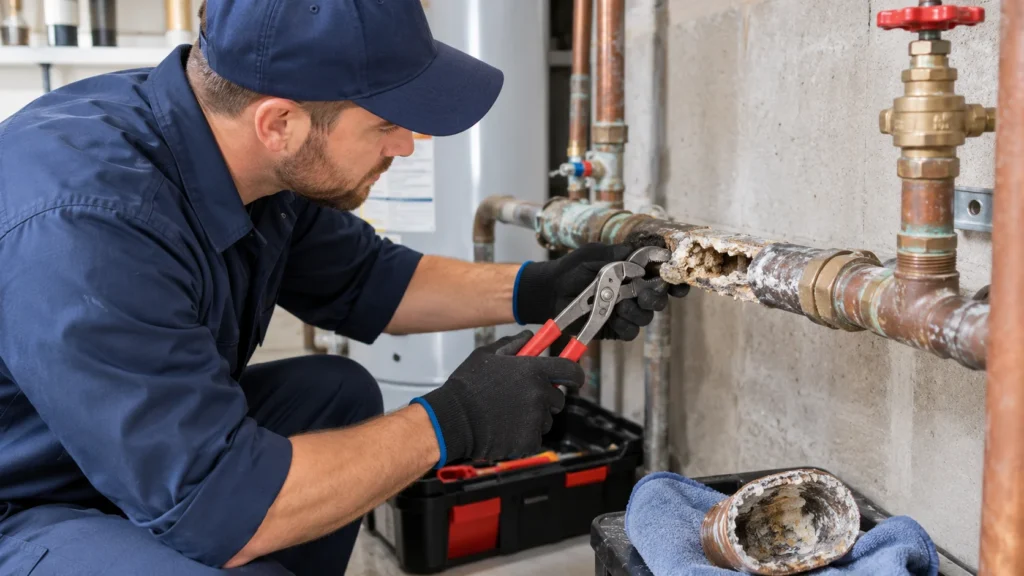
When hard water heats up or evaporates, the dissolved minerals come out of solution and form a solid layer called scale. Health Canada explains that water hardness is primarily associated with dissolved calcium and magnesium, and that hard water can contribute to scale formation in plumbing and household equipment.
You see it as:
- White or grey crust on faucets and showerheads
- Spots on dishes and glassware
- A chalky coating on the heating element or inside the tank of a water heater
The same process can happen slowly inside pipes, especially on the hot-water side.
Why Hardness Varies
Water hardness is usually measured in milligrams per litre (mg/L) or grains per gallon. As a rough guide, water below about 60 mg/L is considered soft, 60 to 120 mg/L moderately hard, 120 to 180 mg/L hard, and above that very hard.
Levels can shift by season, by source, and by which part of the water system serves your street. For that reason, avoid assuming your home matches a neighbour’s or a city-wide average. The Region of Peel publishes water quality information, and a simple test kit or a professional test will tell you what’s coming out of your taps.
Can Hard Water Damage Pipes?
Hard water can affect plumbing over time, but it doesn’t automatically “destroy” pipes. How much it matters depends on several factors.
How Scale Affects a Plumbing System
Scale builds up in thin layers. In fixtures and appliances, that’s easy to see. Inside pipes, it happens out of view.
Over the years, buildup can:
- Narrow the inside of a pipe, reducing flow and pressure
- Clog aerators, showerheads, and small valve openings
- Coat water heater elements and tank bottoms, forcing the unit to work harder
- Make valves, shutoffs, and cartridges stiffer or prone to sticking
- Give debris something to catch on, which can contribute to recurring blockages in drain lines
What Determines How Much Damage Occurs
Whether scale becomes a real problem depends on:
- Pipe material: Copper, galvanized steel, PEX, and older materials behave differently. Older galvanized pipes, for example, are more prone to internal restriction from corrosion and buildup.
- Age of the plumbing: The longer water has been flowing, the more time deposits have had to accumulate.
- Water temperature: Heat speeds up scale formation, so hot-water lines and water heaters tend to be affected first.
- Water chemistry: Hardness is only one factor. pH and other characteristics also influence scaling and corrosion.
- Existing conditions: A pipe that’s already corroded, poorly installed, or partially blocked will show problems sooner.
So the honest answer: hard water can contribute to reduced flow, appliance strain, and plumbing maintenance headaches, particularly in older homes or with untreated hot-water systems. It isn’t a guaranteed pipe-killer, and many homes live with moderately hard water for decades. What matters is catching the signs early.
7 Signs Hard Water May Be Affecting Your Plumbing
- White or chalky mineral deposits: Crusty buildup on faucets, drains, and around fixtures is the classic sign.
- Reduced water flow: If flow has slowly declined over months or years, scale in aerators, showerheads, or pipes may be part of the cause.
- Buildup around faucets and showerheads: Clogged spray holes and uneven streams are easy to check. If cleaning them restores flow, that points to mineral buildup.
- Water heater scale: Rumbling, popping, or knocking noises from the tank, longer heat-up times, or less hot water than you used to get can all indicate sediment and scale.
- Recurring drain problems: Hard water isn’t usually the sole cause of clogs, but mineral scale combined with soap residue, hair, and grease can create stubborn buildup. If slow drains keep coming back, professional drain cleaning may be the right first step, followed by a look at the underlying cause.
- Increased plumbing maintenance: Frequently replacing aerators, cartridges, or appliance parts may be a clue that minerals are wearing things down faster than expected.
- Changes in water pressure: A gradual drop, especially on hot-water lines or at several fixtures, can point to restriction. A sudden drop is more often a valve, leak, or supply issue and deserves prompt attention.
One symptom on its own doesn’t prove hard water is the culprit. A pattern of several is more telling.
Hard Water vs. a Clogged Drain: Are They Connected?
These two problems are often confused, and they’re not the same thing.
- Mineral scale comes from dissolved minerals in your supply water. It typically affects fixtures, hot-water systems, and the inside of supply pipes.
- Drain blockages are more often caused by things going down the drain: hair, soap scum, grease, food residue, wipes, debris, or tree roots getting into an underground line.
They can overlap. Scale and soap residue can roughen the inside of a drain line and help other material stick. But most clogged drains are not caused by hard water alone.
When Drain Cleaning Makes Sense
Professional drain cleaning is appropriate when you have:
- A single slow or blocked drain that plunging doesn’t clear
- Gurgling sounds or odours coming from drains
- Multiple fixtures draining slowly
- Water backing up in a tub, shower, or floor drain
If a blockage keeps returning after it’s been cleared, that’s a sign to investigate further rather than simply clearing it again. A recurring clog usually has a cause: a damaged section, a belly in the pipe, roots, or heavy buildup.
How Can You Tell If Hard Water Is Affecting Your Pipes?
You can gather a lot of information without any tools.
Start with simple checks:
- Look for visible scale on faucets, showerheads, and appliances that use water.
- Monitor water flow. Compare pressure at different fixtures. Is it low everywhere, only on hot, or only at one tap?
- Check hot-water performance. Note noises, slow recovery, or reduced hot water volume.
- Track recurring symptoms. Keep a short list of what happens, where, and how often. This helps a plumber diagnose faster.
- Test your water hardness with a home test strip or a lab or professional test.
When a Professional Inspection Helps
If symptoms persist or the cause isn’t obvious, a plumbing inspection can help sort out whether you’re dealing with scale, a partial blockage, a failing valve, or something else.
For drain and sewer lines, camera inspection in Brampton is one of the most useful diagnostic tools. A small waterproof camera on a flexible cable travels through the line so a plumber can see what’s happening inside.
It can help identify:
- Internal blockages or heavy buildup
- Cracks, offsets, or collapsed sections
- Root intrusion
- Grease accumulation or foreign objects
- The exact location of a problem, so repairs are targeted
To be clear, camera inspection isn’t needed for every hard-water concern. If your only symptom is spotty glassware or a scaled-up kettle, testing your water is the sensible first step. A camera becomes valuable when drains keep backing up, when you suspect damage underground, or when you’re buying or renovating an older home.
How to Fix Hard Water in Brampton
There isn’t a single fix, since the right approach depends on how hard your water is and what symptoms you’re seeing.
Here are the main options.
- Water hardness testing: Know your numbers before spending money. It tells you whether treatment is worthwhile.
- Water softeners: A water softener removes calcium and magnesium (typically by ion exchange) before water reaches your plumbing. It’s the most direct way to address hardness itself, and it can reduce scale in fixtures and hot-water systems. Softeners need proper sizing, installation, and regular maintenance such as refilling salt. They’re a whole-home solution for water conditions.
- Cleaning fixtures and aerators: Unscrew faucet aerators and showerheads and soak them in white vinegar for a few hours to dissolve deposits. It’s inexpensive and often restores flow right away.
- Water heater maintenance: Flushing the tank periodically helps remove sediment. Check the manufacturer’s guidance for how often, and have the anode rod inspected as recommended. If you’re unsure about doing this yourself, a plumber can handle it.
- Professional plumbing inspection: If you’ve cleaned fixtures and flow is still poor, or you’re seeing drainage issues, a plumber can check for restrictions, leaks, or aging pipes.
Softening vs. Drain Cleaning
These are two different services solving two different problems:
- A water softener treats the hardness of the water coming into your home.
- Drain cleaning clears blockages in the lines carrying wastewater out.
One doesn’t replace the other. A softener won’t clear a clogged drain, and drain cleaning won’t make your water soft.
Can Drain Cleaning Remove Hard Water Buildup?
Partly, in a limited way. Drain cleaning can clear blockages and restrictions in drain lines, including some buildup that’s contributing to slow flow. Methods like cabling or hydro jetting remove material inside the drain pipe.
What it can’t do is change your water. Your supply will still be hard, and scale can continue to form in fixtures, water heaters, and hot-water lines. Drain cleaning also isn’t designed to descale supply piping inside walls.
If the same drain keeps slowing down after cleaning, it’s time to look deeper. It might be the pipe itself, a slope issue, roots, or a combination of factors. Diagnosing the underlying cause saves you from paying for the same repair repeatedly.
When Should You Call a Plumber in Brampton?
DIY steps are fine for cleaning aerators and testing your water, but some signs mean it’s time to call a professional.
Consider contacting a Plumber in Brampton if you notice:
- Repeated clogged drains, especially in the same spot
- Persistent low water pressure
- Water backing up in tubs, showers, or floor drains
- Significant mineral buildup that returns quickly
- Leaks, drips, or damp spots near pipes
- Multiple fixtures with reduced flow at once
- Any suspected pipe problem, such as discolouration, noises, or a sudden change in performance
Water backups and leaks in particular shouldn’t wait. They can lead to property damage and are usually easier and cheaper to address early.
Drain Experts Plumbing provides drain cleaning, plumbing inspections, and camera diagnostics for homeowners across Brampton and the surrounding GTA. The goal is a clear answer about what’s happening in your pipes and the simplest, sensible fix, not a bigger job than you need.
Hard Water Prevention Tips for Brampton Homeowners
A little routine care goes a long way:
- Test your water hardness once, and again if you notice changes.
- Clean faucet aerators and showerheads every few months.
- Remove mineral deposits from fixtures with vinegar before they harden.
- Maintain your water heater by flushing it and having it checked on schedule.
- Monitor water pressure. Note changes rather than ignoring them.
- Address slow drains early, before a partial clog becomes a full backup.
- Consider appropriate water treatment if testing shows very hard water and you’re seeing ongoing effects.
- Arrange a professional inspection when problems keep recurring.
Avoid relying on harsh chemical drain openers as a routine fix. They can be hard on pipes and aren’t effective against every type of blockage.
Frequently Asked Questions
1. Is the water in Brampton hard?
Brampton’s water comes through the Region of Peel, and water from Lake Ontario is generally considered moderately hard to hard. Actual hardness can vary by location and over time, so check the Region of Peel’s published water quality information or test your own tap water.
2. Can hard water damage pipes?
It can contribute to buildup that restricts flow and strains water heaters, fixtures, and valves over time. It doesn’t automatically destroy pipes. The effect depends on pipe material, age, water temperature, and overall plumbing condition.
3. How do I know if hard water is causing my plumbing problems?
Look for a pattern: chalky deposits, declining flow, scaled aerators, water heater noise, and reduced hot water. Testing your water hardness and having a plumber inspect the system can confirm whether hard water is a factor or something else is going on.
4. Can hard water cause clogged drains?
Not usually on its own. Most drain clogs come from hair, grease, soap, and debris. However, mineral scale can roughen pipe surfaces and contribute to buildup, so it may play a supporting role.
5. Does drain cleaning fix hard water?
No. Drain cleaning clears blockages in drain lines. It doesn’t soften your water or stop scale from forming elsewhere in the system.
6. Do I need a water softener in Brampton?
Not necessarily. It depends on your water’s hardness, your plumbing and appliances, and whether you’re seeing scale-related problems. Testing your water is the best first step.
7. When should I call a Plumber in Brampton?
Call when you have repeated clogs, water backups, persistent low pressure, leaks, or several fixtures with reduced flow. Recurring problems that DIY cleaning doesn’t solve are also a good reason to book an inspection.
Concerned About Hard Water or Pipe Problems in Brampton?
If you’re dealing with recurring drain trouble, stubborn mineral buildup, weak water flow, or a plumbing problem you can’t quite pin down, you don’t have to guess.
Drain Experts Plumbing can help you work out what’s actually going on. Depending on your situation, that might mean drain cleaning to clear a blockage, a plumbing inspection to check for restrictions or leaks, camera inspection in Brampton to see inside your drain lines, or general plumbing troubleshooting to track down the source of an ongoing issue.
Visit drainexpertsplumbing.ca or get in touch with the team to talk through what you’re seeing. Straightforward answers now can prevent bigger repairs later.