
Every commercial kitchen produces grease. Fryers, grills, dish pits, and prep sinks all send fats, oils, and grease (FOG) down the drain, along with food particles and soap. Once that mixture cools inside the pipes, it thickens, sticks to the walls, and narrows the line a little more each week. For restaurants, cafés, bakeries, and caterers, this is one of the most common causes of slow drains, odours, and backups in the middle of service.
That is why grease trap & commercial kitchen drain cleaning in Toronto matters for more than convenience. The City regulates how food service establishments maintain their interceptors, and the rules are specific. This guide explains how grease traps work, what causes buildup, how to spot trouble early, what Toronto requires for servicing, and when a recurring problem calls for a professional assessment.
What Is a Grease Trap and How Does It Work?
A grease trap, also called a grease interceptor, is a device installed on kitchen drain lines to catch fats, oils, and grease before they reach the sewer. Smaller units sit under or near sinks. Larger gravity grease interceptors are underground tanks. Both keep FOG out of the building’s drain lines and the City’s sewer system, where it can harden and cause blockages.
How Grease Traps Separate Grease from Wastewater
The principle is simple: grease is lighter than water. Wastewater flows in and slows down, so the grease floats to the surface while heavier food solids settle at the bottom. Relatively clear water in the middle moves out to the sewer.
This only works while the unit has room. Once grease and solids take up too much of the tank, wastewater rushes through, and grease starts slipping past into your drain lines. That is why servicing frequency matters.
Which Commercial Kitchens Need Grease Traps?
According to the City of Toronto’s Environmental Code of Practice, food service establishments must install, operate, and maintain a grease interceptor on any pipe that connects directly or indirectly to a sanitary sewer. The type and size depend on the establishment, its plumbing configuration, and applicable Toronto requirements, including the Sewers By-law. If you are unsure what applies to your space, confirm with the City.
Common Causes of Grease Buildup in Commercial Kitchen Drains
Most grease-related problems come from a handful of everyday habits. Understanding them makes grease drain cleaning easier to plan, and often less frequent.
Cooking Oil, Fat, and Grease Disposal
Pouring fryer oil or pan drippings down a sink is the classic culprit. Hot oil looks harmless going down, but it cools in the pipe and coats the walls. Small amounts, repeated daily across a busy shift, add up quickly.
Food Scraps, Soap, and Dishwashing Residue
Rice, pasta, coffee grounds, and sauce residue bind with grease to form dense, sticky deposits. Detergent does not dissolve grease permanently; it can carry it further along the line, where it cools and sets again. A dish pit without strainers loads a drain with solids fast.
Heavy Kitchen Usage and Inadequate Maintenance
A high-volume kitchen simply produces more FOG. Add skipped cleanings or an undersized unit, and the system falls behind. Recurring blockages here are rarely bad luck. They usually mean the maintenance schedule no longer matches the workload.
Warning Signs Your Grease Trap or Kitchen Drain Needs Cleaning
Kitchens often get warnings before a full backup:
- Slow drainage at sinks, floor drains, or dishwashers
- Unpleasant odours from drains or near the interceptor
- Gurgling sounds as water moves through the line
- Recurring clogs that return shortly after being cleared
- Visible grease or a thick, solid cap inside the interceptor
- Wastewater backups into sinks or onto floors
It helps to separate two problems. A full interceptor usually shows up as odour, heavy grease at the top of the unit, and slow drainage at the fixtures connected to it. A blockage deeper in the system looks different: water still backs up after the interceptor has been serviced, or fixtures unrelated to the kitchen are affected. The first is a servicing issue. The second means the drain line itself needs investigating.
How Often Should Commercial Grease Traps Be Cleaned in Toronto?
There is no single answer, because Toronto’s requirements depend on the type of device. The details below reflect the City’s grease interceptor maintenance guidance, last updated in May 2026. Rules can change, so check the page before setting your schedule.
Toronto Grease Interceptor Maintenance Requirements
Hydro-mechanical grease interceptors (grease traps) must be serviced whichever of these comes first, unless the City permits a different frequency: every four weeks, before grease and solids combined reach 25 per cent of the interceptor’s liquid volume, or before the volume of FOG exceeds the unit’s rated capacity.
The City may allow a longer interval, up to eight weeks, if your records show grease and solids combined stay under 25 per cent of liquid volume during the first four weeks.
Gravity grease interceptors must be pumped out before FOG and solids exceed 25 per cent of the tank’s liquid volume. That is a capacity-based rule, not the four-week schedule used for hydro-mechanical units.
Servicing means removing the entire contents, cleaning the unit, and inspecting its components. Only establishments with low FOG output and no stove or fryer may service their own interceptors. Everyone else must use a professional waste carrier approved by the Ministry of the Environment, Conservation and Parks.
Factors That Affect Cleaning Frequency
Beyond the legal minimums, a few practical factors decide how fast an interceptor fills: fryer-heavy menus, busy lunch rushes or large catering events, a unit that is undersized for demand, and poor plate scraping. If your unit is routinely near the 25 per cent mark before its scheduled date, the schedule needs tightening.
Why Maintenance Logs Matter
Toronto requires owners and operators to keep accurate records of interceptor servicing and off-site disposal at the establishment for at least seven years. Service contracts, receipts, and invoices can all count. Kitchens that service their own interceptors must keep maintenance logs on-site.
Records do more than satisfy an inspector. They show how quickly your unit really fills, which is the evidence you would need to request a longer interval, and they help you spot a worsening trend before it becomes a backup.
Professional Grease Trap and Commercial Kitchen Drain Cleaning Process
Interceptor servicing and drain-line cleaning are separate jobs. Pumping out a trap does not clear a blocked pipe, and clearing a pipe does not empty the trap. Not every kitchen needs every step below.
Step 1 — Assess the Drainage Problem
The process starts with questions. Which fixtures are slow? Is the problem constant or only at peak hours? Past service records and the kitchen’s layout help show whether the issue sits at the interceptor or downstream.
Step 2 — Inspect the Grease Trap or Interceptor
The technician checks how much grease and solids the unit holds, whether baffles and fittings are intact, and whether flow in and out looks normal. The estimated fill level is noted for your records.
Step 3 — Remove Grease and Clean the Unit
The entire contents are removed, not just the surface layer, and the unit is cleaned and inspected. Under Toronto’s rules, this work and the disposal of the waste go through a Ministry-approved waste carrier unless the establishment qualifies for manual servicing.
Step 4 — Clear Connected Drain Lines
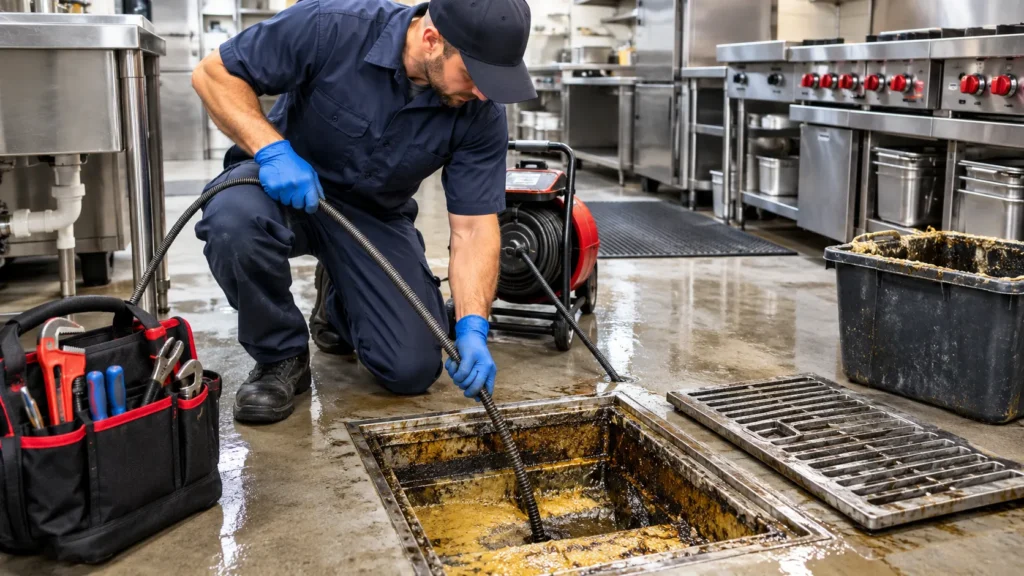
If grease has already travelled past the interceptor, the lines need attention. Mechanical cleaning, such as cabling or jetting, removes buildup from pipe walls. The City also requires that blocked private lines be flushed and vacuumed with a Ministry-approved flusher truck, with waste hauled by an approved carrier. When the cause is unclear, a camera inspection can show where the restriction sits.
Step 5 — Check Flow and Document Maintenance
Flow is tested at affected fixtures to confirm water moves freely. The kitchen should then receive documentation of the work, the unit’s condition, and a recommended service interval, ready to file with its other records.
Kitchen Drain Maintenance Tips to Prevent Grease Blockages
Consistent kitchen drain maintenance costs far less than an emergency call, and most of it happens before anything reaches the pipe. The City also publishes kitchen and outdoor practices guidance for food service establishments.
Keep Fats, Oils, and Grease Out of Sinks
Collect used fryer oil in sealed containers for pickup by an approved carrier. Wipe greasy pots and pans with a paper towel before washing, and use absorbent material for spills under fryers and on floors.
Scrape Plates and Use Sink Strainers
Scrape plates into compost or garbage before they reach the dish pit. Toronto requires strainers on sink drains, so make sure they are in place and emptied during the shift, not just at closing.
Clean Interceptors and Kitchen Equipment on Schedule
Put servicing dates on a visible calendar and treat them like health inspections. Exhaust hoods and filters trap grease too, so clean them routinely.
Train Employees on Grease Disposal
Toronto requires regular staff training, documented and kept on-site for at least seven years, plus signs saying “no fats, oils, or grease down the drain” throughout the kitchen. A short onboarding session and a written closing checklist go a long way.
Avoid Chemical Shortcuts
It is tempting to reach for drain cleaner or a kettle of boiling water. The City specifically advises against using bleach, enzymes, bacteria, solvents, or hot water to move grease through an interceptor. They only loosen grease temporarily, and it can harden again further down the line.
When Is Professional Commercial Drain Cleaning Necessary?
Routine upkeep handles most day-to-day issues. Bring in a professional when several drains are slow at once, blockages return soon after being cleared, wastewater backs up even though the interceptor was recently serviced, or odours persist after cleaning.
These patterns usually point to a restriction deeper in the system, such as heavy grease deposits, a damaged section, or a partial blockage a standard cable cannot reach. A drain camera inspection can show the pipe’s condition and pinpoint the problem, so the fix is targeted rather than guesswork.
When grease buildup leads to recurring clogs or slow drainage, professional Drain Cleaning in Toronto can help identify the blockage and determine an appropriate cleaning method. Acting early also matters because the City can charge back costs it incurs from a grease-blocked sewer to those responsible.
The Business Benefits of Regular Grease Trap and Drain Maintenance
Preventive maintenance will not eliminate every problem, but it changes how a kitchen runs. Scheduled servicing is easier to plan around than a Saturday-night backup, and regular cleaning removes the decomposing material behind many kitchen odours. Catching buildup early lowers the risk of grease-related backups and keeps the working environment cleaner for staff. Service logs support better maintenance planning and show compliance if the City asks. Keeping grease out of your lines also protects your plumbing and the City’s sewer infrastructure downstream.
Frequently Asked Questions About Commercial Kitchen Drain Cleaning in Toronto
Is a grease trap mandatory for restaurants in Toronto?
Generally, yes. Toronto’s Sewers By-law requires food service establishments to install, operate, and maintain a grease interceptor on pipes connected directly or indirectly to a sanitary sewer. Confirm your specific situation with the City.
How is grease trap & commercial kitchen drain cleaning in Toronto done?
Hydro-mechanical traps must be serviced every four weeks, or sooner if grease and solids reach 25 per cent of liquid volume. Gravity interceptors are pumped out before reaching that 25 per cent threshold.
Can hot water or chemicals prevent grease blockages?
No. The City advises against hot water, bleach, enzymes, bacteria, or solvents. They only break grease up temporarily, and it can harden again further down the pipe.
What is the difference between grease trap cleaning and kitchen drain cleaning?
Grease trap cleaning empties and cleans the interceptor itself. Kitchen drain cleaning clears the pipes connected to it. A kitchen can have a freshly serviced trap and still need its lines cleared.
When should a Toronto restaurant call a professional drain cleaner?
Call when multiple drains are affected, clogs keep returning, wastewater backs up, or odours persist after interceptor servicing. These signs often point to a restriction deeper in the drainage system.
Keeping Toronto Commercial Kitchen Drains in Reliable Condition
Reliable kitchen drainage comes down to four habits: servicing interceptors on the schedule Toronto requires, disposing of grease correctly, training staff, and addressing slow drains before they become backups. None of it is complicated, but it has to be consistent and documented.
If your kitchen deals with recurring clogs that regular maintenance has not solved, a closer look at the lines themselves may help. Drain Experts Plumbing offers Drain Cleaning in Toronto, and you are welcome to explore the service page to see whether it fits your situation.