

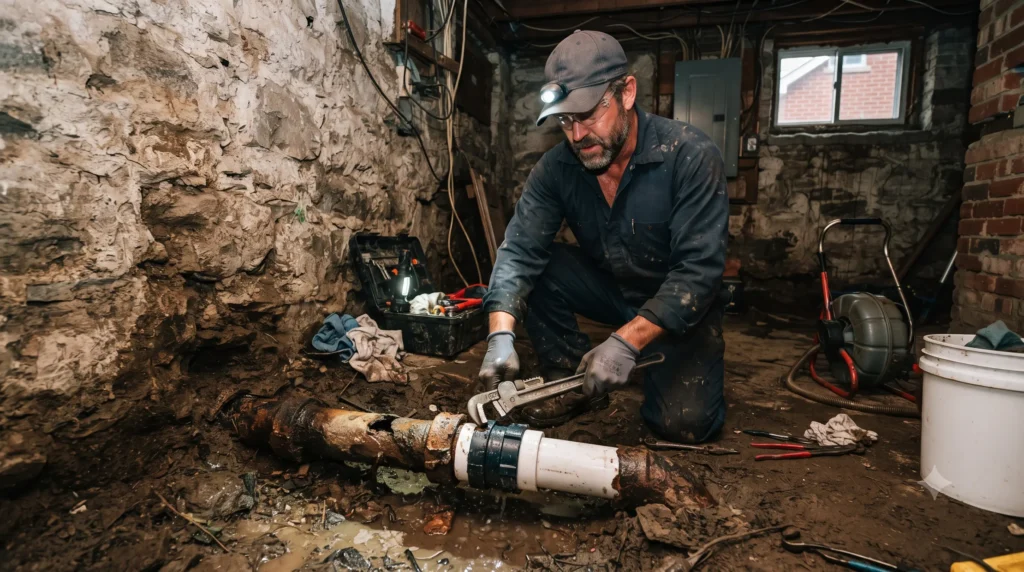
If you own a home in one of Toronto’s established neighbourhoods, there’s a good chance your sewer line is older than you are. Many properties in areas like Cabbagetown, The Annex, Riverdale, Leslieville, and the Beaches were built between the 1900s and 1960s, long before modern plastic piping became standard. That means the sewer lateral connecting your home to the city’s main sewer is often still made of clay, cast iron, or even Orangeburg (a bitumen-fibre pipe used mid-century). These materials weren’t built to last a century, and decades of ground movement, tree growth, and freeze-thaw cycles have taken a toll.
Sewer line problems in Toronto’s older homes rarely appear out of nowhere. They tend to build slowly a slow drain here, a faint odour there until one day you’re dealing with a basement backup during a spring thaw or a summer downpour. Catching the warning signs early can mean the difference between a routine drain cleaning and a full sewer line replacement. This guide walks through the most common issues affecting aging Toronto infrastructure, how to spot them, and what to do before they turn into costly emergencies.
Why Older Toronto Homes Experience More Sewer Line Problems
A few factors make sewer line problems more common in Toronto’s older housing stock than in newer suburban builds.
- Aging clay and cast iron pipes: Clay sewer pipes were standard through the early-to-mid 20th century because they resisted chemical corrosion, but they’re brittle and prone to cracking under pressure. Cast iron, used in many homes built through the 1950s and 60s, corrodes from the inside out over time, narrowing the pipe and roughening its interior surface.
- Toronto’s older neighbourhoods: Streets in mature parts of the city were laid out around mature tree canopies and shallow original infrastructure. Many sewer laterals sit closer to the surface than modern code would allow, putting them directly in the path of root systems and seasonal ground shifts.
- Ground movement and weather conditions: Toronto’s freeze-thaw cycles cause the soil around underground pipes to expand and contract repeatedly each winter and spring. Over decades, this movement stresses pipe joints and can crack even well-installed sewer lines.
- Growing tree root systems: Toronto’s tree-lined streets are a big part of what gives older neighbourhoods their character, but mature roots are also relentless in seeking out moisture, and a sewer line is often the most reliable water source nearby.
- Toronto homeowner resource: The City of Toronto’s Basement Flooding Protection Subsidy Program provides information about eligible basement flooding protection measures, including sump pumps and backwater valves.
Together, these conditions explain why sewer line problems in Toronto’s older homes show up more often, and more severely, than in newer construction.
11 Sewer Line Problems in Toronto’s Older Homes
1. Tree Root Intrusion
- What it is: Roots infiltrating the sewer line through small cracks or loose joints, eventually filling the pipe.
- Why it happens: Roots are drawn to the moisture and nutrients inside a sewer line, especially in leafy, established neighbourhoods.
- Warning signs: Slow-draining fixtures, recurring backups in the same spot, gurgling toilets.
- Potential risks: Left unchecked, roots can fully block or crack the pipe, leading to sewage backup into the home.
- Recommended solution: A camera inspection in Toronto to locate the intrusion, followed by root cutting, hydro jetting, or targeted drain repair.
2. Cracked Sewer Pipes
- What it is: Fractures in the pipe wall caused by age, pressure, or ground shifting.
- Why it happens: Brittle clay pipes and corroded cast iron are especially vulnerable to cracking under the weight of soil and vehicle traffic above.
- Warning signs: Soggy patches in the yard, sinkholes near the foundation, sewage odours outdoors.
- Potential risks: Cracks allow soil and roots to enter, worsening blockages and potentially undermining the pipe’s structural integrity.
- Recommended solution: Depending on severity, trenchless pipe lining or a full sewer line repair may be needed.
3. Pipe Corrosion
- What it is: Internal deterioration of cast iron or galvanized pipe material.
- Why it happens: Decades of exposure to wastewater gradually rusts and erodes the pipe’s interior.
- Warning signs: Discoloured water, reduced water flow, frequent minor clogs.
- Potential risks: Corroded pipes narrow over time and can eventually develop holes, leading to leaks and soil contamination.
- Recommended solution: A camera inspection to assess pipe condition, with replacement recommended once corrosion is advanced.
4. Collapsed Sewer Lines
- What it is: A section of pipe that has caved in, fully blocking wastewater flow.
- Why it happens: Often the end stage of long-term corrosion, root damage, or soil erosion around an aging pipe.
- Warning signs: Complete drainage failure, sudden sewage backup, a noticeable dip in the lawn above the pipe’s path.
- Potential risks: A collapsed line is a plumbing emergency that can cause extensive basement flooding and property damage.
- Recommended solution: Sewer line replacement, typically via trenchless methods where the site allows.
5. Frequent Drain Backups
- What it is: Wastewater repeatedly backing up into sinks, tubs, or floor drains.
- Why it happens: Usually a symptom of a deeper sewer line issue, such as a partial blockage, sagging section, or root mass restricting flow.
- Warning signs: Multiple fixtures backing up at once, especially the lowest drain in the house.
- Potential risks: Recurring backups often signal that a small problem is worsening and will eventually cause a full blockage.
- Recommended solution: Professional drain cleaning paired with a camera inspection to identify the root cause rather than just treating symptoms.
6. Sewer Bellies (Pipe Sagging)
- What it is: A low point, or “belly,” in the sewer line where the pipe has sunk due to soil settling beneath it.
- Why it happens: Common in older installations where bedding soil wasn’t properly compacted, or where decades of ground movement have shifted the pipe.
- Warning signs: Standing water or slow drainage that a camera inspection later reveals as pooling water in a sagging section.
- Potential risks: Bellies trap waste and debris, accelerating buildup and increasing the chance of blockages at that point.
- Recommended solution: Depending on the depth of the sag, spot repair or full replacement of the affected section.
7. Joint Separation
- What it is: Gaps forming where two sections of pipe meet.
- Why it happens: Ground shifting, freeze-thaw cycles, and age can pull older pipe joints apart over time.
- Warning signs: Localized wet spots along the sewer line’s path, sewage smell in the yard, gradual drainage slowdown.
- Potential risks: Separated joints let roots and soil into the line and allow wastewater to leak into surrounding soil.
- Recommended solution: Trenchless lining can often seal separated joints without full excavation.
8. Grease and Debris Buildup
- What it is: Accumulated grease, soap scum, and solid debris narrowing the interior of the pipe.
- Why it happens: Decades of household use, combined with a rougher pipe interior in older cast iron lines, gives buildup more surface area to cling to.
- Warning signs: Slow drains throughout the house, gurgling sounds, occasional foul odours from drains.
- Potential risks: Buildup narrows the pipe until it blocks entirely, often at the worst possible time.
- Recommended solution: Routine drain cleaning and hydro jetting to clear the line and restore full flow.
9. Soil Shifting Around Pipes
- What it is: Movement of the soil bed surrounding the sewer line, altering the pipe’s position and slope.
- Why it happens: Toronto’s seasonal freeze-thaw pattern, combined with clay-heavy soil in many older neighbourhoods, causes repeated expansion and contraction.
- Warning signs: New or worsening drainage issues that seem to appear seasonally, particularly after winter thaw.
- Potential risks: Shifting soil can crack pipes, separate joints, or create new sags in an otherwise sound line.
- Recommended solution: A camera inspection to assess pipe alignment, followed by repair or re-bedding as needed.
10. Sewer Odors Inside the Home
- What it is: A sulphur or sewage-like smell noticeable inside the house, often near floor drains or basement fixtures.
- Why it happens: Can result from a cracked line, a dried-out drain trap, a damaged vent stack, or gas escaping through a compromised pipe.
- Warning signs: Persistent odour that doesn’t clear with cleaning, especially stronger in the basement.
- Potential risks: Beyond the nuisance, sewer gas exposure is a health concern, and the underlying cause is often a sign of pipe damage.
- Recommended solution: A professional plumbing inspection to trace the odour to its source and address the specific defect.
11. Basement Water Intrusion
- What it is: Water or wastewater entering the basement through floor drains, cracks, or a failing foundation drainage system.
- Why it happens: Often tied to an overwhelmed or damaged sewer line that can no longer handle flow, especially during heavy rain or snowmelt.
- Warning signs: Damp basement floors, water stains, a musty smell, or standing water after storms.
- Potential risks: Basement flooding can damage finishes, mechanical systems, and personal belongings, and repeated flooding can affect the foundation itself.
- Recommended solution: Sewer line diagnosis combined with sump pump services to manage groundwater and reduce backup risk.
Warning Signs Your Sewer Line May Be Failing
Not every sewer line problem announces itself with a flood. Often, the earliest signs are subtle enough to dismiss until they aren’t.
- Slow drains in more than one fixture, especially if plunging or cleaning doesn’t help for long.
- Gurgling sounds from toilets or drains when other fixtures are used, which usually points to trapped air from a partial blockage.
- Multiple clogged fixtures at once, particularly the lowest drains in the house, which often indicates the problem is in the main line rather than an individual fixture.
- Sewage odours, indoors or outdoors, that don’t have an obvious source.
- Wet spots in the yard, especially unexplained soggy or unusually green patches along the path between the house and the street.
- Basement moisture issues, including dampness, staining, or a musty smell that returns after cleaning.
Any one of these on its own might be minor. Two or more together are a strong signal it’s time for a professional look.
How a Camera Inspection in Toronto Can Identify Hidden Sewer Problems
A sewer camera inspection uses a waterproof, high-resolution camera fed through the line on a flexible cable, giving a real-time view of the pipe’s interior from the house connection all the way to the city main.
For older Toronto homes, this is often the only reliable way to understand what’s actually happening underground without digging up the yard first. A camera inspection in Toronto can reveal root intrusion, cracks, corrosion, joint separation, bellies, and blockages, and it shows exactly where along the line the problem sits and how severe it is.
The benefit for homeowners is precision. Instead of guessing at the cause of a recurring backup, a camera inspection confirms it, which means any drain repair or excavation work targets the actual problem area rather than the whole line.
This typically saves money, shortens repair time, and avoids unnecessary disruption to landscaping or driveways. It’s also a smart step for anyone buying an older Toronto property, since sewer line condition isn’t something a standard home inspection can fully assess.
Drain Repair vs Sewer Line Replacement
Not every sewer line issue calls for replacement, and not every clog can be solved with a simple drain repair. The right approach depends on what a camera inspection reveals.
- When drain repair is sufficient: Isolated issues like localized root intrusion, grease buildup, or a single crack or joint separation can often be resolved with targeted repair methods, such as hydro jetting, spot trenchless lining, or root cutting without disturbing the rest of the line.
- When replacement is necessary: Extensive corrosion, multiple collapsed sections, widespread bellying, or a pipe nearing the end of its structural life usually call for full or partial sewer line replacement. Trying to patch a pipe that’s failing throughout its length tends to lead to repeat repairs and repeat costs.
- Factors influencing the decision: Include the pipe’s age and material, how much of the line is affected, the depth and accessibility of the pipe, and whether the issue is likely to recur. A qualified plumber in Toronto will weigh these factors against the cost and disruption of each option to recommend the most practical path forward.
Preventing Sewer Line Problems in Toronto’s Older Homes
Prevention is almost always less expensive than emergency repair, particularly for homes with decades-old infrastructure.
- Regular inspections: A camera inspection every few years for older homes can catch developing issues a small crack, early root intrusion long before they become an emergency.
- Root management: Where mature trees are near the sewer line’s path, periodic root cutting or the use of root-inhibiting treatments can slow intrusion significantly.
- Drain maintenance: Routine drain cleaning helps prevent the grease and debris buildup that narrows aging cast iron pipes over time.
- Preventive plumbing care: Being mindful of what goes down drains and addressing slow drains or odours promptly rather than waiting reduces strain on an already aging system.
- Sump pump services: For homes prone to basement moisture or located in low-lying areas, a properly maintained sump pump adds an important layer of protection against backups during heavy rain or spring thaw.
When to Call a Professional Toronto Plumber
Some signs call for immediate attention rather than a wait-and-see approach: sewage backing up into multiple fixtures, standing water in the basement, a strong sewage odour indoors, or a sudden, complete loss of drainage. These usually indicate a blockage or failure that will only get worse and potentially become more damaging the longer it’s left.
Delaying repairs on an aging sewer line carries real risk. What starts as a slow drain can progress to a collapsed pipe or a basement flood, often at the least convenient moment, like during a holiday gathering or a heavy spring rain. A professional diagnosis, ideally backed by a camera inspection, takes the guesswork out of the situation and ensures the fix addresses the actual cause rather than just the immediate symptom.
Conclusion
Sewer line problems in Toronto’s older homes are common, but they’re rarely sudden. Aging clay and cast iron pipes, encroaching tree roots, and decades of freeze-thaw cycles all put steady pressure on infrastructure that was never designed to last this long, and the warning signs, from slow drains to faint odours, are usually there well before a full backup occurs.
The best defence is early detection. A camera inspection can confirm exactly what’s happening underground and guide a proportionate fix, whether that’s routine drain cleaning, a targeted repair, or a full sewer line replacement. If your home falls into Toronto’s older housing stock and you’ve noticed any of the warning signs above, it’s worth scheduling an inspection before a minor issue becomes a major one.
Drain Experts Plumbing offers sewer line diagnostics, camera inspections, drain repair, and sump pump services across Toronto’s older neighbourhoods. Reach out for an assessment before small problems turn into costly repairs.