

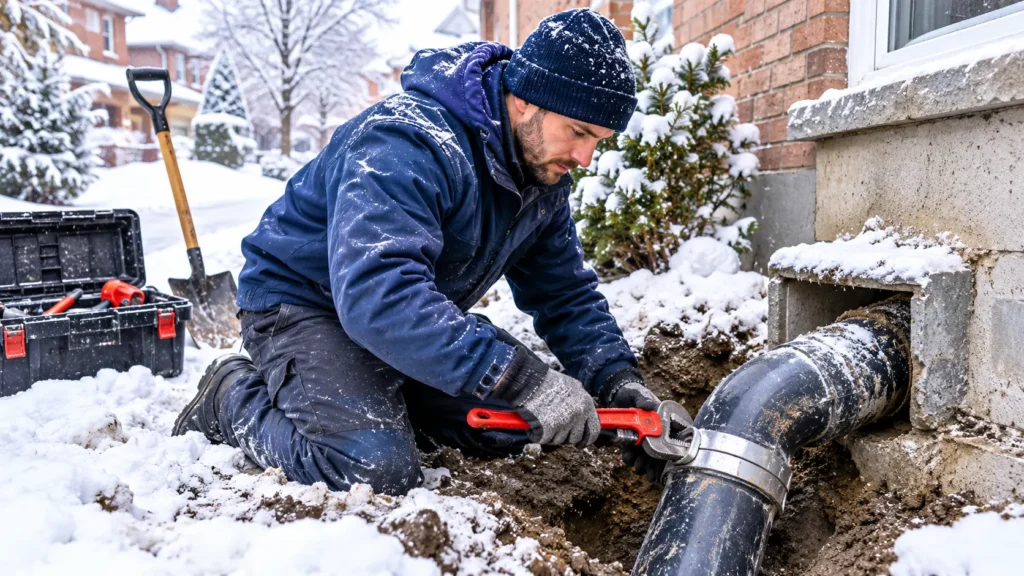
Introduction: Why Checking Your Drains Before the First Heavy Snowfall Matters in Vaughan
Most drainage problems don’t start with a flood. They start with a sink that takes a little longer to empty, a faint smell near the basement floor drain, or a gurgle after the washing machine runs. Learning the signs your Vaughan drains need cleaning gives you a chance to act while the problem is still small.
Inside your pipes, buildup never really stops. Grease sticks to pipe walls, hair and soap residue bind together, leaves and sediment wash into outdoor drains, and mineral deposits narrow the pipe a little more each month.
Winter puts that capacity to the test. Snowmelt, rain on frozen ground, and heavier household water use all push more water through a system that may already be restricted. A partial blockage that went unnoticed in October can become a backup in January.
At Drain Experts Plumbing, we see this pattern often. This guide covers seven warning signs worth checking now, so you can deal with them on your own schedule rather than during an emergency.
Why Do Vaughan Drains Need Cleaning Before the First Heavy Snow?
Snow itself doesn’t cause a sewer backup. The risk comes from what happens around your home as winter weather shifts, and from problems that were already there.
When snow melts quickly, or rain falls on partly frozen ground, water can’t soak in easily. It collects near foundations and raises groundwater levels, which can stress basement drainage systems.
The Government of Canada also recommends regularly clearing snow and ice away from homes to reduce the risk of meltwater entering foundations and basements. Homeowners can review its official snow and ice removal guidance for additional winter flood-prevention measures.
Freeze-thaw cycles add another layer. Outdoor grates, catch basins, and shallow exterior drainage sections can fill with debris, freeze overnight, and thaw the next day. Meanwhile, a pipe already narrowed by grease or roots moves wastewater slowly, and extra water use makes that restriction obvious.
It helps to separate two systems. Your indoor sewer and drain lines carry wastewater from sinks, toilets, showers, and laundry out of the house. Your outdoor stormwater drainage, including downspouts, grading, grates, and weeping tile, manages rain and meltwater. A problem in one doesn’t automatically mean a problem in the other.
7 Signs Your Vaughan Drains Need Cleaning: Before Snow
Sign 1: Water Drains Noticeably Slower Than Usual
Slow drainage is the earliest and most common warning. Water lingering in a kitchen sink, bathroom sink, shower, or laundry drain usually points to buildup on the pipe walls.
In kitchens, the usual culprit is grease and food residue. In bathrooms, it’s hair combined with soap scum and mineral deposits. The pipe narrows gradually, and each bit of debris has a better chance of catching.
Try a simple test. Run water in one fixture and watch how it drains, then try another on the same floor. If only one drain is slow, the problem is probably in that fixture’s trap or branch line. If several are slow, the restriction may be further down the system.
Professional cleaning makes sense when a drain stays slow after you’ve cleared the stopper or strainer, keeps coming back, or spreads to other fixtures.
Sign 2: Gurgling or Bubbling Sounds from Drains or Toilets
A gurgle is air being pushed through water. When wastewater can’t move freely, trapped air escapes through the nearest water seal, often a toilet or sink trap.
A toilet that bubbles when a nearby tub drains suggests restricted flow somewhere shared, such as a partial blockage in a drainpipe or, in some cases, the main sewer line.
Venting matters too. Plumbing vents let air into the system, so water flows smoothly, and a blocked vent can produce similar sounds. Persistent gurgling deserves a professional look rather than an assumption that it’s only a clog.
Sign 3: Foul Odours Coming from Floor Drains or Fixtures
Not every drain smell means a blocked sewer, but a recurring odour is worth understanding.
Organic waste and grease inside pipes can decompose and produce a sour or musty smell, even when water still drains.
Another common cause is a dry trap. Floor drains rely on a small amount of standing water to block sewer gas. In a rarely used basement drain, that water can evaporate and let gas into the room. Pouring water into the drain sometimes solves it.
If the smell returns after you’ve refilled the trap, gets stronger, or appears alongside slow drains or gurgling, a plumbing inspection is a sensible next step.
Sign 4: Water Backing Up into Basement Floor Drains
This is the sign that most clearly calls for professional help. Water coming up through a floor drain means wastewater has nowhere else to go, so it takes the lowest exit.
A localized floor-drain blockage affects just that drain. A main sewer line restriction affects everything connected to it, so you may also see slow toilets, tubs, or sinks on the lower level.
Backed-up water can carry contaminants and quickly damage flooring, drywall, and stored belongings.
If it happens:
- Stop using water in the house, including toilets, laundry, and dishwashers.
- Keep children and pets away from the area.
- Avoid direct contact with the water.
- Call a licensed plumber promptly for an assessment.
Sign 5: Multiple Fixtures Clogging or Draining Slowly at the Same Time
One slow drain is a fixture problem. Several slow drains at once is a system problem.
If a sink, a shower, and a toilet struggle together, or a floor drain reacts when upstairs fixtures run, the restriction is likely in a shared line such as the main drain or the sewer line leaving the house. Common causes include grease buildup, sediment, root intrusion, and damaged pipes.
That’s why clearing fixtures one at a time often disappoints. You may see brief improvement, but if the blockage sits downstream, the problem returns. A drain camera inspection is often appropriate here, since it shows what’s inside the line and helps decide whether cleaning is enough.
Sign 6: You Keep Needing to Plunge the Same Drain
Plunging is a reasonable first step for an occasional clog. Needing to do it every few weeks isn’t normal.
A plunger can restore flow without removing the debris, which can settle further down the pipe and build up again.
Harsh chemical cleaners aren’t a reliable answer either. They may open a small channel through soft buildup but often don’t reach deeper restrictions.
Recurring clogs can point to buildup, a damaged section, roots, or a sagging pipe where water pools. Mechanical cleaning and possibly an inspection is worth considering.
Sign 7: Standing Water or Slow Drainage After Rain or Early Snowmelt
Some warning signs show up outside. After rain or an early thaw, look around your property.
Pooling water near the foundation, overflowing exterior grates, and slow catch basins suggest stormwater isn’t leaving the area as it should. Leaves and debris are a frequent cause, and downspouts that discharge too close to the house or ground that slopes toward the foundation can make it worse.
To be clear, standing water around a foundation does not automatically mean your indoor drain line is clogged. It’s often a surface drainage or grading issue. It’s still worth correcting before winter.
What Happens If These Signs Are Left Untreated Before Winter
1. Unexpected Basement Flooding
When drains can’t keep up, the basement is where it shows. Wet flooring, damaged drywall, and ruined stored items are common results.
2. Sewer Backups and Wastewater Exposure
A restricted sewer line can send wastewater back through lower-level fixtures. Beyond the mess, that water can carry bacteria, which makes cleanup more involved.
3. Increased Pipe Stress and Potential Damage
Existing cracks, offsets, or root intrusion can worsen under pressure. In vulnerable sections, freezing conditions can add strain, so a small defect today may become a larger repair later.
4. Expensive Emergency Plumbing Repairs
Fixing a slow drain is generally simpler and less disruptive than dealing with a backup, water damage, and restoration all at once. Early attention can help you avoid emergency calls, although no maintenance can promise to prevent every issue.
How Professional Drain Cleaning Solves These Problems
The right method depends on what’s in the pipe and where.
1. Mechanical Drain Snaking
A drain snake feeds a rotating cable through the pipe to break through or retrieve a blockage such as hair, soft buildup, or debris. It suits localized clogs and many fixture lines.
2. Hydro Jetting
Hydro jetting uses controlled high-pressure water to scour the inside of a pipe. It’s effective against grease, sludge, and stubborn deposits, and it’s used on pipes that can handle it.
3. Drain Camera Inspection
A small waterproof camera travels through the line and shows its internal condition. It can reveal recurring blockages, root intrusion, and possible structural damage, which takes the guesswork out of repeat problems.
4. Choosing the Right Drain Cleaning Method
No single method fits every case. The choice depends on where the blockage is, the pipe material, how severe the restriction is, and the pipe’s condition.
Simple Steps Vaughan Homeowners Can Take Right Now
You don’t need to take on complicated plumbing work. A few habits make a real difference before winter:
- Clear accessible outdoor grates: Leaves and debris you can safely reach.
- Keep grease out of the kitchen drain: Let it cool, then put it in the trash.
- Use drain strainers: Sinks and showers.
- Check basement floor drains: Unusual odours and visible water.
- Monitor recurring slow drains: Don’t repeatedly ignore them.
- Direct downspouts away from the foundation: In line with local requirements.
- Arrange a professional inspection: Any persistent drainage problem.
When It’s Time to Call Drain Experts Plumbing in Vaughan
Consider calling a professional if you notice:
- Repeated slow drainage
- Multiple fixtures with drainage problems
- Persistent gurgling noises
- Recurring unpleasant drain odours
- Wastewater backing up into basement floor drains
- Clogs that keep returning after plunging
A professional assessment identifies the actual cause rather than treating symptoms. From there, the plumber can determine whether snaking, hydro jetting, a camera inspection, or another solution makes sense for your home.
Ready to Sort This Out Before Winter?
If any of these signs sound familiar, it’s a good time to have them looked at while the weather is still cooperative. Drain Experts Plumbing can help Vaughan homeowners understand what’s happening in their drains and what needs to be done.
Frequently Asked Questions About Vaughan Drain Cleaning Before Winter
Why should I have my drains cleaned before the first heavy snowfall in Vaughan?
Because winter increases demand on drainage systems that may already be partly blocked, removing buildup first helps water move freely when snowmelt and heavier household use arrive.
1. Can snowmelt cause basement floor drains to back up?
It can contribute, but it’s rarely the only cause. Extra water around the foundation can stress basement drainage or expose an existing restriction. A plumber can help sort out which system is involved.
2. How do I know if my main sewer line is clogged?
Look for several fixtures draining slowly at once, gurgling toilets, and water in basement floor drains. A camera inspection can confirm the cause.
3. How often should residential drains be professionally cleaned?
There’s no single schedule. Homes with recurring clogs, older pipes, or mature trees nearby may need more frequent attention. A plumber can recommend a timeline for your home.
4. Is hydro jetting better than drain snaking before winter?
Not always. Snaking suits many localized clogs, while hydro jetting is better for grease and heavy buildup in suitable pipes. The right choice depends on what’s in your line.
5. Can I prevent drain backups during Vaughan’s winter season?
You can lower the risk, though not eliminate it. Keep grease out of drains, clear outdoor grates, direct downspouts away from the house, and have recurring problems inspected early.
Conclusion: Don’t Wait for the First Heavy Snow. Protect Your Home by Acting on the Signs Now
Slow drains, gurgling, odours, backups, repeat clogs, and outdoor pooling are all useful signals. Individually, they may seem minor, but together they suggest your drainage system is working harder than it should.
Drain Experts Plumbing is ready to help Vaughan homeowners find the cause and choose the right solution. If any of these signs sound familiar, learn more about our Drain Cleaning in Vaughan service and book an assessment before the snow arrives.

