

You’re rinsing dishes after dinner, and the water in your kitchen sink just sits there. Or maybe you flushed the toilet and heard a gurgle come from the bathtub down the hall. If you’ve ever stood over a sink watching water rise instead of drain, you already know how unsettling it feels.
A drain backing up in Brampton homes is more common than most homeowners realize, especially in neighbourhoods with mature trees, older clay pipes, or homes built before modern plumbing codes. Add in the region’s heavy spring rainfall and unpredictable freeze–thaw cycles, and it’s easy to see why local drains take a beating throughout the year.
The good news is that most drain backups give off warning signs long before they turn into a real emergency. In this guide, you’ll learn what causes a drain backing up in Brampton homes, how to tell when a slow drain is becoming a serious problem, and which fixes you can try yourself versus when it’s time to call a professional plumber.
Why Is My Drain Backing Up in Brampton?
A drain backup happens when water and waste can’t move through your pipes the way they’re supposed to. Something is blocking the flow, whether that’s a clog inside your home’s plumbing or a bigger obstruction further down the line, like your main sewer pipe.
There’s an important difference between a slow drain and a full backup. A slow drain still empties, just more gradually than usual. A backup means water isn’t going anywhere at all, or it’s coming back up through a different fixture entirely, like a toilet backing up when you run the washing machine.
Ignoring either one rarely saves you money. A minor clog you catch early might only need a simple cleaning. Left alone, that same clog can trap moisture against pipe walls, corrode fittings, or put pressure on aging sewer lines until they crack. What starts as a $150 fix can turn into a five-figure basement drain repair if water damage sets in.
Early diagnosis matters because so many causes of a drain backing up in Brampton homes look similar on the surface. A gurgling sink and a gurgling toilet can point to completely different problems, and guessing wrong wastes both time and money.
9 Common Causes of Drain Backing Up in Brampton
1. Grease and Food Waste
Grease, oil, and food scraps seem harmless going down the kitchen sink, but they don’t stay liquid for long. Once grease cools inside your pipes, it hardens and clings to the pipe walls, gradually narrowing the passage.
- Early warning signs: Slower drainage in the kitchen sink, a foul smell near the drain, or water that pools before disappearing.
- Consequences: Over time, grease buildup can block the pipe completely or combine with other debris to form a stubborn clog that snaking alone won’t clear.
- Solution: Avoid pouring grease down the drain altogether, and schedule periodic drain cleaning in Brampton to remove buildup before it hardens further.
2. Hair and Soap Scum
Bathroom drains take a different kind of abuse. Hair binds together with soap scum and forms a sticky mass that traps everything else flowing through the pipe.
- Early warning signs: Water draining slowly from the tub or shower, or a visible clump near the drain stopper.
- Consequences: Left unchecked, hair and soap clogs can fully block a bathroom drain and, in shared plumbing lines, contribute to backups in nearby fixtures.
- Solution: Use a drain guard, clean it regularly, and consider professional drain cleaning if the slow drainage doesn’t improve.
3. Tree Root Intrusion
Brampton’s mature, tree-lined streets are lovely to look at, but tree roots are drawn to the moisture inside underground sewer pipes. Over years, roots can work their way through tiny cracks or joints and expand inside the line.
- Early warning signs: Recurring backups in the lowest drains of your home, gurgling toilets, or unusually lush patches of grass over your sewer line.
- Consequences: Roots can eventually crack or collapse a pipe section, leading to a full sewer line drain repair in Brampton rather than a simple cleaning.
- Solution: A camera inspection in Brampton can confirm root intrusion, and hydro jetting or targeted repair can clear or remove the affected section.
4. Broken or Collapsed Pipes
Pipes shift over time due to soil movement, age, corrosion, or nearby construction. A broken or partially collapsed pipe restricts flow no matter how clean the rest of your plumbing is.
- Early warning signs: Persistent backups despite regular cleaning, sewer odours in the yard, or damp patches in the basement.
- Consequences: A collapsed pipe won’t fix itself and typically worsens, increasing the risk of sewage backup into your home.
- Solution: This almost always calls for professional drain repair in Brampton, often guided by a camera inspection to pinpoint the exact damage location.
5. Heavy Rainfall
Brampton sees its share of intense spring and summer storms. Heavy rainfall can overwhelm municipal sewer systems and older residential lines, pushing water back toward the path of least resistance, sometimes your basement drain.
- Early warning signs: Backups that happen specifically during or right after heavy rain.
- Consequences: Stormwater backups can bring contaminated water into basements, causing property damage and health concerns.
- Solution: A backwater valve can help prevent sewer backup in Brampton homes during major storms, and a plumber can assess whether your home’s grading and drainage need improvement too.
6. Non-Flushable Items
Wipes, paper towels, cotton products, and similar items may go down the toilet easily, but they don’t break down like toilet paper. They snag on pipe walls and catch other debris as it passes.
- Early warning signs: A toilet that empties slowly or requires multiple flushes.
- Consequences: These items are a leading cause of clogged drains in Brampton homes and can lead to a full blockage further down the line.
- Solution: Only flush toilet paper and human waste. If a blockage has already formed, drain snaking is usually effective.
7. Mineral Build-Up
Brampton’s water contains natural minerals that, over years, can build up inside pipes, particularly around joints and fittings. This is a slower process but a steady one.
- Early warning signs: Gradually decreasing water flow throughout the home, not just in one fixture.
- Consequences: Significant mineral scale narrows the interior pipe diameter, making the plumbing more prone to clogs from ordinary debris.
- Solution: Hydro jetting can clear mineral deposits more thoroughly than snaking, restoring the pipe closer to its original diameter.
8. Frozen Drain Pipes
Brampton winters bring their own plumbing challenges. Pipes located in unheated areas, like garages, exterior walls, or crawl spaces, can freeze when temperatures drop sharply.
- Early warning signs: No drainage at all from a specific fixture during a cold snap, sometimes paired with a knocking sound in the pipes.
- Consequences: Ice expansion can crack pipes, turning a temporary freeze into a repair once things thaw.
- Solution: Insulate exposed pipes before winter, and if a freeze happens, contact an emergency plumber in Brampton rather than trying to thaw the pipe yourself.
9. Lack of Regular Maintenance
Many drain backups aren’t caused by one dramatic event, but by years of small deposits, minor debris, and skipped maintenance building up gradually.
- Early warning signs: Multiple fixtures around the house draining a little slower than they used to.
- Consequences: Without periodic maintenance, small issues combine into a larger blockage that’s harder and more expensive to clear.
- Solution: Schedule routine drain cleaning in Brampton, especially if your home is older or has a history of slow drains.
Signs Your Drain Problem Is Becoming Serious
Not every clog needs an emergency call, but certain signs mean it’s time to act quickly:
- Slow drainage in more than one fixture, not just one sink or tub
- Gurgling sounds coming from drains, toilets, or floor drains
- Bad smells near drains that don’t go away after cleaning
- Multiple clogged fixtures happening around the same time
- Water pooling around floor drains or in the yard
- Basement drain backup, especially after rain or heavy water use upstairs
- Overflowing toilets that don’t clear with plunging
Any of these on their own might be minor. Several happening together usually points to a blockage in your main line rather than an isolated clog.
How to Fix a Drain Backing Up in Brampton
DIY Solutions
For minor, isolated slow drains, a few safe steps can help:
- Use a plunger on toilets and drains designed for it
- Try a drain snake (also called a plumbing auger) for surface-level clogs
- Flush drains with hot water and a mix of baking soda and vinegar for light buildup
- Clean visible hair or debris from stoppers and drain covers
What homeowners should never attempt:
- Pouring chemical drain cleaners down the pipes repeatedly; they can damage older pipes and don’t address the root cause
- Using excessive force with a snake on a suspected sewer line clog
- Ignoring a backup that affects multiple fixtures at once, hoping it clears on its own
- Attempting to thaw a frozen pipe with an open flame
Professional Solutions
When DIY methods don’t clear the problem, or the backup involves more than one fixture, professional tools do a more thorough job:
- Drain cleaning: Removes buildup and debris from inside residential pipes
- Drain snaking: Clears localized clogs mechanically without harsh chemicals
- Hydro jetting: Uses high-pressure water to clear grease, roots, and scale more completely than snaking alone
- Camera inspections: Identify the exact cause and location of a blockage before any repair work begins
- Drain repair: Fixes damaged sections of pipe found during inspection
- Sewer repair: Addresses larger issues in the main line connecting your home to the municipal system
Why Camera Inspections Are the Fastest Way to Find the Real Problem
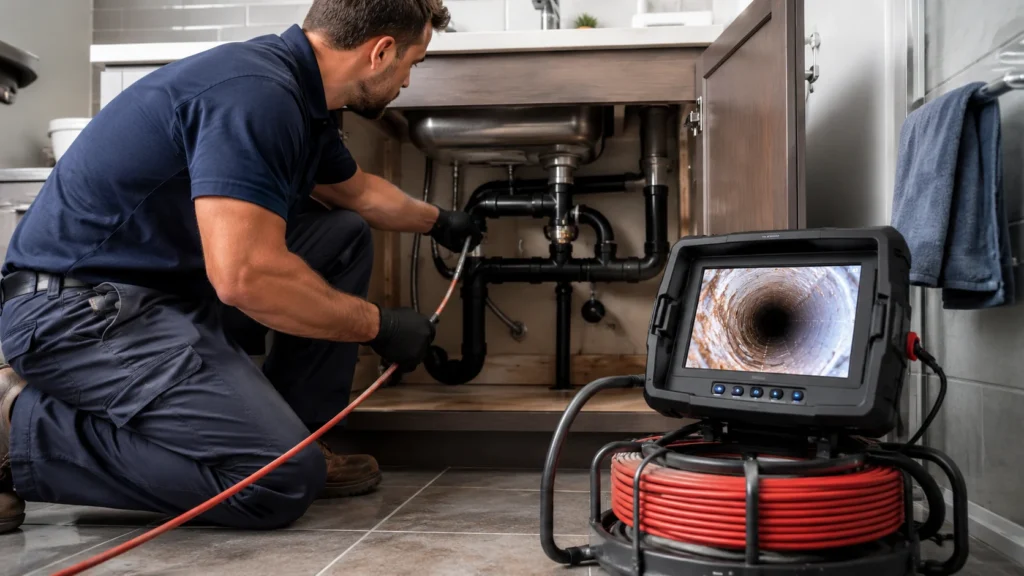
A drain camera is a waterproof, flexible cable with a small camera head that’s fed directly into your pipes. It sends a live video feed back to the technician, showing exactly what’s happening inside the line in real time.
Instead of guessing based on symptoms alone, a camera inspection in Brampton removes the guesswork. It can show tree root intrusion, cracked or collapsed sections, grease buildup, misaligned joints, and hidden blockages that wouldn’t be visible from outside the home.
That accuracy matters because it means the repair plan matches the actual problem. Rather than paying for a general cleaning that doesn’t fix a cracked pipe, or vice versa, homeowners get a solution built around what’s really going on underground.
How to Prevent Drain Backups in Brampton Homes
- Kitchen: Scrape food scraps into the garbage before washing dishes, avoid pouring grease or oil down the sink, and use a sink strainer to catch debris.
- Bathroom: Install drain guards in tubs and showers, and only flush toilet paper and human waste.
- Laundry room: Clean the lint trap regularly and check hoses periodically for wear, since lint and detergent residue can contribute to slow drains over time.
- Basement: Keep floor drains clear of debris and test them occasionally by pouring water down to confirm they drain properly.
- Outdoor drains: Clear leaves and debris from exterior drains, especially in the fall, and check that downspouts direct water away from the foundation.
- Seasonal maintenance: Have drains inspected before winter to catch minor issues before freezing temperatures make them worse, and again in spring after the freeze–thaw cycle and rainy season.
Why Drain Problems Are Different in Brampton
Local conditions shape the kinds of drain issues homeowners run into here. Freeze–thaw cycles cause ground movement that can shift or stress underground pipes over multiple winters. Heavy rainfall events put extra strain on both municipal and residential sewer systems.
Brampton’s mature trees, especially in established neighbourhoods, mean root intrusion is a more common cause of sewer line drain repair than in newer subdivisions with younger landscaping. Older neighbourhoods may also still have original clay or cast iron pipes, which are more prone to cracking and root intrusion than modern PVC.
Underground sewer systems throughout the region vary in age and material depending on when a neighbourhood was developed, which is part of why the same symptoms can point to different causes from one property to the next.
Drain Cleaning vs. Drain Repair: Which Do You Need?
| Factor | Drain Cleaning | Drain Repair |
| Best use cases | Grease, hair, soap scum, minor debris clogs | Cracked, collapsed, or root-damaged pipes |
| Cost factors | Generally lower, based on time and method used | Higher, depending on pipe location and extent of damage |
| Time required | Usually completed same day | May require more time, especially with excavation |
| Long-term value | Effective for recurring maintenance | Resolves the underlying structural issue |
| Typical situation | Slow drains, occasional clogs | Recurring backups, camera-confirmed pipe damage |
If cleaning alone doesn’t resolve a backup, or the same drain keeps clogging after service, a camera inspection can confirm whether repair is the better long-term fix.
When Should You Call a Professional Plumber?
Some situations call for expert help right away rather than more DIY attempts:
- Recurring backups in the same drain or fixture, even after cleaning
- Sewer odours that persist indoors or in the yard
- Basement flooding or water pooling around a floor drain
- Multiple blocked drains happening at the same time
- Tree root problems confirmed or suspected in your sewer line
- Emergencies, like sewage backing up into the home or a complete loss of drainage
In these cases, contacting a residential plumber in Brampton quickly can limit water damage and prevent the problem from spreading to more of your home’s plumbing.
Frequently Asked Questions
Why does my drain keep backing up even after I clean it?
Recurring backups usually mean the clog isn’t fully cleared, or there’s a deeper issue like a partial pipe blockage or root intrusion further down the line that a surface cleaning won’t reach.
Is a gurgling drain always a sign of a serious problem?
Not always, but it usually means air is trapped somewhere in the system, often due to a partial blockage. It’s worth monitoring, and if it continues, having a plumber take a look.
Can heavy rain really cause a drain to back up?
Yes. During intense storms, sewer systems can reach capacity, and water can be pushed back into homes through the lowest drains, particularly in basements.
How often should I have my drains professionally cleaned?
It depends on your home’s age and plumbing history, but many homeowners benefit from a cleaning every one to two years, or more often if backups are a recurring issue.
Are chemical drain cleaners safe to use regularly?
No. Frequent use can corrode pipes over time, particularly older ones, and they often don’t clear the underlying cause of recurring clogs.
What’s the difference between a clogged drain and a sewer backup?
A clogged drain typically affects one fixture. A sewer backup affects multiple fixtures at once and often smells worse, since it involves the main line connecting your home to the municipal sewer.
Can tree roots really get inside my pipes?
Yes. Roots are drawn to moisture and can enter through small cracks or loose joints, then grow and expand inside the pipe over time.
Do I need a camera inspection every time I have a clog?
Not for every minor clog, but it’s recommended for recurring backups or when the cause isn’t obvious, since it identifies the exact problem before repair work begins.
What should I do if sewage is backing up into my basement?
Avoid using water in the home until the issue is addressed, and contact an emergency plumber in Brampton right away to prevent further damage.
Who is responsible for the sewer pipe on my property?
Homeowners are generally responsible for the wastewater pipes inside their home and the section running to the property line, while the municipality maintains the main sewer system beyond that point. Region of Peel: The Sanitary Sewer, homeowner responsibilities for wastewater pipes
Conclusion
A drain backing up in Brampton is rarely just bad luck. Grease buildup, tree roots, aging pipes, heavy rainfall, and everyday debris all play a role, and most of these causes give off warning signs well before things get serious. Catching a slow drain early, understanding what’s normal versus what’s not, and keeping up with routine maintenance can save homeowners from far more expensive repairs down the road.
If your drains have been acting up, gurgling, or backing up more than once, it’s worth getting a professional opinion before the problem grows. Drain Experts Plumbing offers drain cleaning, drain repair, and camera inspection services throughout Brampton, and we’re ready to help you find the real cause and get your plumbing running smoothly again. Contact us today to book an appointment.