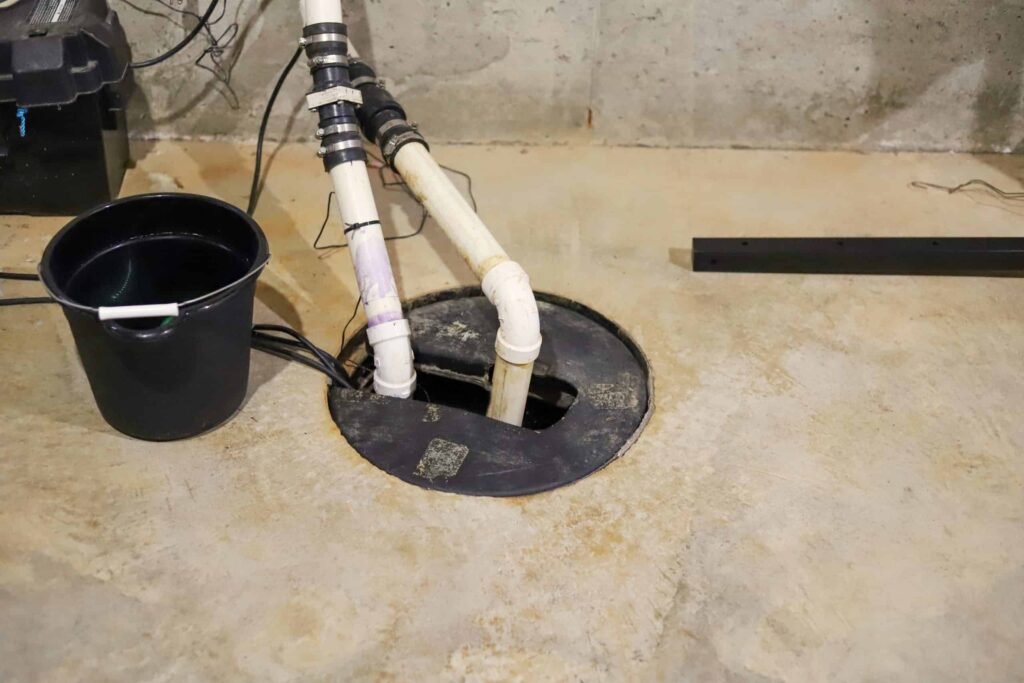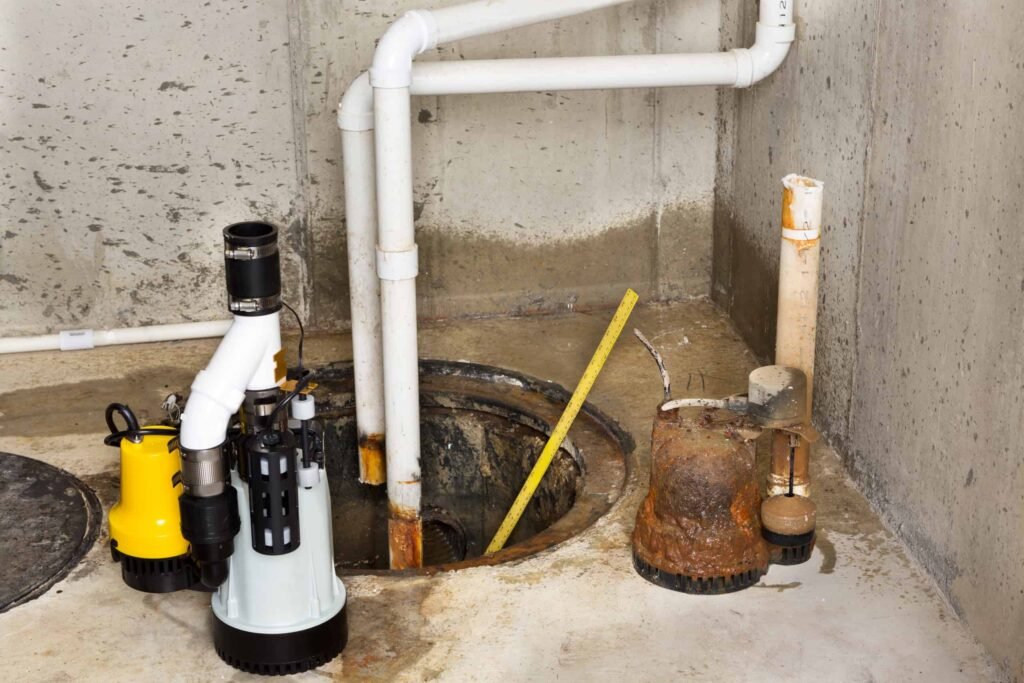

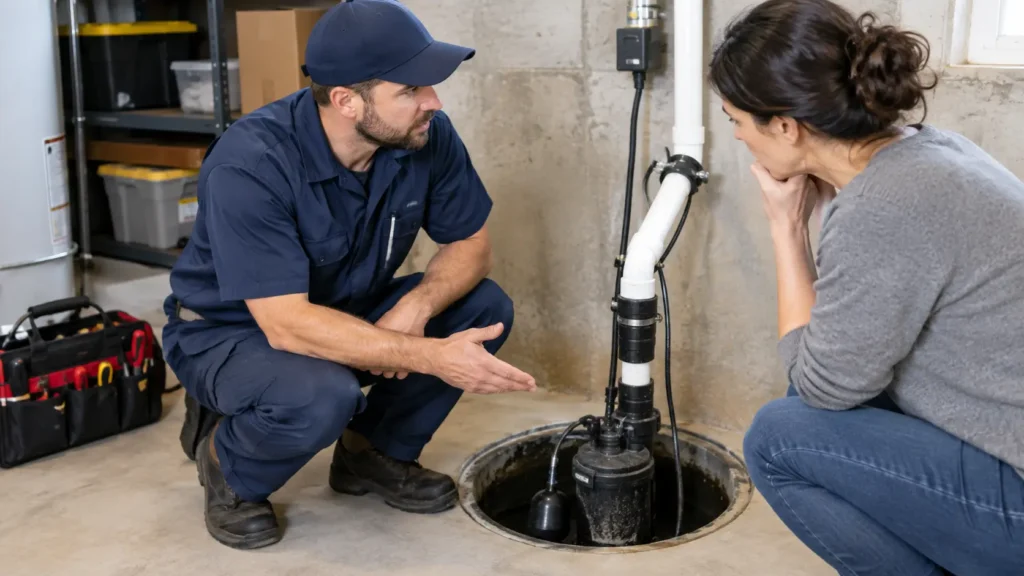
If you can hear your sump pump cycling on and off, but the water in the pit isn’t dropping, something between the pump and the outside of your home isn’t doing its job. A sump pump is running but not removing water is one of the more confusing plumbing problems homeowners run into, because the pump sounds fine, the motor hums, the float moves, and yet the basement stays wet.
During a heavy Toronto rainstorm or a spring thaw, this isn’t just an inconvenience, since water can rise faster than most homeowners expect. Below are the nine most common reasons this happens, what you can safely check yourself, and when it’s time to bring in a professional.
What Should Happen When a Sump Pump Is Working Properly?
In a properly functioning system, groundwater collects in the sump pit until it reaches a set level, at which point the float switch triggers the pump. The pump then pushes water through the discharge pipe, away from your foundation, to a safe exit point outside. The water level in the pit should drop steadily until the pump shuts off again.
When the motor runs, but the water level barely moves, the pump itself may be fine, but something along the path from the pit to the outdoors is interrupting the process a distinction worth understanding before assuming the pump is broken.
9 Reasons Your sump pump is running but not removing water
1. The Discharge Pipe Is Blocked
Leaves, dirt, stones, or ice can build up inside the discharge pipe and stop water from leaving the home. This is common during Toronto’s freeze-thaw cycles, when trapped moisture turns to ice inside the line. You may notice frequent cycling, or water pooling near the outdoor discharge point instead of draining away.
2. The Pump Impeller Is Clogged or Damaged
The impeller is the rotating component that pushes water through the pipe. If it’s clogged with sediment or worn down, the motor can keep running normally while moving very little water. This often sounds identical to a healthy pump, so it can go unnoticed for a while.
3. The Check Valve Is Not Working Properly
A check valve keeps water in the discharge line from flowing back into the sump pit once the pump shuts off. If it’s stuck, cracked, or installed incorrectly, water can drain right back down after each cycle, showing up as the pump restarting almost immediately.
4. The Float Switch Is Stuck or Malfunctioning
The float switch tells the pump when to start and stop based on water level. A stuck or tangled float can cause the pump to run when it shouldn’t. That said, if the motor is clearly running continuously while the pit stays full, a blocked discharge line or pump issue is often more likely than a float problem alone.
5. The Pump Is Too Small for the Amount of Water Entering the Pit
Sometimes the pump works as designed, but the volume of water coming in exceeds what it can move out. This shows up during heavy rainfall, high groundwater, or in homes where more water reaches the pit than the pump was sized for. A pump behaving this way isn’t necessarily defective; it may just be undersized.
6. There Is a Power or Electrical Problem
Inconsistent power, a failing outlet, or damaged wiring can affect pump performance, even if the motor still appears to be operating. Electrical issues aren’t something to test or repair yourself. If you suspect a wiring or power problem, that’s a case for a licensed professional, not trial and error.
7. The Sump Pit or Pump Intake Is Blocked
Sediment, dirt, or debris can build up around the pump’s intake screen, restricting how much water reaches the pump. The motor may then run continuously while very little water is drawn in, leaving the pit level largely unchanged.
8. The Discharge Line Is Frozen or Improperly Positioned
During colder stretches, the portion of the discharge pipe outside the home can freeze solid, blocking water from escaping even though the pump works correctly. A line that slopes the wrong way, sits too close to the foundation, or empties where water pools nearby can create similar symptoms without any freezing involved.
9. The Sump Pump Is Worn Out or Has an Internal Failure
Like any mechanical appliance, sump pumps have a working life, and internal components wear down over years of use. Unusual noises, repeated cycling, weaker performance, or a motor that runs constantly without lowering the water level can point to a pump nearing the end of its service.
What Should You Check First If Your Sump Pump Is Not Removing Water?
Before calling anyone, a few safe observations can help narrow down the problem. Watch whether the water level in the pit is rising, holding steady, or dropping slowly. Check the discharge point to see whether water is flowing out or blocked by ice, dirt, or debris. Listen for grinding or straining sounds, and note whether water flows out and quickly returns to the pit, which often points to a check valve issue.
Avoid reaching into the sump pit while the pump is running, and don’t open any electrical components yourself. The City of Toronto recommends regularly inspecting and maintaining sump pumps and ensuring they are properly sized for the home. City of Toronto sump pump and basement flooding guidance. If the pump keeps running without a real drop in water level, the problem likely needs a closer look than a homeowner can safely give it.
When Is a Sump Pump Problem an Emergency?
Most sump pump issues can wait a day or two, but a few situations call for prompt attention: basement water rising quickly, water approaching outlets or electrical equipment, a pump running nonstop without lowering the water level, water entering faster than the pump can remove it, or a suspected electrical fault.
None of this means panic is warranted, but a pump that has clearly stopped protecting your basement during active water intake is worth treating as urgent, not something to leave until the weekend.
Can a Sump Pump Problem Cause Basement Water Damage?
Yes, a sump pump is running but not removing water effectively can contribute to real basement water damage over time: soaked flooring, damaged belongings, and ongoing moisture problems in finished spaces. Prolonged water near the foundation can also point to a need for additional drainage work or basement waterproofing.
That said, not every basement water issue starts with the sump pump itself. Drainage problems, grading issues, or foundation cracks can produce similar symptoms, which is why a full inspection is often more useful than assuming the pump is solely responsible.
Should You Repair or Replace a Sump Pump?
This depends on several factors rather than one rule. The age and condition of the current pump matters, along with the type of failure involved. A clogged impeller or a stuck float switch is often a straightforward repair, while a motor that has failed internally or a pump that keeps breaking down may be a better candidate for replacement.
Pumping capacity matters too. If the pump was undersized for your home’s water volume to begin with, a better-matched replacement may solve a problem repairs alone wouldn’t. And a new pump paired with a blocked or poorly positioned discharge line won’t perform any better than the old one did. A professional inspection is generally the most reliable way to determine which option fits your setup.
When Professional Sump Pump Services Make Sense
A professional visit typically involves checking the pump’s operation under load, inspecting the discharge line and check valve, testing the float mechanism, and evaluating whether the pump’s capacity matches the water entering the pit, along with the condition of the sump pit itself.
Drain Experts Plumbing offers sump pump services for Toronto homeowners dealing with exactly this kind of issue, including inspection, repair, and installation where replacement makes more sense than continuing to patch an aging pump.
Could the Real Problem Be Your Drainage System?
A sump pump doesn’t operate in isolation. If drains around the foundation are restricted, or there’s a broader issue with how water is managed around your home, a pump can appear to be failing when the real problem lies elsewhere. Blocked drains, foundation water management issues, or gaps in waterproofing can all look like a sump pump problem at first glance.
In these situations, professional drain cleaning, drain repair services, or a closer look at your home’s basement waterproofing may address the underlying cause more directly than sump pump repairs alone.
How Drain Experts Plumbing Can Help Toronto Homeowners
Drain Experts Plumbing works with Toronto homeowners on sump pump, drainage, and related plumbing issues, including cases where the cause isn’t obvious. A visit can include plumbing diagnostic services to pinpoint whether the pump, the discharge system, or a broader drainage issue is behind the problem, along with sump pump repair or replacement if needed. For a professional plumber in Toronto to look at a pump that’s running without doing its job, that inspection is usually the best starting point.
Frequently Asked Questions
1. Why is my sump pump is running but not removing water?
This usually means water isn’t reaching the discharge point, even though the motor is running. Common causes include a blocked discharge pipe, a damaged impeller, a faulty check valve, or a pump that’s undersized for the water entering the pit.
2. What should I check if my sump pump runs continuously?
Check whether the outdoor discharge point is flowing freely or blocked, and listen for unusual sounds from the pump. Avoid handling the pit or electrical components yourself, and call a professional if the water level isn’t dropping.
3. Can a blocked discharge pipe stop a sump pump from removing water?
Yes. Debris, sediment, or ice inside the discharge pipe can prevent water from leaving the home even when the pump runs normally, making it one of the more common causes of this issue.
4. Why does water come back into the sump pit after the pump shuts off?
This is often caused by a faulty or stuck check valve, which lets water already pushed through the discharge line flow back into the pit instead of continuing outside.
5. Can a sump pump be too small for a house?
Yes. A pump that was adequate when installed may not keep up if the water entering the pit increases, whether from heavier rainfall, higher groundwater, or changes around the property over time.
6. Is it better to repair or replace a sump pump?
It depends on the pump’s age, the type of failure, and how often problems have occurred. Issues like a clogged impeller are often repairable, while repeated failures or an undersized pump may point toward replacement.
7. Can Drain Experts Plumbing repair or replace sump pumps in Toronto?
Yes. Drain Experts Plumbing provides sump pump inspection, repair, and installation for homeowners across Toronto dealing with pumps that run but don’t effectively remove water.
Conclusion
A sump pump is running but not removing water doesn’t automatically mean it’s protecting your basement. The cause could be a blocked discharge pipe, a damaged impeller, a faulty check valve, a stuck float, an undersized pump, an electrical issue, a blocked intake, freezing, or a pump nearing the end of its life. Sorting out which one applies matters, because the fix differs in each case.
If your sump pump is running but not removing water and the problem isn’t resolving on its own, it’s worth having it looked at before the next heavy rain. Drain Experts Plumbing can inspect the pump, the discharge system, and the surrounding drainage to figure out what’s going on and what it will take to fix it.