

A plumbing emergency rarely waits for a convenient time. Pipes tend to burst in the middle of the night, toilets overflow right before guests arrive, and sewer backups show up after a heavy summer storm. When something goes wrong with your home’s plumbing, the difference between a quick fix and a costly disaster often comes down to how fast you act. That’s why knowing when to call an Emergency Plumber in Toronto matters just as much as knowing a good one exists.
Toronto’s plumbing systems face some unique pressures. Many neighbourhoods still rely on aging pipes that were never built for today’s water demands. Add in freezing winters that crack pipes and heavy spring or summer rainfall that overwhelms drains, and it’s easy to see why local homeowners deal with everything from drain clogging to full sewer backup more often than they’d like. Delaying repairs, even by a day or two, can turn a manageable problem into thousands of dollars in water damage.
In this guide, we’ll walk through the 10 plumbing emergencies you should never ignore, what causes them, and what to do while you wait for help to arrive.
What Is Considered a Plumbing Emergency?
Not every plumbing issue counts as an emergency. A slow-draining sink can usually wait until regular business hours, but some situations need attention right away because they risk property damage, health hazards, or both.
Common plumbing emergencies include:
- Burst pipes: release large amounts of water quickly
- Active leaks: that won’t stop or are getting worse
- Sewer backup: flowing into sinks, tubs, or floor drains
- Overflowing toilets: that keep refilling after flushing
- No running water: anywhere in the home
- Water heater failure: especially with leaking or gas smells
- Basement flooding: from any source
Call Drain Experts Plumbing immediately if: water is actively flooding your home, sewage is backing up into your fixtures, you smell gas near your water heater, or you’ve lost all water pressure with no explanation. In these cases, every minute counts, and waiting can turn a repair job into a full renovation.
10 Plumbing Emergencies You Should Never Ignore
1. Burst Pipes
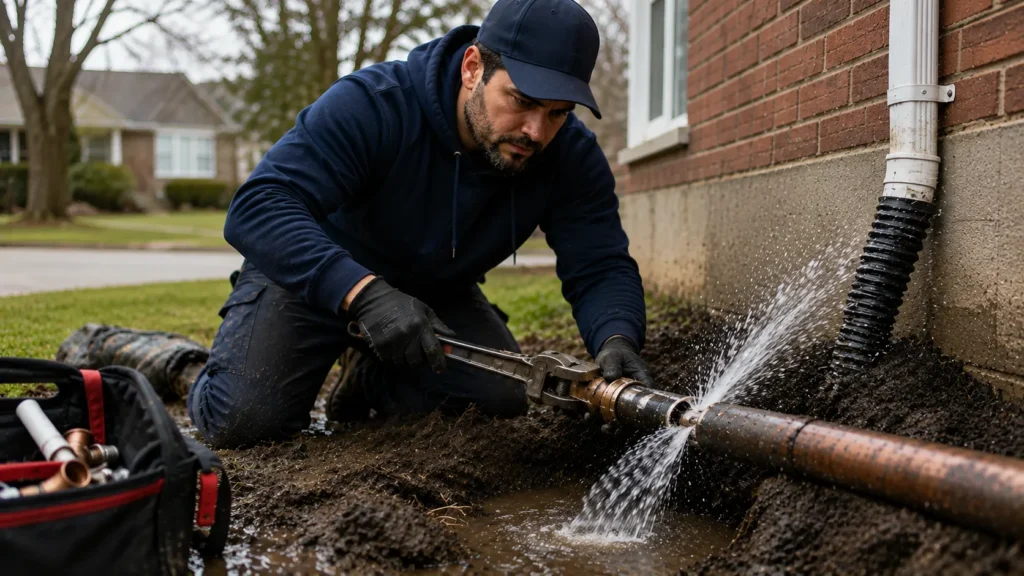
A burst pipe is one of the most damaging plumbing emergencies a homeowner can face. It can release hundreds of litres of water in a short amount of time, soaking floors, walls, and belongings before you even realize what’s happening.
- Causes usually include frozen pipes that expand and crack, corroded plumbing, or sudden spikes in water pressure. Older homes with galvanized steel or outdated copper piping are especially at risk.
- Warning signs include a sudden drop in water pressure, unusual banging noises in the walls, or damp patches spreading across your ceiling or flooring.
- If you suspect a burst pipe, shut off your main water supply right away and call for burst pipe repair. The longer water keeps flowing, the more it can damage subfloors, drywall, and even your home’s structural framing.
- Pro Tip: Know the location of your main shut-off valve before an emergency happens. In a real crisis, those extra seconds spent searching for it can mean the difference between a small cleanup and a flooded basement.
2. Sewer Backup
Few plumbing problems are as unpleasant, or as urgent, as a sewer backup. This happens when wastewater can’t flow out through the municipal sewer line and gets pushed back into your home instead.
- Causes range from tree root intrusion and grease buildup to aging municipal infrastructure that struggles during heavy rain. In older Toronto neighbourhoods, combined sewer systems can become overwhelmed during storms, pushing water back toward homes.
- The health hazards are serious. Sewage carries bacteria and contaminants that shouldn’t come into contact with skin, food surfaces, or anything in your home.
- Signs of a coming sewer backup include gurgling drains, slow-draining fixtures throughout the house (not just one), and sewage odours near floor drains.
- A camera inspection is often the fastest way to pinpoint exactly where the blockage is happening, without guesswork or unnecessary digging.
3. Severe Drain Clogging
A single slow drain is usually a minor annoyance. But when multiple drains clog at once, or a clog keeps coming back no matter what you try, it’s a sign of a bigger problem.
- Kitchen drains often clog from grease, food scraps, and coffee grounds building up over time.
- Bathroom drains tend to clog from hair, soap residue, and toiletries. When the problem sits deeper in the main drain, though, it can affect every fixture in the house at once.
- For stubborn or recurring clogs, emergency drain cleaning goes beyond a basic plunger or store-bought chemical. Professional plumbers often use hydro jetting, which blasts high-pressure water through the pipe to clear grease, debris, and buildup completely.
- Pairing this with a camera inspection helps confirm the clog is fully cleared and reveals whether there’s underlying damage causing repeat blockages.
4. Overflowing Toilet
An overflowing toilet is stressful, but it’s not always a full emergency. Often, it’s caused by a clog combined with a faulty fill valve that keeps sending water into the bowl.
- Emergency steps include turning off the water supply valve at the base of the toilet immediately and avoiding repeated flushing, which only makes the overflow worse.
- Professional help is required when the toilet keeps backing up after you’ve cleared the visible clog, when water is coming up from other drains at the same time (a sign of a deeper blockage), or when the overflow keeps happening no matter what you try.
5. Basement Flooding
Basement flooding is one of the most common plumbing emergencies Toronto homeowners deal with, especially during heavy rainfall. Water can enter through several different paths, and figuring out which one is affecting your home is the first step toward a real fix.
- Heavy rainfall can overwhelm the municipal storm system, pushing water back through weeping tile or foundation cracks.
- Blocked drains, whether floor drains or storm drains outside your home, prevent water from draining away properly.
- A sewer backup can also flood a basement from the inside, through floor drains or basement fixtures.
- Sump pump failure is another major cause. If your sump pump stops working during a storm, water that would normally be pumped away starts collecting instead. The City of Toronto offers guidance on basement flooding protection, including subsidies for flood-prevention devices like backwater valves and sump pumps, which is worth reviewing if flooding has been a recurring issue for your home.
6. Water Heater Failure
Losing hot water is inconvenient, but some water heater failures are genuine emergencies. No hot water at all could point to a broken heating element or a bigger mechanical failure.
- Tank leaks are more urgent, since a failing tank can release a large volume of water quickly and may need to be shut off and replaced.
- Rusty water coming from your taps often signals corrosion inside the tank, which usually means the unit is nearing the end of its life.
- For gas water heaters, any smell of gas near the unit is a serious safety concern. Shut off the gas supply if you can do so safely, leave the area, and contact your gas utility along with a licensed plumber right away.
7. Major Water Leaks Behind Walls
Some of the most damaging leaks are the ones you can’t see. Hidden leaks behind walls or under flooring can go unnoticed for weeks, quietly causing damage the entire time.
- Watch for water stains on ceilings or walls, a musty smell, peeling paint or wallpaper, or mould growth in areas that shouldn’t be damp. Unexplained increases in your water bill are another red flag worth investigating.
- Professional leak detection equipment, including moisture meters and thermal imaging, can locate the source of a hidden leak without tearing open walls unnecessarily. Catching these early prevents structural damage and protects your home’s air quality.
8. Frozen or Burst Pipes
Toronto winters bring real risk to exposed or poorly insulated plumbing. When water inside a pipe freezes, it expands, and that pressure can crack even sturdy piping.
- Winter plumbing risks are highest for pipes running through unheated spaces like basements, attics, garages, and exterior walls.
- Prevention tips include insulating exposed pipes, letting faucets drip slightly during extreme cold snaps, and keeping your home’s heat on, even when you’re away.
- If a pipe does freeze, emergency response means shutting off the main water supply before it thaws and bursts, and calling a plumber rather than attempting to thaw it yourself with an open flame or other risky methods.
9. Main Sewer Line Blockage
A blockage in your main sewer line affects your entire home, not just one fixture. Tree roots are one of the most common culprits, since roots are naturally drawn to the moisture inside sewer pipes and can grow directly into small cracks or joints over time.
- Grease buildup from years of kitchen drainage can also narrow the pipe until it eventually blocks completely.
- A camera inspection lets a plumber see exactly what’s causing the blockage and where it’s located, without digging up your yard to find out.
- Once the cause is identified, hydro jetting is often used to clear the line completely, restoring proper flow without the need for extensive excavation in many cases.
10. No Running Water
Losing all water pressure throughout your home is unsettling, and the cause isn’t always obvious.
- Possible causes include a municipal water main break, a failed pressure regulator, or a major leak somewhere in your home’s plumbing system.
- When to contact the city: if neighbours are also without water, the issue is likely on the municipal side, and the City of Toronto’s water division should be your first call.
- When to call an emergency plumber: if your neighbours still have water and you don’t, the problem is isolated to your home’s plumbing, and a professional needs to find the cause quickly.
What Should You Do Before an Emergency Plumber Arrives?
While you’re waiting for help, a few quick steps can limit the damage:
- Shut off the main water supply: stop the flow of water at its source.
- Turn off electricity: In affected areas, if water is near outlets or appliances.
- Protect furniture and valuables: move them away from the affected area.
- Avoid chemical drain cleaners: can damage pipes and create hazards for the plumber.
- Take photos: document the damage for insurance purposes before cleanup begins.
- Clear the work area: the plumber can access the problem quickly once they arrive.
How Camera Inspection Helps Diagnose Plumbing Emergencies
Camera inspection uses a waterproof camera attached to a flexible cable, fed directly into your pipes. It gives plumbers a real-time, inside view of what’s actually happening underground or behind walls.
Plumbers typically use camera inspection when a clog keeps returning, when there’s a suspected sewer line issue, or before buying a home with older plumbing. It’s also useful after tree root intrusion or repeated drain clogging, since it shows exactly where and how severe the damage is.
The biggest benefit of camera inspection is accuracy. Rather than guessing at the problem or digging exploratory holes, plumbers can see cracks, blockages, root intrusion, or misaligned pipes directly. This saves both time and money, since the repair can be targeted precisely instead of addressing the whole line unnecessarily.
How to Prevent Plumbing Emergencies
Many plumbing emergencies are preventable with a bit of regular maintenance:
- Schedule an annual plumbing inspection: catch small issues before they grow.
- Book regular drain cleaning: prevent buildup from turning into a blockage.
- Avoid pouring grease down drains: since it hardens and narrows pipes over time.
- Prevent tree root intrusion: install root barriers near mature trees close to sewer lines.
- Test sump pumps: before storm season and again before winter.
- Protect pipes during winter: by insulating exposed sections and sealing drafts.
- Monitor water pressure: since consistently high pressure stresses pipes and fittings.
- Replace aging plumbing components: before they fail, rather than after.
Did You Know? The Insurance Bureau of Canada notes that water damage has become one of the leading causes of home insurance claims across the country, which is part of why prevention-focused maintenance is worth the investment.
Why Toronto Homeowners Trust Professional Emergency Plumbers
When something goes wrong, homeowners want a plumber who can respond quickly and get it right the first time. Fast response times matter most during an active emergency, when every extra minute can mean more water damage.
Licensed and insured plumbers bring accountability and proper training to every job, which matters for both safety and long-term reliability. Modern diagnostic equipment, including camera inspection tools and leak detection technology, allows for accurate diagnoses instead of guesswork.
Services like emergency drain cleaning and hydro jetting solve problems at their source rather than offering a temporary patch. Combined with transparent pricing and a focus on long-term solutions, professional plumbers give homeowners confidence that the job is done properly, not just quickly.
Frequently Asked Questions
How quickly should an emergency plumber arrive?
A reliable emergency plumber should respond within an hour or two for urgent situations like burst pipes or active flooding. Response times can vary depending on your location within Toronto and current demand, so it’s worth asking about estimated arrival time when you call.
Can drain clogging become an emergency?
Yes. What starts as a minor clog can turn into an emergency if it blocks water flow completely, causes backups into other fixtures, or leads to overflowing. Recurring clogs are often a sign of a deeper issue that needs professional attention.
What causes sewer backup?
Sewer backup is typically caused by tree root intrusion, grease buildup, aging municipal infrastructure, or heavy rainfall overwhelming the sewer system. A camera inspection can identify the exact cause so it can be addressed properly.
Is camera inspection worth it?
Yes, especially for recurring clogs or suspected sewer line damage. It allows plumbers to diagnose the exact problem without unnecessary digging, which often saves money on the overall repair.
What should I do if a pipe bursts?
Shut off your main water supply immediately, turn off electricity near the affected area if needed, and call an emergency plumber right away. Taking photos for insurance purposes before cleanup can also help with any claims.
How much does an emergency plumber in Toronto cost?
Costs vary depending on the issue’s severity, time of day, and materials needed. Most emergency plumbers provide an estimate before starting work, so it’s a good idea to ask for transparent pricing upfront.
Does homeowners insurance cover plumbing emergencies?
Coverage depends on your specific policy and the cause of the damage. Many policies cover sudden, accidental damage like burst pipes, but may exclude damage caused by neglect or lack of maintenance. Check with your insurance provider, and the Insurance Bureau of Canada offers general guidance on water damage coverage.
Final Thoughts
Plumbing emergencies rarely give you a warning. Whether it’s a burst pipe in the middle of winter, a sewer backup after a summer storm, or a water heater that suddenly fails, acting quickly is what protects your home from lasting damage. Toronto’s mix of aging infrastructure, freezing winters, and heavy rainfall means these issues are more common here than many homeowners realize.
The biggest takeaway is this: don’t wait to see if a plumbing problem gets better on its own. Small leaks turn into major water damage, minor clogs turn into full blockages, and delayed action almost always costs more in the long run, both in repairs and in stress.
Working with a professional gives you access to proper diagnostic tools like camera inspection, along with the experience needed to fix the actual problem rather than just the symptoms. If you’re dealing with any of the situations covered in this guide, don’t take chances with your home’s plumbing system.
Reach out to a trusted Emergency Plumber in Toronto today for fast, reliable help, day or night. Getting ahead of the problem now is always easier than dealing with the aftermath later.