

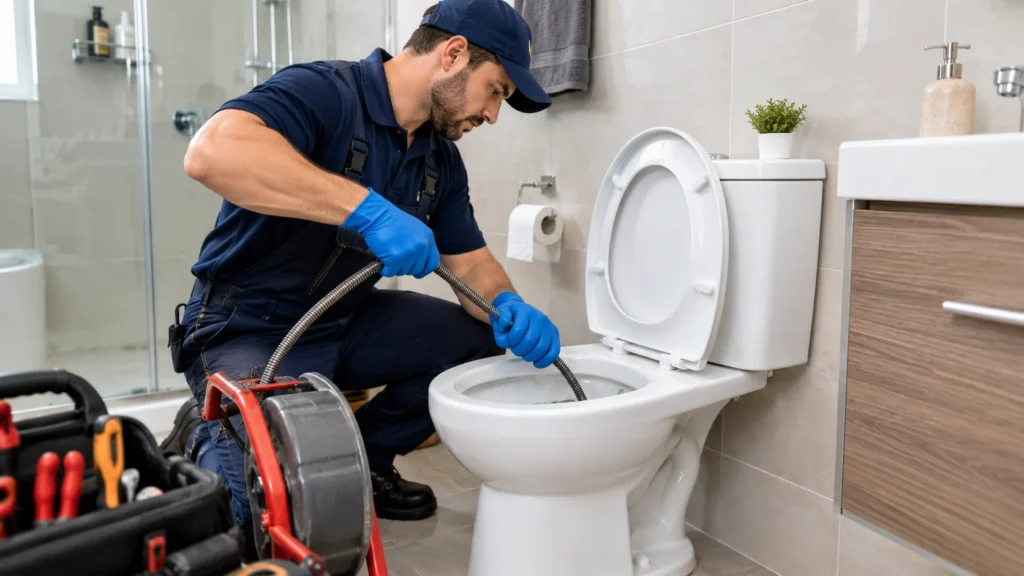
You plunge it. It drains fine for a few days. Then it slows again, or worse, it backs up right when you have guests over. If this cycle sounds familiar, you’re not imagining things: a toilet that keeps clogging in Brampton usually isn’t bad luck. It’s a sign that something in the system, whether the fixture itself or the drain line behind it, isn’t working the way it should.
An occasional clog happens to almost every household. But when the same toilet needs attention week after week, that’s a different situation, usually one where the plunger is treating a symptom rather than the actual cause.
This article walks through seven reasons a toilet keeps clogging in Brampton, the warning signs to watch for, and how to tell a simple fixture issue apart from a recurring clogging problem in a Brampton home that runs deeper into the drain line.
Is a Toilet That Keeps Clogging a Normal Problem?
There’s a real difference between an occasional clog and a recurring one. An occasional clog is usually a one-off: too much paper, an unlucky flush, nothing more. A recurring clog is a pattern. It’s the same toilet, needing the same fix, over and over.
Frequently reaching for the plunger isn’t actually solving anything if the clog keeps coming back. Clearing the immediate blockage restores flow for the moment, but it doesn’t tell you why the blockage formed in the first place.
In some cases, the real restriction sits farther down the drain line, and the toilet is simply the point where the problem becomes visible. Treating the surface issue repeatedly, without ever addressing what’s causing it, is why some households end up plunging the same toilet for months.
7 Reasons Your Toilet Keeps Clogging in Brampton
1. Too Much Toilet Paper or Improper Flushing
This is the most common cause, and it’s often underestimated. Modern toilets are designed to handle a reasonable amount of toilet paper per flush, not a full roll’s worth used at once. Thicker or quilted toilet paper adds to the problem because it breaks down more slowly than standard single-ply paper.
Flushing in stages, rather than waiting until the bowl is packed, makes a noticeable difference. If your household tends to use a lot of paper per flush, spacing it out or flushing partway through can prevent a lot of unnecessary clogs.
2. Wipes and Other Non-Flushable Items
Wipes, paper towels, cotton products, and hygiene items are a frequent cause of recurring blockages, even when a product is labelled “flushable.” Unlike toilet paper, these items are built to hold together, useful for their intended purpose, but problematic once they’re in a drain line. They don’t break down the way paper does, and they can snag on minor imperfections inside the pipe, creating a spot where other material continues to collect.
Not every flushable-labelled product causes an issue on a single use, but repeated use puts steady strain on your plumbing system. The safest approach is keeping these items out of the toilet and disposing of them in the trash instead.
3. A Partial Blockage Is Still Restricting the Drain
One of the more frustrating scenarios is when the toilet drains just not fully. Water goes down, but slower than it should, or the bowl fills higher than usual before draining. This is often a sign of a partial obstruction: something is narrowing the pipe without blocking it completely.
Watch for:
- Slow flushing that doesn’t resolve on its own
- Water rising higher in the bowl than normal
- Needing the plunger more often than usual
- The clog returning within a day or two of clearing it
A partial blockage can sit in the toilet trap or slightly further down the line. If plunging keeps giving you temporary relief instead of a lasting fix, professional drain cleaning in Brampton can clear material that a plunger simply can’t reach.
4. The Blockage May Be Further Down the Drain Line
Sometimes the toilet isn’t really the problem; it’s just the fixture showing the symptoms. If the clog is actually located in the branch line downstream of the toilet, plunging will only ever offer short-term relief because you’re not clearing the actual restriction.
Signs pointing to a drain-line issue rather than a toilet-only issue include repeated clogging despite normal flushing habits, slow drainage that doesn’t fully resolve, gurgling during or after a flush, and water backing up in a nearby fixture. None of these confirm a deeper problem alone, but together they’re worth paying attention to.
5. Tree Roots or Other Sewer-Line Intrusion
Tree roots naturally seek out moisture, and older or slightly compromised sewer piping can be an entry point. Once roots get into a pipe, they restrict flow and create a spot where waste and paper collect, leading to recurring blockages.
This isn’t a problem every Brampton property will run into; it depends on the age and condition of the sewer line and the proximity of mature trees. But if a toilet keeps clogging in Brampton alongside slow-draining fixtures elsewhere in the home, root intrusion is worth investigating. A camera inspection in Brampton is typically the most reliable way to confirm whether roots are actually involved.
6. The Toilet Itself May Have a Problem
Not every recurring clog originates in the drain line. Sometimes the toilet itself is underperforming: an older, low-flow model that doesn’t generate enough force, an incorrect water level in the tank, a partial obstruction inside the internal trap, worn components, or even an installation issue from when the toilet was originally set.
It can be genuinely difficult to tell, from the homeowner’s side, whether the fixture or the drain line is at fault; both can produce similar symptoms. That’s usually where a professional assessment earns its value, separating a toilet-specific fix from a drain-line issue that needs different attention entirely.
7. A Main Drain or Sewer Problem
This scenario deserves the most attention, because it affects more than one fixture. When a main drain or sewer line is restricted, the problems usually aren’t limited to the toilet.
Warning signs include the toilet and bathtub backing up around the same time, several drains running slow at once, persistent gurgling not tied to a single flush, a sewage odour near drains, water backing up into a different fixture when the toilet is flushed, and blockages recurring throughout the home rather than in one spot.
One symptom on its own doesn’t confirm a sewer-line failure. But when several show up together, it’s a strong indicator the issue extends beyond the toilet and into the home’s main drainage system.
How Do You Know If the Problem Is Your Toilet or the Drain Line?
Here’s a general guide to interpreting what you’re seeing. These are indicators, not definitive diagnoses; a proper assessment is the only way to know for certain.
| What You Notice | What It May Indicate |
| One toilet clogs occasionally | Local toilet blockage |
| The same toilet repeatedly clogs | Partial or deeper blockage |
| Toilet and tub are both affected | Drain-line restriction |
| Several fixtures are affected | Main drain/sewer issue |
| Gurgling accompanies clogs | Possible drainage restriction |
| Sewage backs up | Professional assessment is warranted |
When Should You Stop Using a Plunger and Call a Plumber?
A single minor clog usually doesn’t need a service call; that’s a normal part of owning a toilet. But there’s a point where continuing to plunge the same toilet stops being a reasonable response and starts being a workaround for a problem that needs proper diagnosis.
Consider calling a professional plumber in Brampton when:
- The same toilet repeatedly clogs, flush after flush.
- The clog comes back within a day or two of clearing it.
- More than one fixture is affected.
- You’re hearing persistent gurgling.
- There’s a sewage odour near drains.
- Water backs up into another fixture.
- DIY attempts keep failing, even with a new plunger or auger.
- You suspect the blockage is sitting deeper than the toilet itself.
None of this means every clog warrants a phone call. It means that once a pattern forms, continuing to treat the same symptom rarely resolves what’s actually causing it.
Can Professional Drain Cleaning Fix a Recurring Toilet Clog?
When the obstruction sits beyond what a household plunger or auger can reach, professional drain cleaning is often the next step. A plumber can locate the restriction more precisely, clear material that’s accumulated along the pipe walls or at a bend, and restore normal drainage through the line rather than just the toilet bowl.
Just as importantly, a professional can usually tell you whether the clearing is likely to hold or whether the underlying cause is root intrusion, pipe damage, or an aging line that needs further investigation. For a closer look at how this process works, our drain cleaning in Brampton service covers what’s involved in more detail.
When Is Camera Inspection in Brampton Worth Considering?
A camera inspection is a diagnostic tool, not a repair in itself, but it’s often the fastest way to understand what’s actually happening inside a drain line. It’s particularly useful when a toilet keeps clogging in Brampton despite normal use, when root intrusion or pipe damage is suspected, when several fixtures are backing up without an obvious cause, when a blockage returns shortly after professional drain cleaning, or when there’s simply no clear way to know where the obstruction is located.
Rather than guessing, a camera inspection lets a plumber see the actual condition of the pipe, whether it’s roots, a partial collapse, buildup, or something else, before recommending a next step. You can find more detail on our camera inspection page in Brampton.
How Drain Experts Plumbing Can Help With Recurring Toilet Clogs in Brampton
If you’re dealing with a toilet that won’t stay clear, Drain Experts Plumbing can help figure out what’s actually going on before recommending a fix. Depending on what’s found, that might mean addressing the toilet itself, professional drain cleaning to clear a deeper restriction, a camera inspection to confirm the cause, or, in more involved cases, drain or sewer repair. The goal is to match the solution to the actual problem rather than repeating the same short-term fix.
How to Prevent Your Toilet From Clogging Again
A few consistent habits go a long way toward keeping a toilet clear:
- Flush only human waste and toilet paper, nothing else.
- Avoid using large amounts of toilet paper in a single flush.
- Keep wipes, paper towels, and hygiene products out of the toilet entirely.
- Address slow flushing as soon as you notice it, rather than waiting for a full blockage.
- Don’t rely on repeated use of harsh chemical drain products, which can wear on pipes over time without fixing the underlying cause.
- Pay attention to gurgling or recurring backups; they’re early signals, not background noise.
- If a clog keeps returning, get it properly diagnosed instead of clearing it again and hoping it doesn’t come back.
Frequently Asked Questions About Toilet Clogging in Brampton
1. Why does my toilet keep clogging even after I plunge it?
Plunging can restore flow temporarily without fully removing the obstruction. If material is only partially cleared, or the blockage sits farther down the drain than the plunger can reach, the clog is likely to return.
2. Can a clogged toilet indicate a sewer-line problem?
It can, particularly alongside other symptoms like slow drains elsewhere, gurgling, or backups in more than one fixture. A single clogged toilet alone doesn’t confirm a sewer issue, but the combination is worth having assessed.
3. When should I get drain cleaning in Brampton?
Generally worth considering when a toilet clogs repeatedly, when plunging only provides short-term relief, or when there are signs the blockage sits beyond the toilet itself, such as slow drainage or gurgling.
4. Can a camera inspection find the cause of a recurring toilet clog?
It can reveal what’s physically happening inside the pipe: buildup, root intrusion, damage, or misalignment. It won’t fix the issue on its own, but it gives a plumber a clear picture of what approach makes sense.
5. Why does only one toilet keep clogging?
This often points to something specific to that fixture or the branch line serving it: a partial obstruction or a localized restriction nearby. It doesn’t necessarily mean the whole home’s plumbing is affected.
6. Should I call a plumber if my toilet keeps clogging in Brampton?
If it’s an isolated, one-time clog, likely not. But if the same toilet keeps clogging in Brampton, DIY methods aren’t holding, or you’re noticing gurgling or backups elsewhere, that’s a good reason to get it looked at.
Final Thought
If you’re in Brampton and tired of plunging the same toilet over and over, it’s worth finding out why before it turns into a bigger problem. Drain Experts Plumbing can help diagnose whether you’re dealing with a fixture issue, a drain-line restriction, or something further down the system and recommend the right fix instead of another temporary one. Get in touch with a plumber in Brampton to have your recurring toilet clog properly assessed.