
You’ve cleared the same drain three times this year. It works fine for a few weeks, then the water starts pooling around your feet in the shower again, or the kitchen sink backs up right when you’re rinsing dishes. It’s frustrating, and it’s easy to assume you just need a stronger drain cleaner or a longer snake. Sometimes that’s true. Other times, the real problem is sitting further down the line where you can’t see it.
That’s where a camera inspection comes in. Instead of guessing what’s happening inside your pipes, a plumber can send a waterproof camera through the line and actually look at what’s going on: buildup, a cracked joint, roots working their way through a seam, or a section of pipe that’s simply worn out. A camera inspection in Toronto won’t fix the problem on its own, but it takes the guesswork out of figuring out what needs to happen next.
Below are 11 signs that suggest it might be time to stop guessing and start looking.
What Is a Camera Inspection?
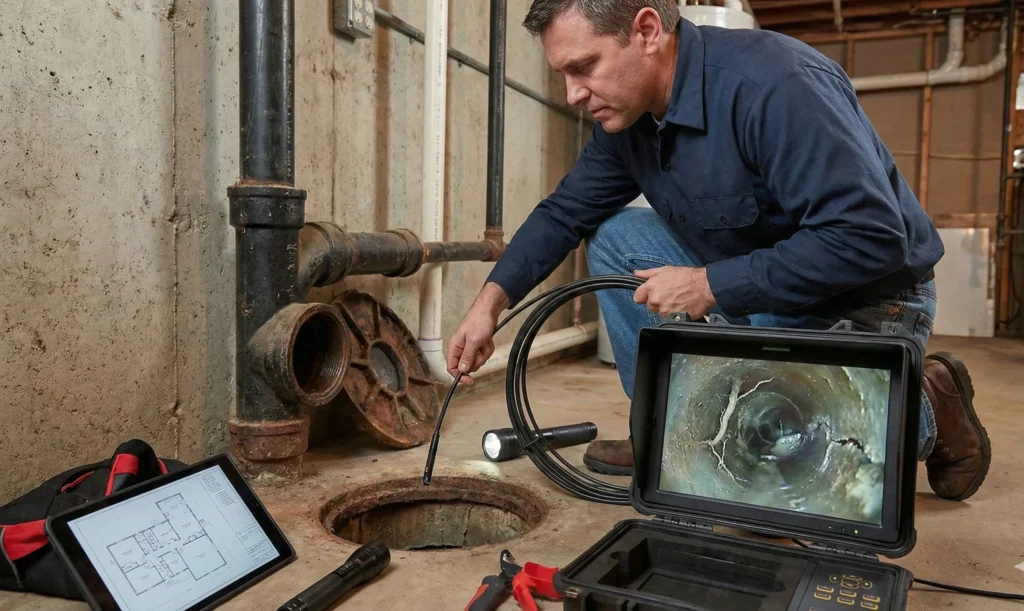
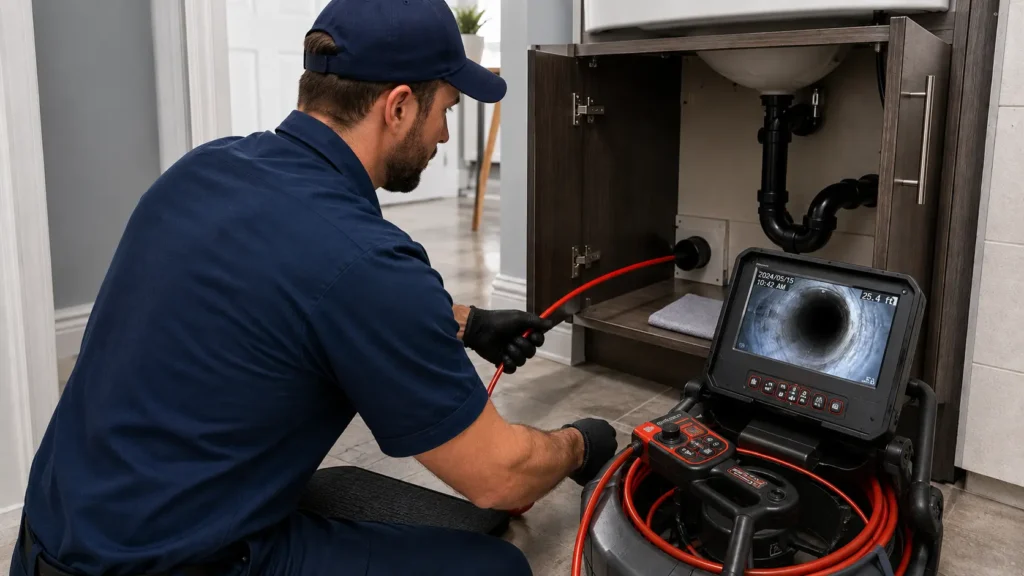
A plumbing camera inspection is exactly what it sounds like: a small, waterproof camera attached to a flexible rod is fed into a drain or sewer line so a plumber can see the inside of the pipe in real time. The camera is guided through the line from an accessible point, usually a cleanout, and the footage is displayed on a monitor as it travels.
This lets a plumber in Toronto identify things that are impossible to diagnose from the surface: buildup along the pipe walls, a belly or sag in the line, roots pushing through a joint, or a section of pipe that’s cracked, corroded, or separated. For homeowners dealing with a plumbing issue that keeps coming back, a sewer camera inspection in Toronto can turn a repeat guessing game into an actual answer, without any digging or guesswork involved.
11 Signs You May Need a Camera Inspection in Toronto
A camera inspection lets a plumber look inside the pipe in real time. Below are the 11 most common signs we see that it’s time to stop guessing and get a clear look:
1. Your Drains Keep Clogging
An occasional clog is normal. Grease, hair, and everyday debris build up over time, and a good cleaning usually takes care of it. But when the same drain clogs again and again, even after it’s been cleared, something else is likely going on. It could be a buildup problem that keeps rebuilding quickly, a section of pipe that’s collecting debris because of a dip or misalignment, or roots that have made their way into the line. Clearing the blockage treats the symptom, but it won’t tell you why the clog keeps forming in the first place.
2. Multiple Drains Are Slow at the Same Time
One slow drain is usually a localized issue. But when your kitchen sink, bathroom sink, shower, and floor drain are all draining sluggishly around the same time, that’s often a sign the restriction isn’t in any single fixture; it’s further down, in a shared section of the drainage system. A drain inspection in Toronto can help pinpoint where the actual restriction sits, rather than treating each slow fixture as a separate problem.
3. You Keep Experiencing Sewer Backups
A sewer backup is one of the more disruptive plumbing problems a homeowner can face, and if it’s happened more than once, it deserves a closer look. Backups can stem from a range of causes: blockages, root intrusion, buildup, or damage to the pipe itself, including collapsed or partially collapsed sections. City of Toronto’s guidance on basement flooding and sewer backups also identifies blocked, cracked, or broken sewer lines and tree-root intrusion as possible causes of sewer backups. A camera inspection doesn’t guarantee it will find the exact cause every time, but it gives a plumber a direct look at the line instead of relying on assumptions.
4. You Notice Persistent Sewer Odors
A sewer smell that lingers, especially if it keeps returning after you’ve tried addressing it, is worth paying attention to. There are several possible explanations, from a dried-out trap to a vent issue to a problem further along the line. When the odor persists or shows up alongside other symptoms like slow drains or gurgling, a professional look inside the pipe can help narrow down what’s actually causing it.
5. Your Toilet Gurgles or Bubbles
An occasional gurgle isn’t necessarily cause for concern. But when it happens consistently, or alongside other drainage symptoms, it can point to air trying to escape past a restriction somewhere in the line. On its own, one gurgling sound doesn’t mean much. Combined with slow drains or recurring clogs elsewhere in the house, it’s a piece of a larger pattern worth investigating.
6. Water Backs Up Into Another Fixture
This is one of the more telling signs of a shared drainage issue. If your shower backs up when the toilet is flushed, or your sink fills up when another fixture is draining, the fixtures are likely connected to a common line that has a restriction somewhere downstream. This kind of cross-fixture backup is a strong indicator that the problem isn’t isolated to one drain, and it’s a good reason to look at what’s happening further down the system.
7. You Suspect Tree Roots Inside the Sewer Line
Toronto has a lot of mature trees, and older sewer lines often run close to root systems that have had decades to grow. Roots are drawn to the moisture inside sewer pipes and can work their way in through small cracks or loose joints. Once inside, they tend to expand, catching debris and gradually restricting flow. Recurring clogs, slow drainage, and repeated backups are all common symptoms. A sewer camera in Toronto can confirm whether roots are actually present and roughly where they’ve intruded, which is useful information before any sewer line inspection in Toronto leads to repair decisions.
8. Your Home Has Older Drain or Sewer Pipes
Older homes often come with older plumbing, and pipes that have been in the ground or in the walls for decades can develop issues over time: corrosion, cracking, separated joints, or general deterioration. That doesn’t mean every older home needs an inspection right away. But if you’re already noticing recurring symptoms and you know your plumbing system is aging, it’s a reasonable point to get a closer look rather than waiting for a bigger issue to show up.
9. Drain Problems Return Shortly After Cleaning
This is one of the clearest signals that something more is going on. Drain cleaning is effective at clearing an obstruction, but it doesn’t necessarily tell you why the obstruction formed. If a drain clogs again within days or weeks of being cleaned, the cleaning addressed the symptom without touching the underlying cause. That’s usually where camera inspection becomes genuinely useful; it can help identify what’s causing the blockage to keep coming back, whether that’s a structural issue, a buildup pattern, or root intrusion, so the actual problem can be addressed instead of the same clog over and over.
10. You Notice Unexplained Wet Spots or Drainage Problems
Unusual moisture in your yard, damp patches near your foundation, or changes in how water drains around your property can have a number of causes, and not all of them are plumbing-related. Not every wet spot means a sewer leak. But if the moisture is persistent, keeps showing up in the same area, or is happening alongside other drainage symptoms inside the home, it’s reasonable to have it professionally looked at rather than left unexplained.
11. You’re Planning Sewer or Drain Repairs
If you’re already considering repair work, an inspection before digging in is worth doing. Seeing the inside of the pipe first helps establish where the problem actually is, what condition the pipe is in, and whether repair is even necessary at that location. This kind of upfront information can make the difference between guessing at a repair scope and having a clear picture of what drain repair actually needs to happen.
What Problems Can a Plumbing Camera Inspection Detect?
A plumbing camera inspection can reveal a range of issues that are otherwise hidden from view:
- Blockage: buildup of grease, debris, or other material restricting flow
- Tree-root intrusion: roots that have entered the pipe through cracks or joints
- Cracked pipes: fractures in the pipe wall that can worsen over time
- Broken pipes: sections with more significant structural failure
- Pipe separation joints: joints that have pulled apart, often due to ground shifting or age
- Heavy buildup: scale, grease, or sediment coating the interior of the pipe
- Corrosion deterioration of metal pipes: common in older plumbing systems
- Foreign objects: items that have been flushed or washed into the line and gotten stuck
- Collapsed pipe sections: areas where the pipe has caved in, blocking flow almost entirely
- Other visible abnormalities: bellies, sags, or misalignments in the pipe
A drain camera inspection gives a plumber a direct visual of these conditions, rather than relying on symptoms alone. That’s the main value of a sewer camera inspection in Toronto: it replaces assumptions with an actual look at what’s inside the line.
What Happens During a Camera Inspection?
The process is fairly straightforward from a homeowner’s perspective:
Step 1: Identify the Plumbing Problem: The plumber talks through the symptoms you’ve been experiencing to understand what’s likely going on and where to focus the inspection.
Step 2: Access the Drain or Sewer Line: An existing cleanout or accessible entry point is used to get into the line, avoiding unnecessary digging or opening up walls.
Step 3: Insert and Guide the Camera: The waterproof camera, attached to a flexible cable, is fed through the pipe while the plumber monitors its progress.
Step 4: Inspect the Inside of the Pipe: The footage is reviewed in real time, allowing the plumber to note buildup, damage, roots, or other issues as they appear.
Step 5: Determine the Next Step: Based on what’s found, the plumber can explain what’s happening and what kind of solution cleaning, repair, or further diagnostics makes sense. Every property and every plumbing problem is different, so how long this takes will vary from job to job.
Should You Keep Cleaning the Drain or Get a Camera Inspection?
These two services aren’t competing with each other; they serve different purposes.
Drain Cleaning
- Clears or removes an existing blockage
- Useful for buildup and routine drainage problems
- Often provides immediate relief
Camera Inspection
- Investigates the condition inside the pipe
- Useful for recurring or unexplained problems
- Can reveal hidden pipe conditions that cleaning alone won’t fix
In practice, they often work together: clean the blockage first, and if the problem returns, inspect the line to identify what’s actually causing it. From there, you can choose the solution that actually addresses the issue instead of repeating the same fix.
When Should You Schedule a Camera Inspection in Toronto?
It’s worth considering a camera inspection in Toronto when:
- The same drain repeatedly clogs
- Several drains are affected at once
- Sewer backups keep returning
- You suspect tree roots may be involved
- Unusual drainage noises continue over time
- Previous drain cleaning hasn’t resolved the issue
- You’re planning major drain or sewer repair work
If more than one of these applies to your situation, it’s a reasonable sign that a closer look inside the pipe would be more useful than another round of cleaning alone.
Can a Camera Inspection Help Prevent Bigger Plumbing Problems?
A camera inspection can’t guarantee that future plumbing problems won’t happen; pipes age, roots keep growing, and buildup can return. What it can do is give you a clear picture of the current condition of your pipes. Spotting a small crack, an area of heavy buildup, or early root intrusion before it turns into a full blockage or backup gives you more time to plan a solution on your own terms, rather than reacting to an emergency.
Frequently Asked Questions:
1. How long does a camera inspection take?
It depends on the length of the line and what the plumber finds along the way. Simple inspections can be relatively quick, while more complex situations take longer to fully assess.
2. Is a camera inspection necessary for every clogged drain?
No. A single, isolated clog that clears easily usually doesn’t need one. It becomes more useful when clogs are recurring, unexplained, or affecting multiple fixtures.
3. What can a sewer camera detect?
It can show blockages, buildup, cracks, breaks, root intrusion, corrosion, pipe separation, and collapsed sections, among other visible conditions inside the pipe.
4. Can a camera inspection find tree roots?
Yes. Roots are one of the more common issues a camera inspection identifies, particularly in older sewer lines with cracked joints or seams.
5. Should I get a camera inspection after repeated drain cleaning?
If cleaning hasn’t stopped the problem from coming back, an inspection can help explain why, rather than repeating the same temporary fix.
6. Is a camera inspection useful before drain repair?
Yes. Seeing the pipe’s condition beforehand helps identify the issue and determine which repair makes sense.
Need a Camera Inspection in Toronto?
If you’re dealing with recurring clogs, slow drains, sewer backups, or drainage problems that keep coming back no matter what you try, it’s worth finding out what’s actually happening inside the pipe rather than continuing to guess. Drain Experts Plumbing offers camera inspection in Toronto to help homeowners get a clear look at their drain and sewer lines and understand what’s really going on before deciding on next steps. If your plumbing problem keeps returning, reach out to schedule a camera inspection in Toronto and get an answer instead of another guess.